


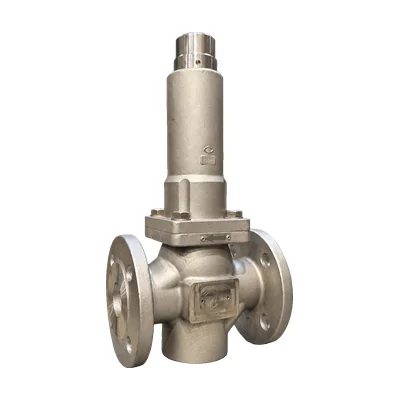

How to choose your stainless steel pressure reducing valve: Valfonta’s PRV series
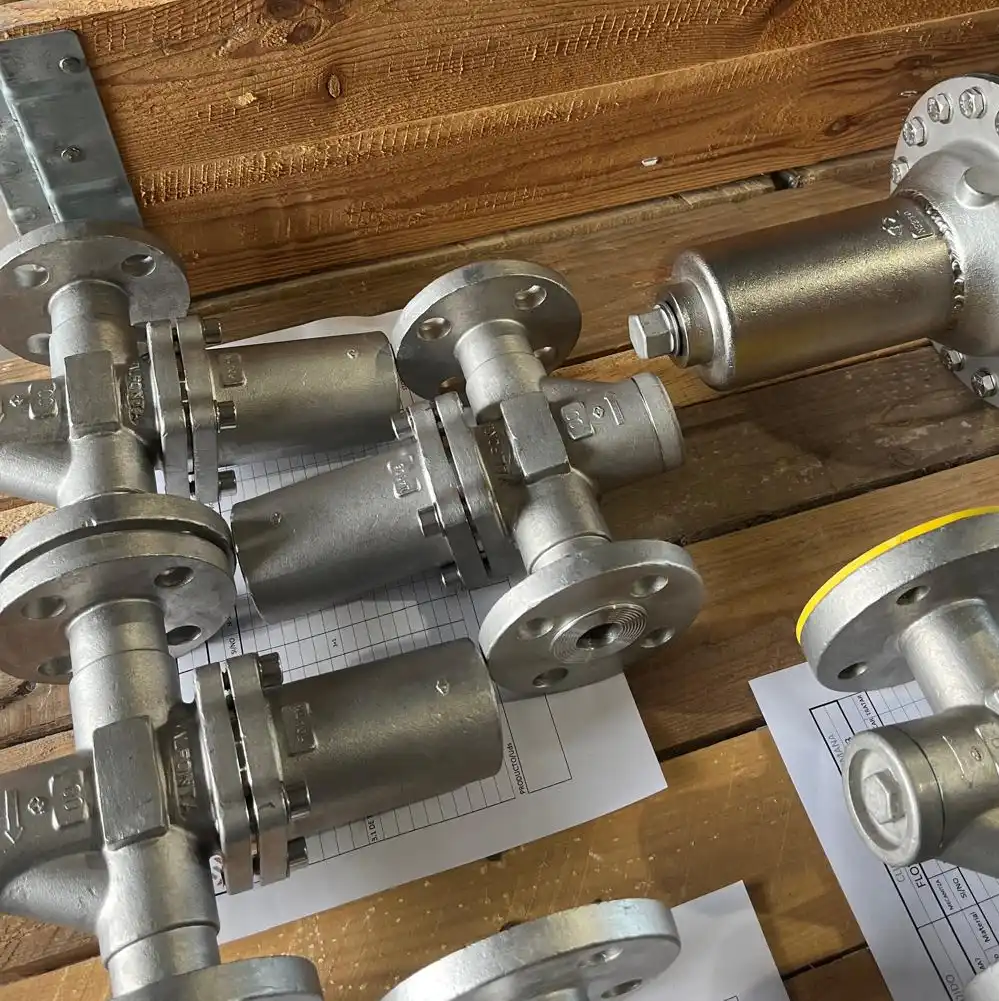
Article contents
A stainless steel pressure reducing valve is a crucial device for any application that demands maximum hygiene, high corrosion resistance, or specific chemical compatibility.
It is the de facto standard in sectors such as the pharmaceutical, chemical, food, and biotechnology industries.
However, not all stainless steel valves are the same.
The difficulty lies in choosing the right model among different internal operating technologies: is a piston-balanced, a bellows, or a diaphragm valve better?
In this guide, we analyze Valfonta’s PRV series, our complete range manufactured in AISI 316L Stainless Steel, to help you identify the exact solution (PRV20, PRV30, PRV44, or PRV45) that your process needs.
Why choose an AISI 316L stainless steel pressure reducing valve?
High corrosion resistance: Unlike other materials, 316L offers excellent durability against a wide range of aggressive fluids, demineralized water, pure gases, or steam.
Sanitary compatibility: It is the preferred material for hygienic applications. It is essential in laboratories, pharmaceutical plants, and the food industry, since it does not contaminate the fluid. It is complemented by special gasket options (such as EPDM or Viton) or Clamp-type connections.
Durability in harsh environments: The stainless steel body requires no paint and withstands chemical cleaning (CIP/SIP) or aggressive environments (marine, chemical plants) perfectly without degrading.
*This stainless steel foundation allows us to build reliable valves for any environment.
The PRV series: 4 models, 3 balancing technologies
Although the entire PRV series is manufactured in 316L stainless steel, its internal technology defines its ideal application. At Valfonta, we use three different balancing principles to cover every need.
PRV20 and PRV30 models: the reliability of piston balancing
These models are direct-acting valves that are piston-balanced. Inside, a piston moves to compensate for inlet pressure fluctuations, ensuring that the outlet pressure remains constant. They are the most robust and reliable solution for most gases (such as compressed air or nitrogen) and liquids.
The PRV20 model: It is the compact solution in the range, with sizes from 1/4″ to 3/4″. It is perfect for installations in laboratories, machinery (OEM), or end-use points that require a reliable, compact stainless steel valve.
The PRV30 model: It is the “big brother” of the PRV20, with sizes of 1/2″ and 1″. It shares the same piston principle, but it is designed as an all-purpose valve for sanitary plants, laboratories, and industrial process lines.
PRV44 model: robustness for steam with bellows balancing
The PRV44 model uses a superior technology for high-temperature applications: bellows balancing. Instead of elastomer seals (such as NBR or Viton), the PRV44 seals the stem with an AISI 316L stainless steel bellows. This metal bellows completely isolates the fluid from the actuator and the adjusting spring.
This feature makes it the ideal valve for steam (its main application), as well as for other fluids at high temperatures, withstanding up to 210 °C.
PRV45 model: high sensitivity for low-pressure gases
The PRV45 model is a highly specialized valve. Although it is piston-balanced internally, its unique feature is a large diaphragm actuator.
This large diaphragm (with diameters that vary according to the pressure range) gives it extreme sensitivity. It has been specially designed for gases that require a very low outlet pressure. It can precisely regulate pressures as low as 0.01 bar (10 mbar), which makes it perfect for nitrogen inerting, tank blanketing, or high-precision laboratory applications.
Comparison table: PRV20 vs. PRV30 vs. PRV44 vs. PRV45
To help visualize the complete range and make a quick preselection easier, we have summarized the key specifications of the stainless steel PRV series in the following table:
| Features | PRV20 (Compact) | PRV30 (Standard) | PRV44 (Steam) | PRV45 (Sensitive) |
|---|---|---|---|---|
| Body Material | 316L stainless | 316L stainless | 316L stainless | 316L stainless |
| Mechanism | Piston-Balanced | Piston-Balanced | Bellows-Balanced | Piston-Balanced (Diaphragm Actuator) |
| Main Fluid | Gases and Liquids | Gases and Liquids | Steam, Gases, Liquids | Gases (low P), Steam, Liquids |
| Max. Temp. | 150 °C (with Viton) | 150°C (with Viton) | 210°C | 150 °C (with Viton) |
| Outlet P. Range | 0.2 – 20 barg | 0.5 – 12 barg 19 | 0.5 – 12 barg 20 | 0.01 – 8 barg |
| Sizes (DN) | 1/4″ – 3/4″ | 1/2″ – 1″ | 1/2″ – 1″ | 1/2″ – 1″ |
Installation flexibility: a key advantage of the PRV series
One of the great advantages of the entire PRV range (PRV20, PRV30, PRV44, and PRV45) is that their internal design allows them to be installed in any position. This offers enormous flexibility to the engineer or installer, who does not always have an optimal horizontal pipe run available.
Although they are very versatile, there are recommended positions to ensure the best performance:
Standard position: It is recommended to install them in a horizontal pipe, with the actuator (spring) in a vertical position facing up.
Permitted position: They can also be mounted in a horizontal pipe with the actuator facing down.
Not recommended position: Although mechanically possible, installing them with the actuator “on its side” (in a horizontal position) is not recommended, as the valve might not work as precisely.
Regardless of the position, there are two golden rules that apply to all installations:
Cleaning and strainer installation: Before mounting the valve, the pipe must be cleaned of impurities. It is highly recommended to install a strainer just upstream of the valve to protect the seat and the plug from erosion or clogging.
Start-up: When starting up the system, the isolation (shutoff) valves must be opened slowly to avoid water hammer that could damage the internal components of the valve
Valfonta’s complete catalog for your installation
This range of PRV series stainless steel pressure reducing valves is just one part of the comprehensive solution that Valfonta offers for fluid control. Depending on your application, we also manufacture other series of pressure reducing valves (such as the M1 and M2), pressure relief valves, control valves, ejectors, and injectors.
Contact our technical team for expert advice. We will analyze your fluid, pressure, temperature, and flow rate to select the exact PRV model that your process needs.
You can fill out our contact form or call us directly at 93 37 208 88.
Frequently asked questions
What is the difference between piston balancing (PRV30) and bellows balancing (PRV44)?
Both are excellent, but for different fluids. The piston of the PRV30 is a robust solution ideal for gases and liquids. The bellows of the PRV44 uses a metal seal that makes it the best option for steam and high-temperature applications (up to 210 °C).
I need to regulate nitrogen at a very low pressure (millibars). Which valve should I use?
The PRV45 model. It has been specifically designed for gases that require a low outlet pressure. Its large diaphragm actuator allows it to regulate pressures from 0.01 bar (10 mbar).
What does “maintenance-free” mean?
This term, used in our manuals, refers to the fact that the valves are self-operated and do not require lubrication, calibration, or constant adjustments. However, like any industrial equipment, the gaskets and parts subject to normal wear must be checked periodically and replaced if necessary. Genuine Valfonta spare parts must always be used.
Can I use the PRV44 (designed for steam) with liquids?
Yes. Although the PRV44 is the steam specialist, its design and materials make it perfectly suitable for group 2 liquids and gases.
Related valves
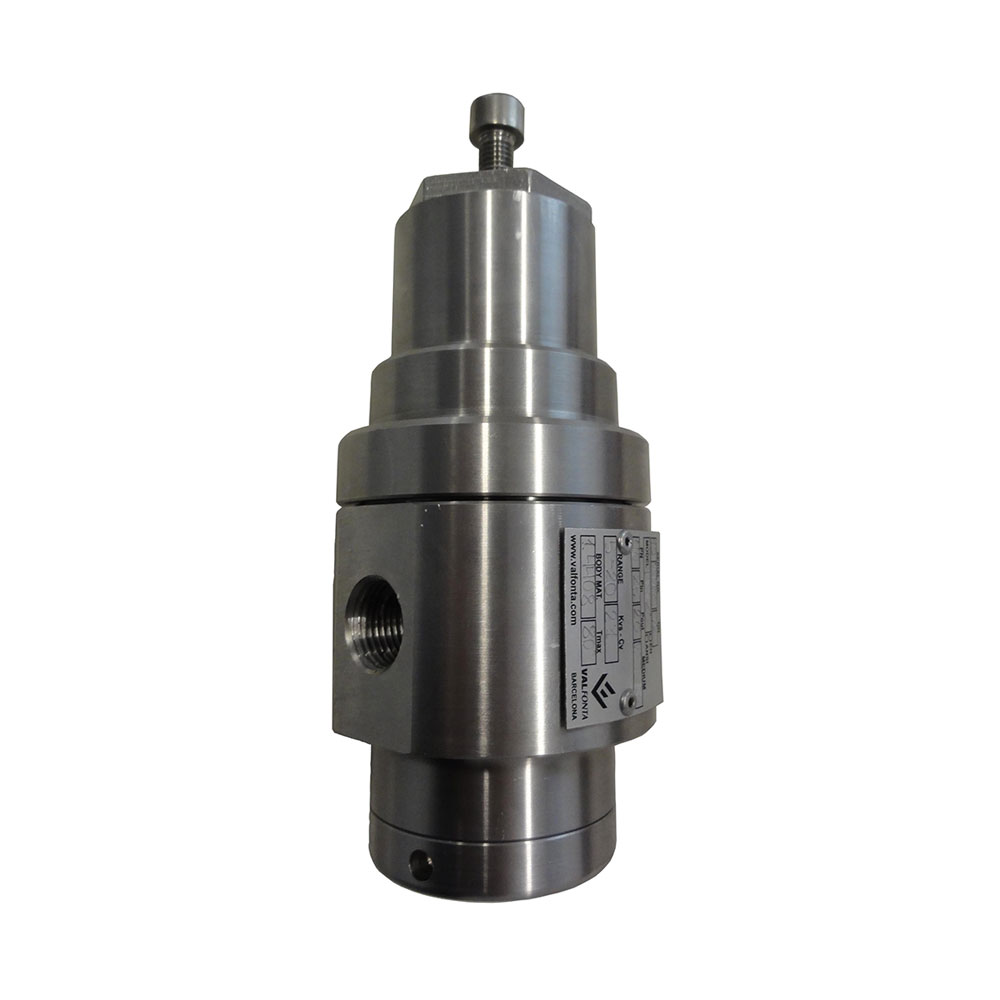 PRV20 reducing valve
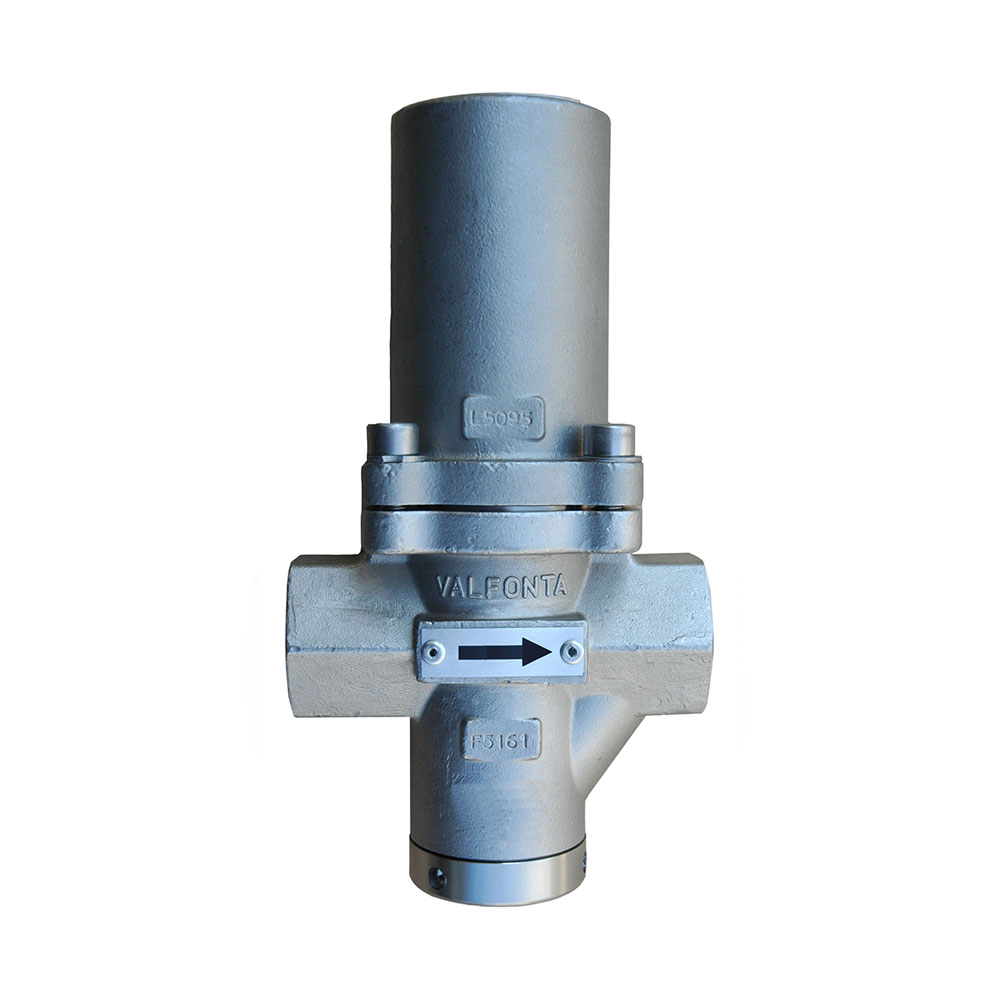 PRV44 reducing valve
Related articles
Can we help with your installation?
Tell us the fluid, the inlet and outlet pressures, the temperature, and the flow rate, and we will recommend the right valve.
You can also call 933 720 888 or email valfonta@valfonta.com.