


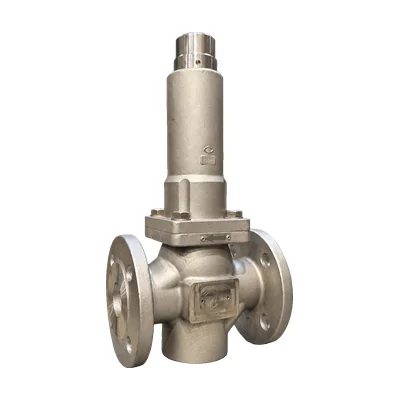

Features of the S1 and S2 self-regulating excess pressure valves
Article contents
How an excess pressure valve works
The valve stays closed while the inlet pressure is below the set pressure. When it is exceeded, the valve opens gradually, in proportion to the pressure rise, and lets the excess flow pass to a return line, a tank, or a lower-pressure zone. When the pressure returns to its value, it closes.
All Valfonta valves of this type are self-operated: an adjusting spring opposes the inlet pressure, with no air or electricity. What changes is the element that senses the pressure: a piston (PRV53), a diaphragm (S2 and PRV55), a bellows (PRV54), a diaphragm and bellows (S1), or the spring-loaded guided plug itself (S3).
Excess pressure valve, reducing valve, and safety valve
- The excess pressure valve (or relief valve) holds the upstream pressure: it opens when there is excess pressure.
- The pressure reducing valve holds the downstream pressure: it closes when the outlet pressure rises. See our pressure reducing valves.
- The safety valve is a safety accessory that protects tanks, boilers, or piping against overpressure. An excess pressure valve does not replace it. We explain this in the difference between a safety valve and a relief valve.
What can Valfonta offer you?
At Valfonta, we are dedicated to manufacturing and developing pressure control mechanisms, ensuring greater effectiveness and efficiency in distribution systems and installations carrying fluids of different characteristics.
We specialize in the design, manufacture, and customization of pressure reducing valves and excess pressure and pressure relief valves. Our ability to produce custom solutions is based on a deep understanding of the varied and sometimes complex needs of different systems and installations.
Regulating valves are essential for the efficient and safe management of any fluid system. They not only control pressure, but also prevent damage to the piping and minimize fluid and gas losses and leaks. In this way, they contribute to operational efficiency, machinery safety, and environmental protection.
Distribution networks, especially in the industrial sector, are often complex and may have zones where the pressure is higher than the piping or equipment can safely withstand. This can happen for several reasons, such as proximity to pumping stations or location in low-elevation geographic areas, where pressure can build up.
In these situations, pressure reducing valves become absolutely critical. They are able to reduce the pressure inside the system to a safe level, avoiding the risk of pipe ruptures, caused by excess pressure. They also help prevent leaks of any fluid or gas flowing through the system, protecting both the integrity of the system and the surrounding environment. If what you need is to discharge overpressure, see our guide to excess pressure valves.
In short, at Valfonta we strive to produce valves of the highest quality that provide precise and reliable pressure regulation, ensuring the efficiency and safety of your systems and installations.
Which excess pressure valves do we show you in this article?
What is the function of a pressure reducing valve?
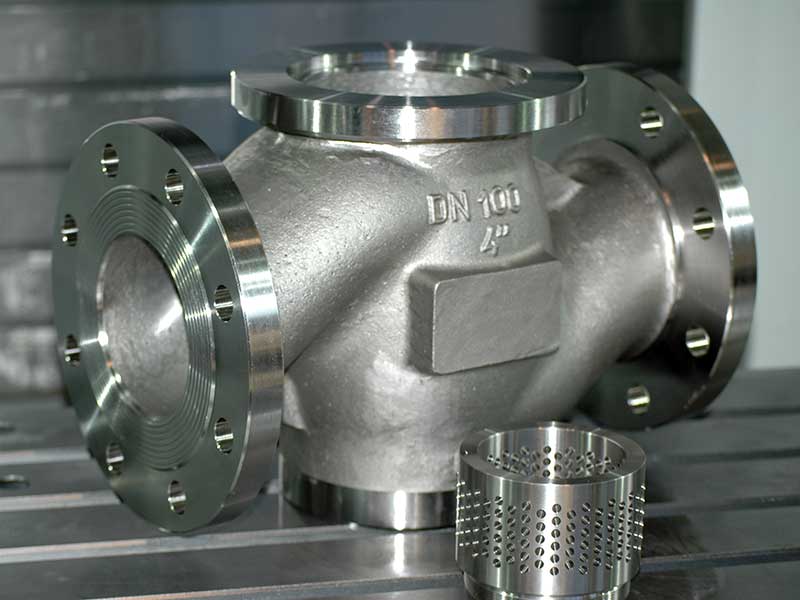
The answer to this question lies at the very core of the efficiency and safety of fluid systems. As a control valve, the pressure reducing valve plays a crucial role in adjusting the outlet pressure of the system. It does so consistently and reliably, unaffected by variations in inlet pressure or by changes in demand on the flow line.
At Valfonta, we specialize in the manufacture and design of this type of pressure regulating valve, with more than fifty years of experience in the fluid systems industry. This long track record allows us to say with pride that pressure reducing valves are our specialty and our passion.
The knowledge accumulated over more than half a century of service gives us a solid, rich foundation to guarantee each of our customers the solution best suited to their needs.
We don’t just manufacture valves; at Valfonta, every project is a challenge we approach in a personalized way. We carefully analyze each installation, consider all the needs and requests our customers bring to us, and work meticulously to find the optimal solution and the most suitable valve.
Features of the S1 and S2 self-regulating excess pressure valves
In this post, we will show you the features of and differences between two of our most common pressure relief valve models, the S1 and S2. They are just two options from our wide catalog of valves; do not hesitate to request more information, as well as personalized advice to choose your valve, if you need it.
S1 valve
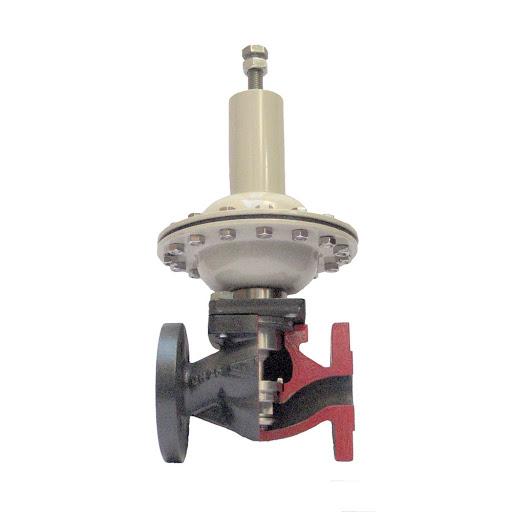
It is a self-operated excess pressure valve. This series of regulating valves is suitable for steam, compressed air, non-hazardous gases, and liquids. It responds very quickly to demand. It has a single-seat globe valve. The stem is sealed by the double-layer bellows.
It is made of stainless steel; to prevent any damage to the bellows, the S1 series is fitted with an anti-rotation system. The diaphragm is reinforced with an intermediate fabric layer. Regulation range from 0.5 to 15 barg with different actuators. The valve opens when the upstream pressure increases. Maximum inlet pressure 15 barg.
Other configurations:
Reduced Kv or Cv.
A control line kit to sense the pressure directly at the body (optionally with or without a condensate pot) for set points > 1 bar.
The condensate pot is available and is required for steam or fluids with a temperature above 125 °C, in order to protect the diaphragm against excessive temperatures.
S2 valve
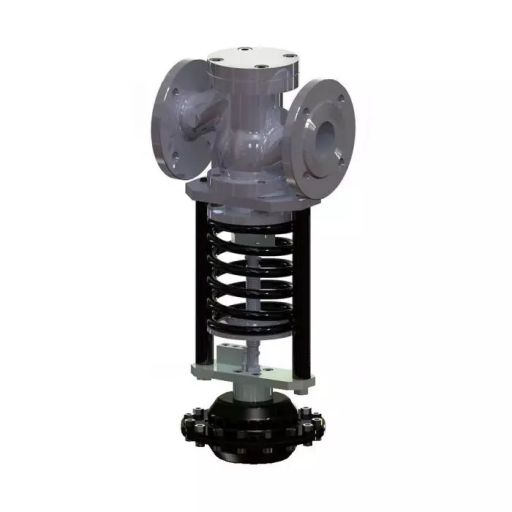
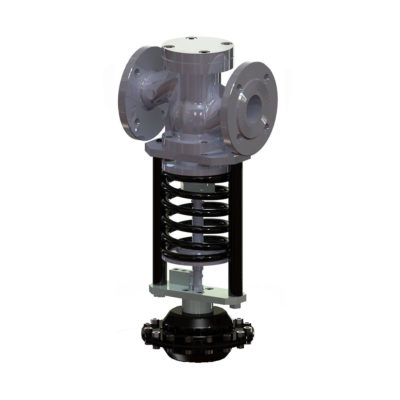
Self-regulating excess pressure valve. Its main function is to hold the inlet pressure at a set maximum value–relieving the excess pressure downstream–by means of the adjusting stem.
When the inlet pressure exceeds the set value, the valve opens in proportion to the pressure rise detected.
This S2 pressure regulator model is suitable for low-temperature steam (with a condensate pot), compressed air, gases, and liquids.
The actuator is fitted with a diaphragm with a high-quality intermediate reinforcing fabric. Its inlet pressure regulation range goes from 0.02 to 10 barg with the different actuator sizes.
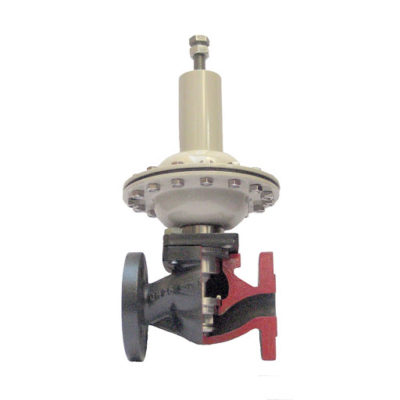
The condensate pot is available and is required when the fluid is steam or for liquids with a temperature above 125 ºC, to protect the diaphragm from overheating.
It is important to note that an excess pressure valve is not a safety valve and, where necessary, overpressure protection must be installed.
This type of valve is used to let a zone with excess pressure feed another lower-pressure zone without starving the main line. In the event of excessive consumption, it prevents overpressure.
As we can see, pressure valves are designed to reduce and stabilize the pressure of a fluid.
They are mainly conceived as a pressure compensation system that seeks to minimize variation in the outlet pressure.
The benefits of these self-regulating pressure valves include stabilizing pressure in all types of systems and preventing high pressures from causing cracks, vibration, and noise in the piping, pressure variations at different times of day…
Control valves, if properly selected and maintained, increase efficiency, safety, and profitability.
To contact our sales department, simply fill in the form below, call 933 72 08 88, or send an email to valfonta@valfonta.com.
Together, we will find the most suitable valve for your system or installation!
The excess pressure models at a glance
| Model | Construction | DN | Set pressure (barg) | Max. T (°C) | Steam |
|---|---|---|---|---|---|
| S3 | Spring, guided plug | 15 – 150 | 0,5 – 20 | 220 | Yes |
| S1 | Diaphragm and bellows | 15 – 150 | 0,5 – 15 | 220 | Yes |
| S2 | Diaphragm, internal sensing | 15 – 100 | 0,02 – 10 | 180 | Yes, with external sensing |
| PRV53 | Piston | 15 – 25 | 0,5 – 10 | 150 | No |
| PRV54 | Bellows | 15 – 25 | 0,5 – 12 | 210 | Yes |
| PRV55 | Diaphragm | 15 – 25 | 0,01 – 8 | 150 | Yes |
Data from the Valfonta excess pressure summary catalog (2025) and the datasheets. S3: DN125 and DN150, on request. PRV53: up to 15 barg on request. There is also a seventh model, the S4, with no datasheet on the website.
You will find the datasheets, spring ranges, and documentation for each model on our pressure relief and excess pressure valves page.
How to choose an excess pressure valve
- Very low set pressures. The PRV55 has set pressures from 0.01 barg (10 mbar) and the S2, from 0.02 barg.
- High set pressures. The S3 reaches 20 barg and the S1, 15 barg.
- Flow. For small flows, the PRV53, PRV54, and PRV55 (DN15 to DN25, Kv from 2 to 3.5 m³/h). For large lines, the S1 (Kv up to 240 m³/h) or the S3 (up to 130 m³/h in DN100).
- Steam. S3 and S1 up to 220 °C, PRV54 up to 210 °C, and PRV55 up to 150 °C. The PRV53 is for liquids, compressed air, and inert gases.
- Construction. The PRV models are made of AISI 316L stainless steel; the S1, S2, and S3 are made of carbon steel or CF3M stainless, and in duplex or super duplex on request.
Frequently asked questions
What is set pressure?
It is the pressure at which the valve begins to open. It is set by the compression of the adjusting spring: compressing it raises it. Valfonta supplies the valves adjusted to the value specified in the order.
Does an excess pressure valve replace a safety valve?
No. It modulates to hold the upstream pressure, but it is not a safety accessory. If the installation needs overpressure protection, a safety valve must also be installed.
Which model do I use for steam?
Which valve is suitable for pressures of a few millibars?
Where is the excess flow discharged?
To a return or recirculation line, to the tank or the pump suction, or to another lower-pressure zone. The S2, for example, lets a zone with excess pressure feed another lower-pressure zone without starving the main line.
Related valves
Related articles

Can we help with your installation?
Tell us the fluid, the inlet and outlet pressures, the temperature, and the flow rate, and we will recommend the right valve.
You can also call 933 720 888 or email valfonta@valfonta.com.