


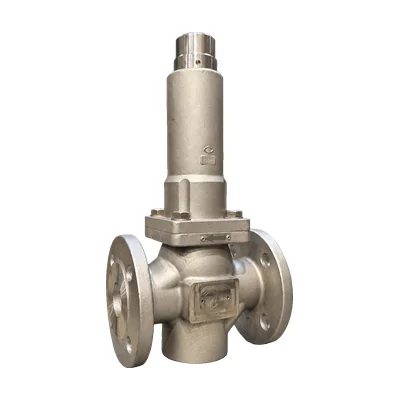

How does an adjustable pressure relief valve work and what are its applications?

Article contents
At Valfonta we manufacture all kinds of mechanisms whose main function is to control pressure. Thanks to these mechanisms, we always ensure greater effectiveness and efficiency in any distribution system or in installations carrying fluids of various characteristics.
Thanks to our experience in this field, we can supply any type of adjustable pressure relief valve to anyone who needs it. In fact, we can even custom-build them for your installation or system.
Why are adjustable pressure relief valves so important?
Keep in mind that using a pressure relief valve is vital if you want to avoid any damage to the piping or even possible leaks of both fluids and gases. In distribution networks, pressure is often quite high. It is in these cases that it becomes so necessary to reduce the pressure within the system and thus avoid annoying noise, vibration, or pipe perforations and the resulting leaks. For this reason, there are several types of industrial pressure valves.
How does an adjustable pressure relief valve work?
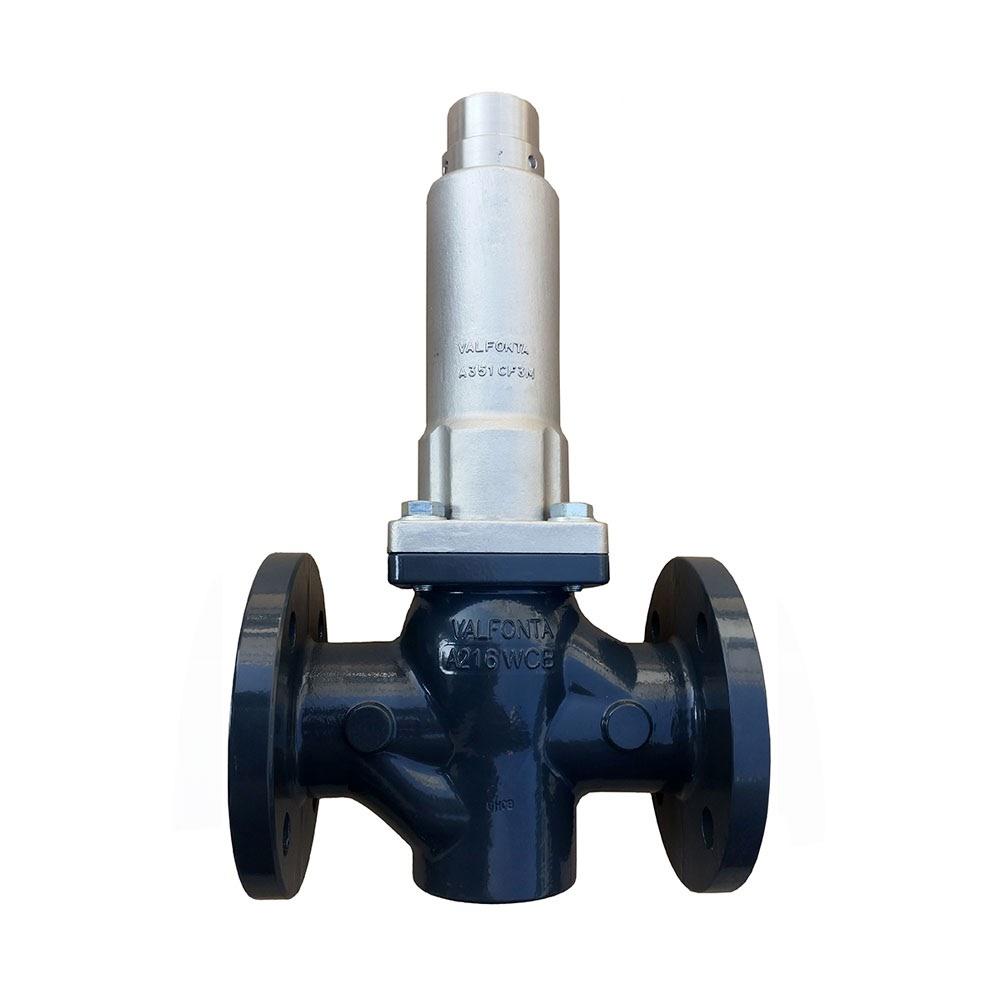
Adjustable pressure relief valves, as their name suggests, are mechanisms whose primary purpose is to relieve pressure (or perform what we call a bypass), but in a fully controlled way. In the case of a pressure and temperature relief valve, it will also take temperature into account.
This mechanism basically consists of a plug that keeps the discharge opening closed. It also has a carefully calibrated spring that holds this plug in the most suitable position to prevent the system contents from escaping.
When the internal pressure of the gas or fluid exceeds the pressure set on the spring, the plug opens to let the contents out through the discharge opening. This, of course, only happens while the internal pressure remains too high; once it drops sufficiently, the plug returns to its initial position and the system is once again completely sealed.
Since this is an adjustable pressure relief valve, the pressure threshold that marks the release point can be adjusted through the force exerted by the spring. This is usually done with a screw that passes through it and is tightened or loosened as required.
Applications of an adjustable pressure relief valve
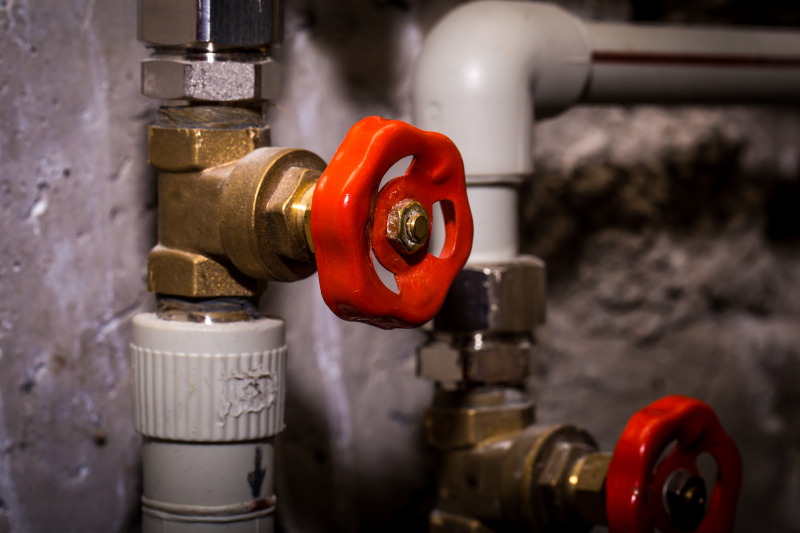
As you have seen, Valfonta’s adjustable pressure relief valves are designed to keep a system’s pressure stable at all times. Also known as overpressure valves, they are effective mechanisms that always prevent any fluid from exceeding a preset limit. So, if you are looking for a trusted place to buy a pressure relief valve, you should know that Valfonta has long experience manufacturing and distributing them.
Installations in chemical laboratories, sanitary plants, distilleries, or even dry cleaners
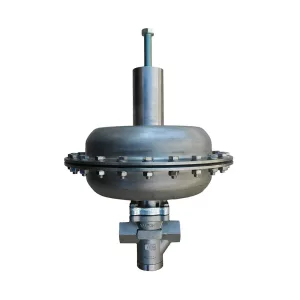
All these sites have systems that are prone to pressure problems. For these cases, it is therefore very advisable to have an excess pressure valve, such as our PRV55 model. It is a model similar to the others, but regulation is performed by means of a diaphragm.
Steam plants
For steam, a suitable option may be our S1 adjustable pressure relief valve model, as it offers a fast response.
Systems with non-hazardous gases and liquids
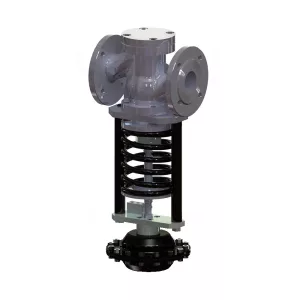
These systems accept both pressure relief valves and excess pressure valves. That is why the S1, S2, and S3 models are all more than suitable for any system whose contents are not hazardous but where pressure must be controlled reliably. They are fast, efficient models, ideal for keeping the valve inlet at its set point.
Compressed air
Compressed air systems always require an excess pressure valve, and you can install several of our models in them. Both the S1 and the PRV55 will be suitable and highly useful.
How the set pressure is adjusted in practice
Each model is supplied with a spring whose range covers the requested set pressure, and Valfonta delivers the valve already adjusted to that value. The spring should be chosen so that the set pressure falls within its range, not at the end of it. Some examples of the standard ranges:
- PRV53: from 0.5 to 3, from 1 to 6, and from 3 to 10 barg.
- PRV54: from 0.5 to 4, from 3 to 8, and from 4 to 12 barg.
- S3 in DN15 and DN20: from 1 to 6, from 4 to 12, and from 8 to 16 barg (from 15 to 25, on request).
Fine adjustment is done on site. On the S3, for example, you remove the cap and the O-ring and turn the adjusting stem: turning it clockwise compresses the spring and increases the set pressure. Always check the result with the inlet pressure gauge and review the set pressure periodically, as we explain in why you should audit the set pressure of relief valves.
Buy your adjustable pressure relief valves from Valfonta
As you have seen, adjustable pressure relief valves are designed to stabilize a system’s pressure, so they can be considered a compensation method whose main aim is to minimize pressure variation.
With Valfonta valves you can prevent high pressures from causing problems ranging from noise or vibration to cracks and leaks. Using valves properly thus translates into greater safety and profitability for any system.
If you want to buy a pressure relief valve, you can contact us: just call 933 72 08 88 or send us an email at valfonta@valfonta.com. . Our staff will be happy to assist you and help you get the valve your installation needs.

Related valves
Related articles

Can we help with your installation?
Tell us the fluid, the inlet and outlet pressures, the temperature, and the flow rate, and we will recommend the right valve.
You can also call 933 720 888 or email valfonta@valfonta.com.