


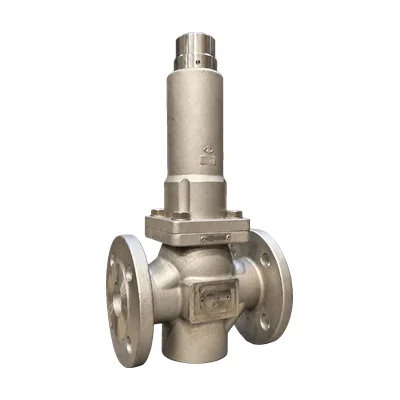

Industrial valve classes: types, functions, and how to choose the right one

Article contents
Every industrial installation carries liquids, gases, or steam that must be directed, metered, or stopped with precision. That is the job of industrial valves, a critical component for process safety and efficiency.
There are many classes of industrial valves, and choosing the right one depends on the function it must perform. In this guide we explain what an industrial valve is, how valves are classified by function, and how to choose the right model, with particular attention to pressure reducing valves, Valfonta’s specialty.
What an industrial valve is and how it is built
Before reviewing the different classes, it helps to understand what an industrial valve is and which elements all models have in common.
Definition and function of an industrial valve
An industrial valve is a mechanical device that controls the flow of a fluid—liquid, gas, or steam—within a system. Depending on the type, it can fully open or close the passage, regulate the flow, maintain a given pressure, or protect the installation by discharging fluid in the event of overpressure.
It is, therefore, the element that makes it possible to operate a process in a controlled and safe manner, adapting the flow to the needs of each installation.
Valves are manufactured in a wide variety of materials—stainless steel, bronze, special steels—depending on the fluid, the temperature, and the required resistance to corrosion, and they are found in virtually every industry: chemical, food, pharmaceutical, energy, and water.
Main parts: plug, stem, and seat
Although there are many designs, industrial valves share three essential parts whose functions complement one another:
Plug: the moving element that physically shuts off the passage of the fluid.
Stem: guides and holds the plug to allow or block the flow of liquids and gases.
Seat: provides the tight seal through contact with the plug.
Starting from these elements, each manufacturer develops specific designs according to the working fluid, pressure, and temperature. At Valfonta, we manufacture these components to strict quality standards at our facilities in Badalona.
Why choosing the right valve class is key
Each valve class is designed for a specific function. Using a shutoff valve to regulate flow, or a regulating valve to isolate a line, causes premature wear, pressure drops, noise, and even safety risks.
For example, permanently throttling a ball valve in an attempt to regulate flow damages the seat and eventually compromises tightness; the right choice for that function is a regulating valve. Choosing the right class—and sizing it correctly—ensures reliable operation, extends the service life of the installation, and avoids unnecessary maintenance costs. That is why it pays to know the main valve families and how they differ.
Industrial valve classes by function
The most useful way to classify industrial valves is by the function they perform in the system. These are the three major families.
Isolation or shutoff valves
Their purpose is to fully allow or block the passage of the fluid, without regulating intermediate flow; they operate fully open or fully closed. They are used to isolate pipe sections, equipment, or parts of an installation during maintenance or operation. The most common models in this family are:
Gate valve: closes by means of a plate that lowers perpendicular to the flow. It offers very low pressure drop when open and is ideal for isolating sections that are operated infrequently.
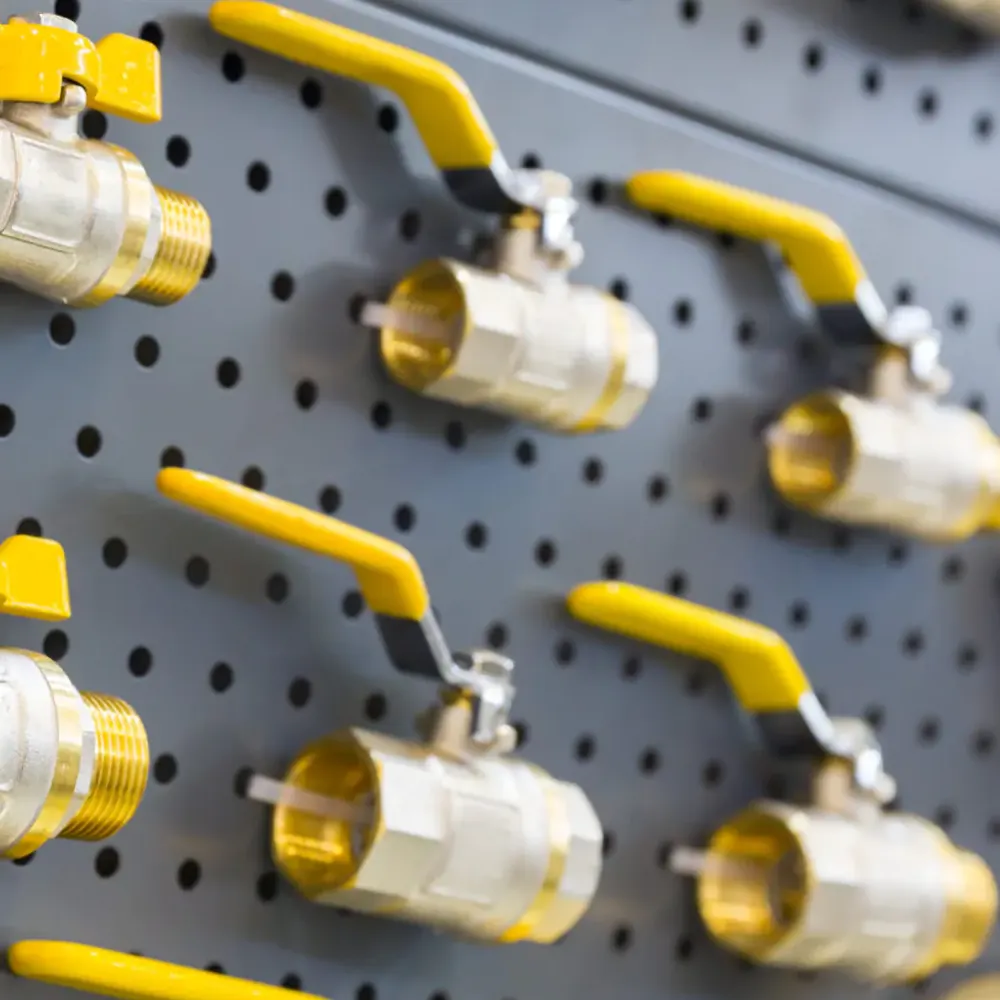
Ball valve: a bored sphere rotates a quarter turn to open or close. It is fast, tight, and very reliable, and is widely used for general shutoff of liquids and gases.
Butterfly valve: a disc rotates on its stem inside the pipe. It is compact and lightweight, suitable for large sizes and for installations where space and weight matter.
Globe valve: although it can throttle the flow, it is also used for shutoff when good tightness is required. Its linear stroke is well suited to steam lines and demanding services.
The choice between these models depends on the size, the operating frequency, the allowable pressure drop, and the required tightness.
Pressure regulating and control valves
These valves do more than open or close: they continuously modulate the flow or pressure to keep the process at the desired value. Within this group, the pressure reducing valve is one of the most important: it reduces the outlet pressure and keeps it stable downstream, regardless of variations in inlet pressure or line demand.
Depending on their operating principle, reducing valves can be direct-acting—the most common, simple, and reliable—or pilot-operated, which gain precision with high flow rates or large pressure drops. This family also includes control valves with pneumatic or electric actuators, which adjust the flow based on an external signal from the control system and are key in automated processes. This is the family in which Valfonta specializes, with a wide range of reducing valves that we will cover in the next section.
Safety and pressure relief valves
Their function is to protect the installation and people. The pressure relief (or excess pressure) valve acts when the fluid is about to exceed the established limits, discharging part of the flow to prevent leaks, ruptures, or explosions.
Safety valves play an equivalent role in boilers and pressure equipment, opening quickly in the event of overpressure. This family often also includes check or non-return valves, which prevent the fluid from flowing in the opposite direction and protect upstream pumps and equipment.
Unlike reducing valves, which regulate continuously, these valves act only occasionally, as a protective mechanism. You can learn more about the difference between a safety valve and a relief valve on our blog.
Valfonta pressure reducing valves: the range for regulating your installation
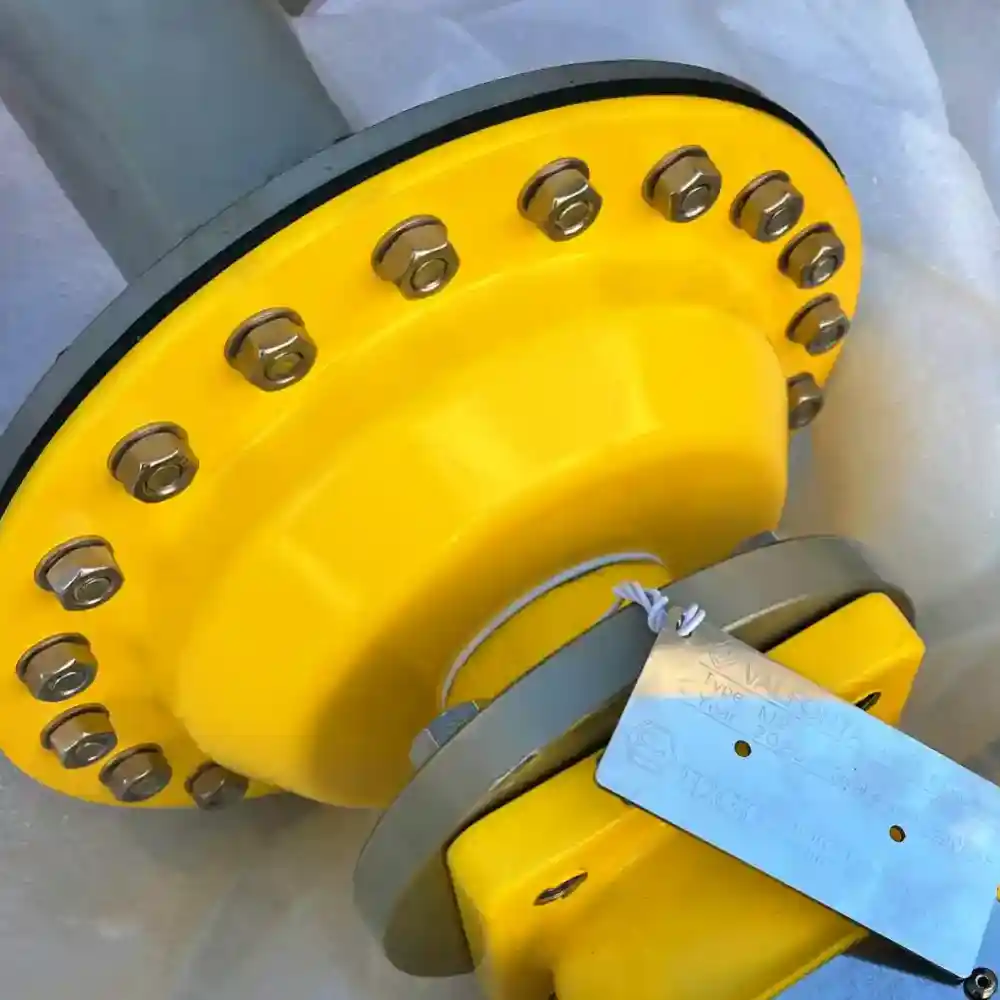
Among regulating valves, pressure reducing valves are Valfonta’s main specialty. We manufacture a complete range capable of covering virtually any industrial application, from steam and gases to liquids and special services. They are used in industries as diverse as chemicals and pharmaceuticals, food, energy, water treatment, and steam processes, where maintaining a stable working pressure is decisive for process quality and safety.
Why choose a Valfonta pressure reducing valve
With more than 50 years manufacturing and designing pressure regulating valves, at Valfonta we study each installation to propose the valve best suited to its operating conditions.
Our reducing valves stand out for their regulation reliability, their ease of installation and maintenance, and the option of being manufactured with custom materials and configurations (different bodies, gaskets, connections, or oxygen service). All manufacturing takes place in Spain, which ensures responsive technical support and short lead times.
This customization capability is what sets a specialized manufacturer apart from a mere distributor: when an application calls for a specific Kv coefficient, a material resistant to an aggressive fluid, or a particular connection, the valve is adapted to the process, not the other way around. The result is more precise regulation, a longer service life, and fewer incidents over time.
Valfonta pressure reducing valve models
This is the range of reducing valves available in the Valfonta catalog. Each model is designed for a type of fluid and application:
| Model | Type | Typical application |
|---|---|---|
| M1 reducing valve | Self-operated by diaphragm | Steam, compressed air, liquids, and non-hazardous gases |
| M2 reducing valve | Direct-acting, diaphragm | Gases (air, nitrogen), liquids, and steam; blanketing (DN15–DN100) |
| M2 bellows reducing valve | Direct-acting with bellows | Easy adjustment, installation in any position |
| PRV20 reducing valve | Self-operated by piston | Chemical laboratories, sanitary plants, sprinklers |
| PRV30 reducing valve | Direct-acting, piston (AISI 316) | Stable pressure 0.5–12 bar; options for O₂ and special materials |
| PRV44 reducing valve | Direct-acting with bellows | Steam and fine regulation in industry |
| PRV45 reducing valve | Direct-acting | General industrial pressure regulation |
| VD reducing valve | Self-operated | Constant downstream pressure in industry |
You can see all models, sizes, and datasheets in the pressure reducing valves category, and compare them with our pressure relief valves and control valves.
Frequently asked questions
What is an industrial valve?
It is a mechanical device that controls the passage of a fluid (liquid, gas, or steam) in an installation. Depending on its class, it can shut off the flow, regulate the flow rate, maintain a pressure, or protect the system against overpressure.
How many types of industrial valves are there?
There are many models, but they fall into three major classes by function: isolation or shutoff valves (gate, ball, butterfly, globe), regulating and control valves (pressure reducing valves, control valves), and safety and pressure relief valves.
What are the parts of a valve?
The three parts common to every industrial valve are the plug (shuts off the passage of the fluid), the stem (guides and holds the plug), and the seat (provides the tight seal through contact with the plug).
What is a pressure reducing valve and what is it used for?
It is a regulating valve that reduces the outlet pressure and keeps it stable downstream, regardless of variations in inlet pressure. It protects the installation against leaks and failures and ensures a constant working pressure.
What is the difference between a reducing valve and a relief valve?
A reducing valve regulates continuously to keep the pressure at a working value. A relief valve is a safety device that acts only when a limit is exceeded, discharging fluid to protect the system. One regulates; the other protects.
How do you choose the right industrial valve?
You need to assess the inlet and outlet pressure, the flow rate, the type of fluid, the temperature, the ambient conditions, the required precision, and the applicable regulations. For a critical application, the safest approach is to consult a specialized manufacturer that will study the system.
Related valves
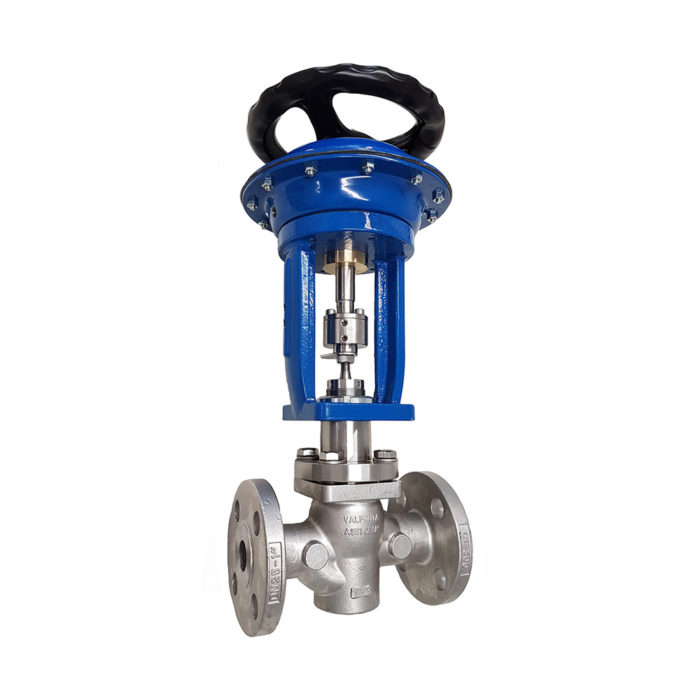 C1 control valve
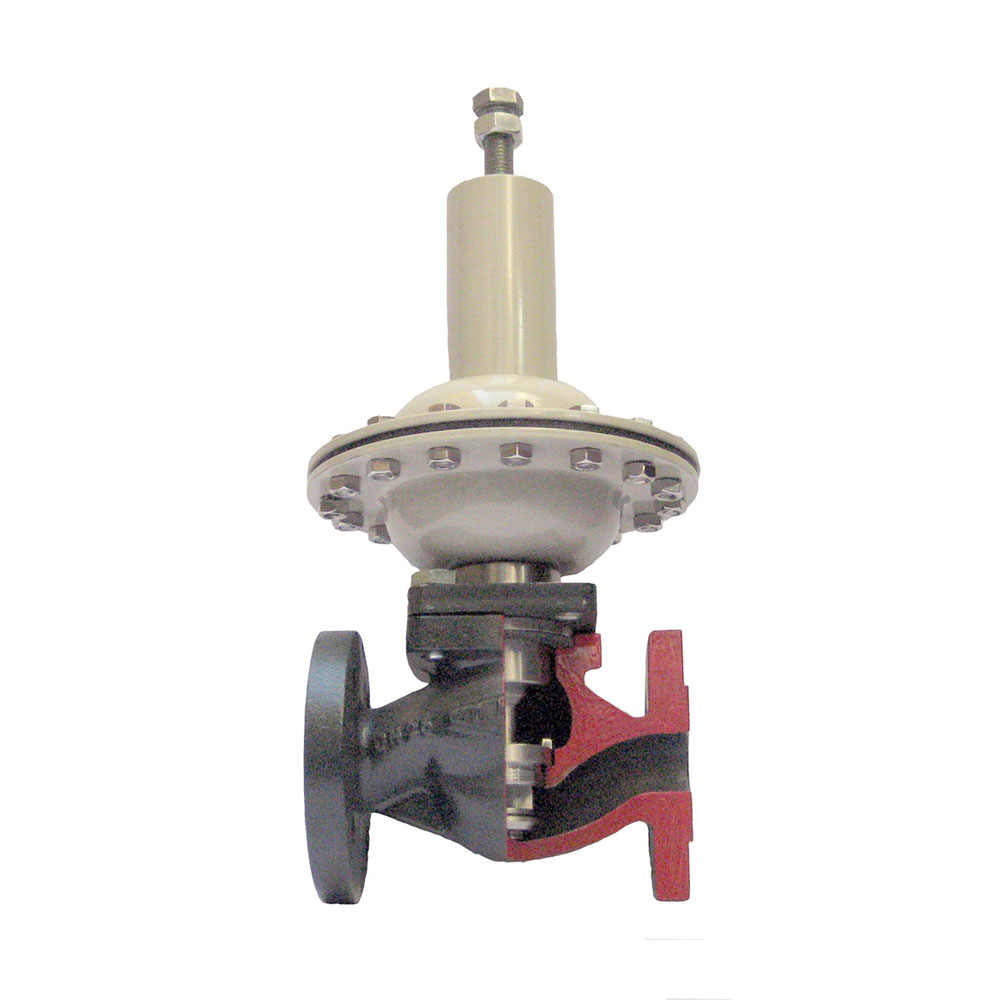 M2 diaphragm reducing valve
Related articles
Can we help with your installation?
Tell us the fluid, the inlet and outlet pressures, the temperature, and the flow rate, and we will recommend the right valve.
You can also call 933 720 888 or email valfonta@valfonta.com.