


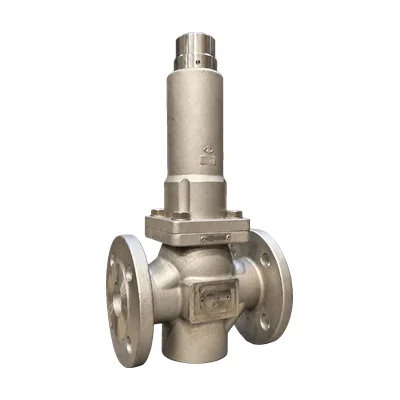

What is a steam pressure reducing valve?
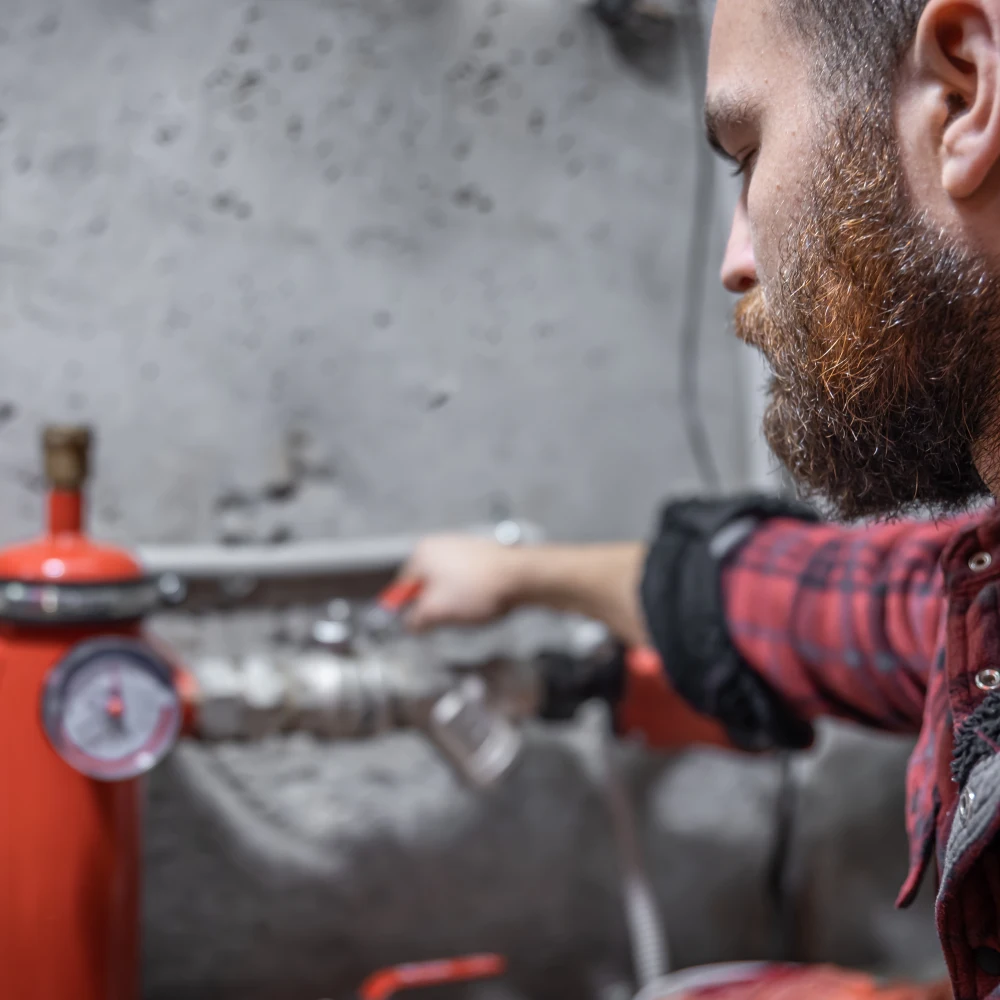
Article contents
Characteristics and special features of this type of valve
A steam pressure reducing valve is an essential component in steam systems, designed to regulate steam pressure to a safe, constant level.
By automatically adjusting the steam flow in response to changes in outlet pressure, these valves protect equipment, ensure operational efficiency, and maintain optimal working conditions.
Their use is critical in industries that rely on steam for heating, industrial processes, or power generation, ensuring system safety and reliability.
At Valfonta, we have been manufacturing a range of steam pressure reducing valves for many years. Thanks to our extensive experience, we know we can guarantee the quality of our products, so that customers get an optimal solution for all types of fluids, whether steam, liquids, or gases.
Likewise, we are committed to innovation and technological development, which for years has shaped our growth and the way we work.
Materials, sizes, and connections
Stainless steel pressure reducing valves are specially designed to reduce or modulate the pressure in a pipe or system. Adjusting a steam pressure reducing valve requires certain materials and items, which you can find on our website.
They are self-operated or direct-acting valves that need no auxiliary energy, and they can also be used for flow modulation or as an overpressure valve. Our catalog shows the different sizes available, as well as the materials used and the types of connections required.
How steam pressure reducing valves work
For the most basic pressure reduction, a simple globe valve held in a fixed, partially open position can be used. An orifice plate can also be inserted in the steam flow so that it never closes completely.
However, any fluctuation that alters the flow would be accompanied by a corresponding change in pressure. To prevent this, pressure reducing valves (PRVs) can be used to provide more precise pressure control. The valve opening is adjusted automatically so that the pressure remains unchanged, even when certain fluctuations occur.
Pressure reducing valves, also known as pressure regulating valves, are hydraulic control valves whose main function is to reduce a high pressure upstream of the valve, obtaining a constant, lower value downstream of it.
All of this regardless of the pressure variations obtained and the changes that have occurred or may occur.
The pressure reducing valve is actuated when the valve gate closes upon sensing that the upstream pressure is being transmitted fully and completely to the upper chamber located inside it.
This is achieved by closing the manual valve located on the control circuit between the pilot and P2.
Types of pressure reducing and pressure regulating valves
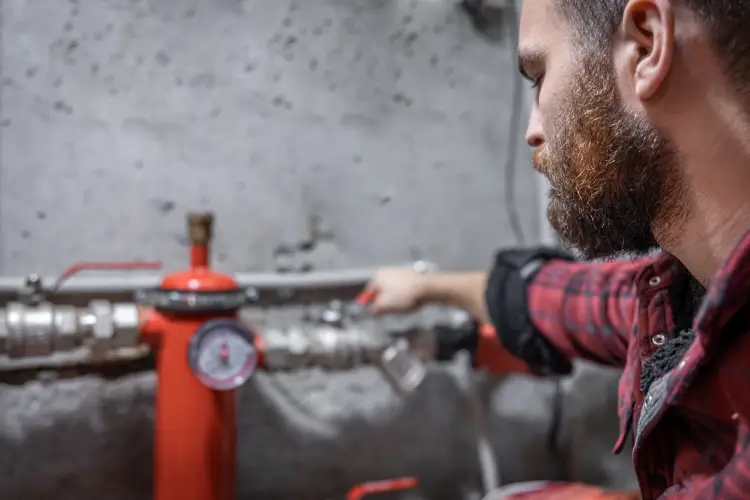
Direct-acting pressure reducing valves:
They can be installed in any position (they are compact and lightweight). This category includes various bellows reducing valves, other self-operated valves, and even self-balanced ones.
Pressure reducing valves with built-in separator and steam trap:
They provide dry steam or air at a stable secondary pressure, which improves product quality and heating efficiency. The opening and closing of the pilot valve are controlled by the balance between the force of the adjusting spring and the secondary pressure obtained.
Pressure reducing valves without separator or steam trap:
These are for general use. Depending on the type of model used, the set point is set locally or remotely.
What it does and why it pays to reduce pressure at the point of use
Pressure reduction is a thermodynamic transformation process that makes it possible to adjust and stabilize the downstream pressure of the process fluid. The reducing valve is the device that performs this adjustment: it keeps the downstream steam pressure constant at the desired value precisely and reliably, even when the inlet pressure or the line demand varies.
When the system is well designed and distributes dry saturated steam at high pressure, reducing the pressure at the point of use simplifies the installation and reduces costs. A clear example: under saturation conditions, steam pressure and temperature are correlated, so controlling the pressure is enough and no additional equipment is needed to control the temperature.
Operating principle: spring, diaphragm, and reduced pressure
An automatic steam reducing valve works by continuously comparing the reduced pressure with the opposing force of a counteracting spring. When the downstream pressure deviates from the set value, the system automatically intervenes to restore it, acting on an elastic element (a diaphragm or membrane) that controls the opening of the plug.
This control can be exercised directly or indirectly through a pilot valve, and that is precisely the difference between the two main design principles discussed below. The set point is adjusted on the spring force by means of the adjusting screw.
Direct-acting vs. pilot-operated valves
In a direct-acting reducing valve, also called self-operated, the diaphragm acts directly on the plug. It is the simplest, most robust, and most economical solution, needs no auxiliary energy, and is ideal for most steam installations. It is easy to adjust, and many models can be mounted in any position.
In a servo-controlled or pilot-operated reducing valve, a pilot valve amplifies the pressure signal and actuates the main plug. It gains precision and responsiveness when flow rates are high or the pressure drop is large, at the cost of greater mechanical and maintenance complexity. The choice between the two depends on the flow rate, the pressure drop, and the precision the process requires. As a rule of thumb, if the installation works well with a direct-acting valve, there is no reason to complicate it: the simplest solution that does the job is almost always the most reliable in the long run.
Valves operated by a pneumatic or electric actuator
These valves must be operated externally by compressed air or electricity. In return, they allow the regulation to be integrated into the plant control system, the set point to be changed remotely, and more complex control strategies to be handled. They are the right choice when the process requires automation, data logging, or coordination with other system variables.
What good pressure reduction delivers
A properly sized reducing valve must always guarantee enough flow to cover the maximum required under the expected operating conditions, even the most unfavorable ones. When demand peaks occur, the valve throttles the steam flow to non-critical users to maintain a steady, risk-free supply, both at the boiler and in the lines serving critical users.
The benefits of well-designed pressure reduction can be felt throughout the plant: each piece of equipment operates at the pressure it was designed for, the risk of overpressure is reduced, the service life of the installations is extended, and unnecessary steam consumption is avoided. In a network where the boiler distributes at high pressure and the consumers need very different values, the reducing valve is what allows them all to share the same line.
This function should not be confused with that of the relief valve. The reducing valve continuously regulates the downstream pressure; the relief valve is a protective device that discharges fluid when a limit is exceeded to safeguard the integrity of the equipment. They are complementary, not interchangeable, functions: many steam installations have both, each playing its own role.
Sizing and selection criteria
Getting the calculation right is what makes the difference between stable regulation and a problematic installation. The parameters to define are:
Inlet pressure and desired outlet pressure, to check the regulation range and the pressure drop.
Maximum steam flow required under the most unfavorable expected conditions.
Kv coefficient required, which determines the valve size.
Operating temperature and steam quality (ideally, dry saturated steam).
Connection type and materials of the body and gaskets according to the service.
It is also advisable to review the whole assembly, not just the valve: a strainer that traps particles before the inlet, condensate drainage handled upstream, and a downstream pressure gauge to verify the setting. These are low-cost components that prevent most regulation problems and significantly extend the service life of the seat and the plug.
Incorrect sizing is the most common cause of instability: an oversized valve barely regulates at low loads and causes oscillations, while an undersized one fails to deliver the required flow at demand peaks.
Common mistakes (and how to avoid them)
In steam reducing valves, failure almost always starts with sizing. Choosing the line size (DN) instead of calculating by Kv/Cv leaves the valve oversized: it will operate almost closed, vibrate, cavitate, and “hunt” at any change in flow.
The solution is to start from real data (Qmin–Qmax, P1, P2, ΔP, T, density) and select the Kv/Cv that places the valve in its stable control range. Equally critical is leaving out the strainer and the separator: entrained particles and condensate erode the seat/plug, cause leaks, and destabilize P2. A Y-strainer upstream and a separator with automatic drainage before the reducing valve protect the equipment and smooth out the regulation.
Another frequent source of problems is a poorly located pressure sensing point (too close to the outlet, or after elbows or tees), which introduces turbulent signals and causes hunting; place it on a straight run at 6–10×DN or use remote sensing where P2 really matters. Failures also occur due to materials and elastomers that are incompatible with the steam temperature/quality (NBR where PTFE/EPDM is needed, for example); always validate thermal limits and compatibility.
Finally, if the environment requires it, do not forget the ATEX marking of the assembly (valve, actuator, positioner) and its temperature class: ignoring it compromises safety and regulatory compliance.
If you have already chosen the model, our guide to installing and maintaining a steam reducing valve explains how to assemble the pressure reducing station. All models are on our pressure reducing valves page.
Which models from our catalog do we recommend?
In addition, our company also offers pressure regulating valves:
- Piston pressure regulating valve (model PRV 20): balanced by a piston, it is designed to provide a much more constant pressure.
- Self-operated pressure regulating valves (model M1): used to control steam, although also used for compressed air, certain liquids, and non-hazardous gases.
- Self-actuated pressure regulating valves: designed to work with gases at low outlet pressure, liquids, and certain gases.
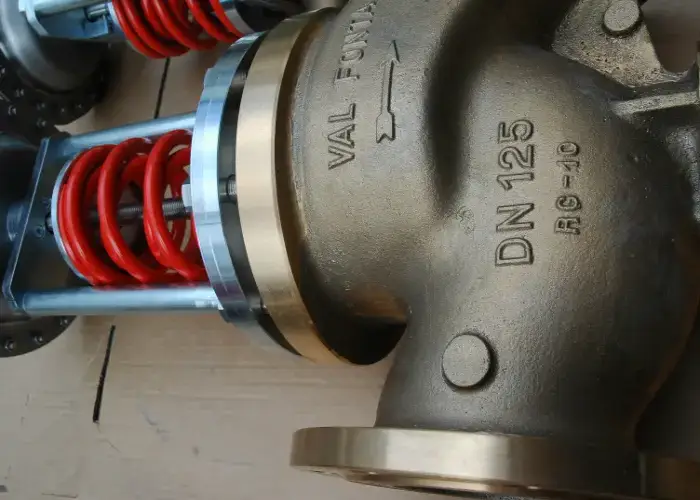
For any questions about steam pressure reducing valves, contact us
Determining which pressure valve is needed is very important to avoid greater damage. Likewise, it is essential to know what type of medium will flow through the pipe (steam, liquid, or gas). For this reason, you need to know whether the valve is operated manually or automatically in order to act one way or the other.
If you contact us, the Valfonta experts will be happy to offer you attentive, personalized service. They will also answer your questions and explain in full detail how pressure reducing valves work. Just call us at 93 3720888 or email us at valfonta@valfonta.com, and we will get back to you as soon as possible.
Advantages of pressure reducing valves
They allow full control of the incoming and outgoing pressure.
They eliminate the risk of overpressure in the consumer network.
They reduce water consumption.
They minimize noise in the installation.
They keep the outlet pressure constant regardless of inlet fluctuations.
Compact and economical.
Frequently asked questions
What is a steam pressure reducing valve used for?
It is used to adjust the downstream steam pressure and keep it constant at the desired value, regardless of variations in inlet pressure or demand. It allows each piece of equipment to receive steam at the pressure it needs, and under saturation conditions, controlling the pressure is equivalent to controlling the temperature.
What is the difference between a direct-acting and a pilot-operated reducing valve?
In a direct-acting (self-operated) valve, the diaphragm acts directly on the plug: it is simpler, more robust, and more economical, and covers most installations. In a pilot-operated or servo-controlled valve, a pilot valve actuates the main plug, which provides greater precision with high flow rates or large pressure drops, at the cost of greater complexity.
What is the difference between a self-operated valve and an actuator-operated valve?
A self-operated valve works with the energy of the fluid itself and needs no internal or external power supply. An actuator-operated valve requires compressed air or electricity, but it allows the regulation to be integrated into the plant control system and the set point to be changed remotely.
How is a steam reducing valve sized?
Based on the inlet and outlet pressure, the maximum flow required under the most unfavorable conditions, and the resulting Kv coefficient, taking into account the steam temperature and quality. The valve must guarantee the expected maximum flow without being oversized, since that would cause instability at low loads.
Which Valfonta model should I choose for a steam line?
For steam equipment, the M1 is the go-to option because it is self-operated; the M2 covers gases, liquids, and steam in the chemical and pharmaceutical industries; the PRV44 provides fine regulation with a bellows; and the PRV30 stands out when a very stable outlet pressure or special materials are required. Our technical team studies the installation and proposes the right model.
Is a reducing valve the same as a relief valve?
No. The reducing valve continuously regulates the downstream pressure to keep it at the working value. The relief valve is a protective device that discharges fluid when the pressure exceeds a limit, to safeguard the integrity of the equipment. They are complementary functions.
Which reducing valve is best for saturated vs. superheated steam?
For saturated steam, diaphragm-operated self-operated models or bellows-balanced models (e.g., M1, M2F, PRV44) offer very good stability with a separator and a water seal pot. For superheated steam, prioritize high-temperature internals and elastomers (metal seats or PTFE + EPDM/FG), and balanced options (bellows/piston) that better tolerate P1 fluctuations.
How do I size by Kv/Cv?
Start from Qmin–Qmax, P1, P2, ΔP, T, and the fluid properties. Calculate the required Kv at the critical and nominal points, check the % opening in operation (ideally 20–80%), and check for noise/cavitation. If Qmin is very low, consider a reduced trim or two valves in parallel (peak + base).
Do I always need a steam separator?
In practice, yes, when you are looking for stability and service life: the separator removes entrained water, reduces erosion and noise, and improves the response of the reducing valve. Combine it with automatic drainage and a water seal pot to protect diaphragms/pressure gauges.
What is the typical service life and maintenance?
With correct sizing and controlled steam quality, a reducing valve can last more than 10–15 years. Schedule a quarterly visual inspection (leaks, drains, strainer) and an annual overhaul (seat/plug, spring, diaphragms/bellows, set point check). Use genuine kits to maintain the leakage class and performance.
Can I use these reducing valves in ATEX areas?
Yes, as long as the assembly (valve + actuator/positioner, if applicable) is ATEX certified for the corresponding zone and temperature class, and is installed in accordance with the manufacturer’s documentation. Check the marking on the nameplate and the surface temperature limits.
Related valves
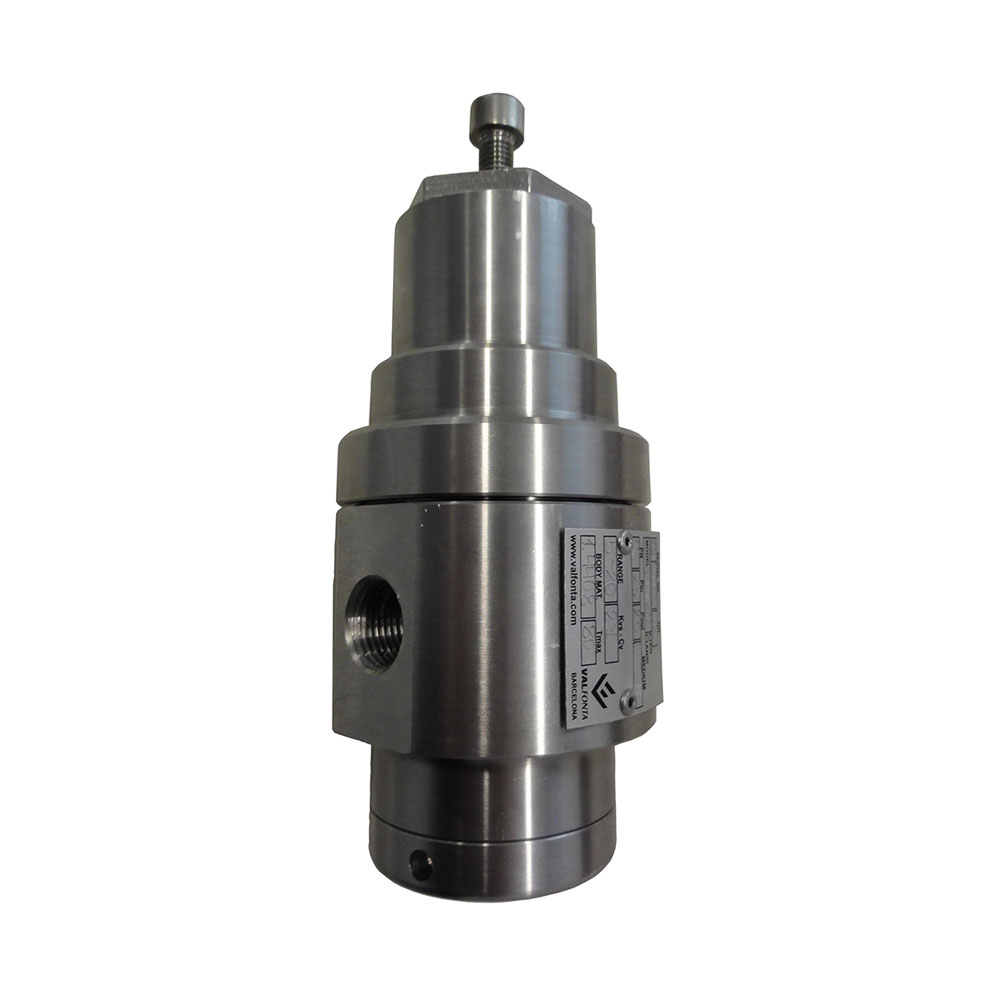 PRV20 reducing valve
Related articles

Can we help with your installation?
Tell us the fluid, the inlet and outlet pressures, the temperature, and the flow rate, and we will recommend the right valve.
You can also call 933 720 888 or email valfonta@valfonta.com.