


Control valve: types and recommendations from Valfonta
Article contents
- What is a control valve?
- Types of control valves
- Recommendations for selecting control valves
- Evaluate the specific application
- Consider the operating conditions
- Choose automatic actuators for greater precision
- Maintenance and ease of operation
- Valfonta control valve with pneumatic actuator
- Types of hydraulic control valves commonly found in today’s systems
What does Valfonta offer you?
In the management of hydraulic and pneumatic systems, control valves play a crucial role in ensuring efficiency, safety, and precise process control.
In this article we will explore the different types of control valves available on the market, detail their main industrial applications, and present our recommendations based on the experience of Valfonta, a leading company in the design and manufacture of fluid control solutions. Before deciding, it is also worth reviewing the most common mistakes with pressure control valves.
We will also highlight our control valve with pneumatic actuator, an advanced option for applications that demand high reliability and precision.
What is a control valve?
A control valve is a mechanical device designed to regulate the flow of fluids—whether liquids, gases, or steam—within a piping system.
It makes it possible to adjust key parameters such as the flow rate, pressure, or temperature of the fluid, ensuring dynamic process control according to operating conditions.
It works by changing the size of the flow opening by means of a moving element, which can be a disc, a ball, a diaphragm, or a plug, among others.
These valves are essential in industrial sectors that require a fast, precise, and safe response to changes in the system, such as:
Chemical plants
Refineries
Power facilities
Heating, ventilation, and air conditioning (HVAC) systems
Types of control valves
Globe control valves
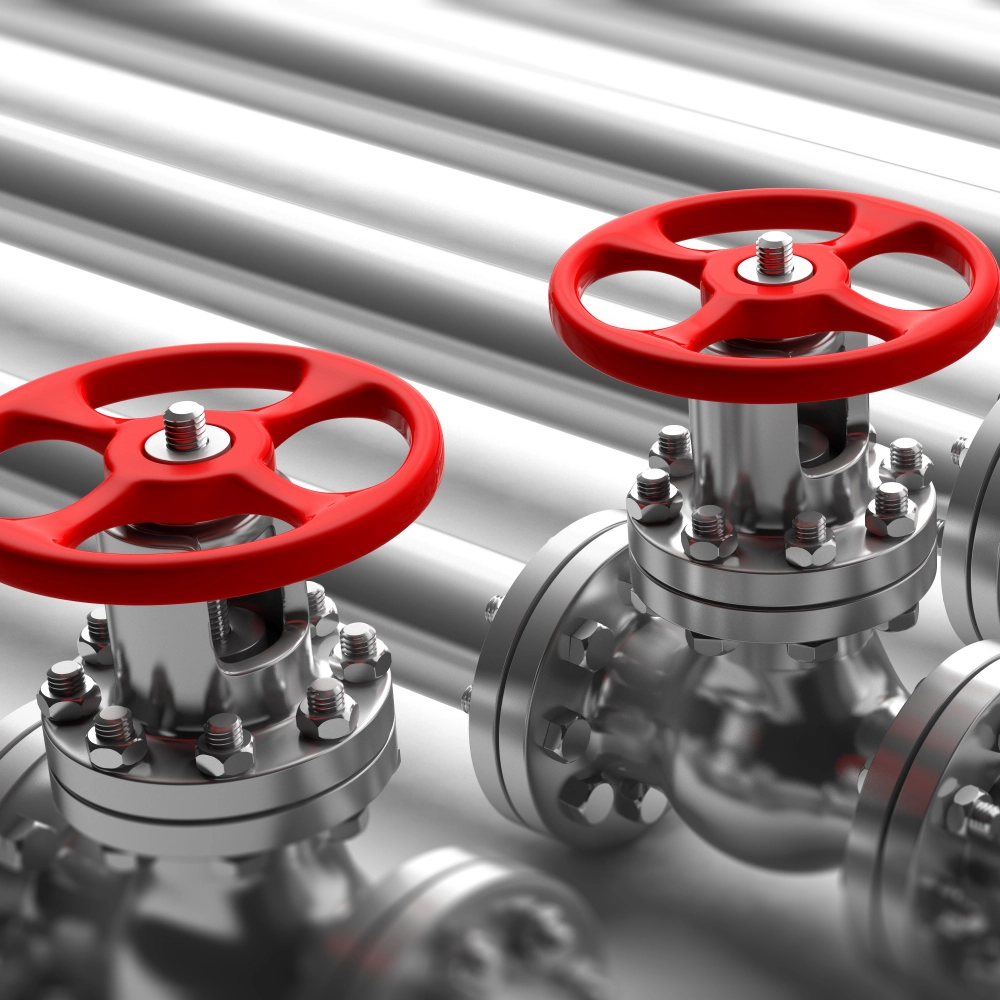
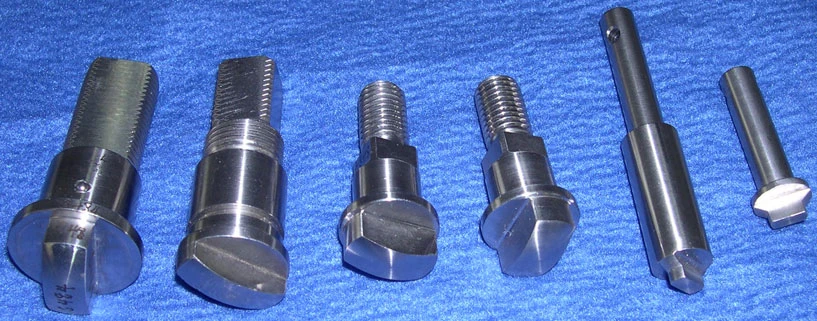
Globe valves stand out for their robust design and high precision in flow regulation. The moving plug seats on a fixed orifice, allowing fine adjustment of the flow rate.
Advantages:
- Precise control over a wide range of flow rates.
- High resistance to pressure and temperature.
Applications:
Chemical industry, refineries, high-pressure steam processes.
Butterfly control valves
With a compact, lightweight design, butterfly valves use a rotating disc to regulate the passage of fluid.
Advantages:
- Fast, simple operation.
- Low installation and maintenance costs.
Applications:
HVAC systems, water treatment plants, large-diameter pipelines.
Ball control valves
Ball valves offer excellent sealing and fast operation.
Their mechanism consists of a bored sphere that rotates to open or close the flow passage.
Advantages:
- Excellent tightness.
- Low pressure drop.
Applications:
Oil and gas, high-pressure systems, industrial fluid distribution networks.
Diaphragm control valves
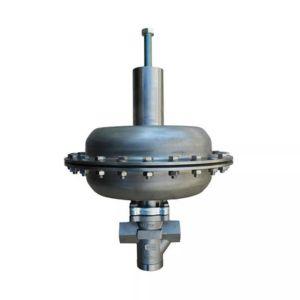
These valves use a flexible diaphragm that deforms to regulate the flow.
They are ideal for applications that require leak-free control and high fluid purity.
Advantages:
- Complete isolation between the fluid and the internal mechanisms.
High corrosion resistance.
Applications:
Pharmaceutical and food industries, processes with aggressive fluids.

Needle control valves
Designed to adjust small flow rates with great precision, needle valves are essential in processes that require meticulous control.
Advantages:
- Ultra-precise flow control.
- Ideal for low-pressure applications.
Applications:
Laboratories, dosing systems, industrial instrumentation.
Three-way control valves
They allow flows to be diverted or mixed in two different directions.
They are versatile valves for systems that require operating flexibility.
Advantages:
- They make it easy to mix or redirect fluids.
- Compact and efficient.
Applications:
Air conditioning systems, cooling and heating circuits.
Recommendations for selecting control valves
Evaluate the specific application
Each application has unique requirements that must be analyzed in detail.
It is essential to know:
- The type of fluid to be handled (liquid, gas, steam).
- The nature of the process (continuous regulation, fast opening/closing, dosing, fluid mixing).
- The special characteristics of the fluid (corrosiveness, purity, risk of solidification, etc.).
Selecting a valve suited to these conditions ensures more precise control, greater reliability, and less need for maintenance in the long term.
Consider the operating conditions
Operating pressure, process temperature, and flow velocity are parameters that directly affect the choice of valve type and construction materials.
At Valfonta we have valves designed to work:
- With pressure ratings of PN25 and PN40manual-C1-13B-ESP.
- At temperatures up to 350°C depending on the material and configuration chosenmanual-C1-13B-ESP.
The right combination of these factors maximizes the service life of the equipment and minimizes the risk of failure.
Choose automatic actuators for greater precision
In dynamic or highly demanding processes, using valves with automatic actuators (pneumatic, electric, or hydraulic) makes it possible to:
- Improve control precision.
- Adapt quickly to process variations.
- Integrate easily into automation systems.
Valfonta offers solutions with highly reliable multi-spring pneumatic actuators, such as our C1 model valve, designed for modulating or on/off servicemanual-C1-13B-ESP.
Maintenance and ease of operation
A control valve should allow simple maintenance operations to minimize plant shutdowns and service costs.
Valfonta valves, such as the C1 model:
- Feature a top entry design for quick access to the plug and the valve internalsmanual-C1-13B-ESP.
- Have genuine spare parts kits that are easy to install.
- Offer low-maintenance packing options such as PTFE or graphite V-ringsmanual-C1-13B-ESP.
Good maintenance-oriented design not only reduces downtime but also improves the overall profitability of the system.
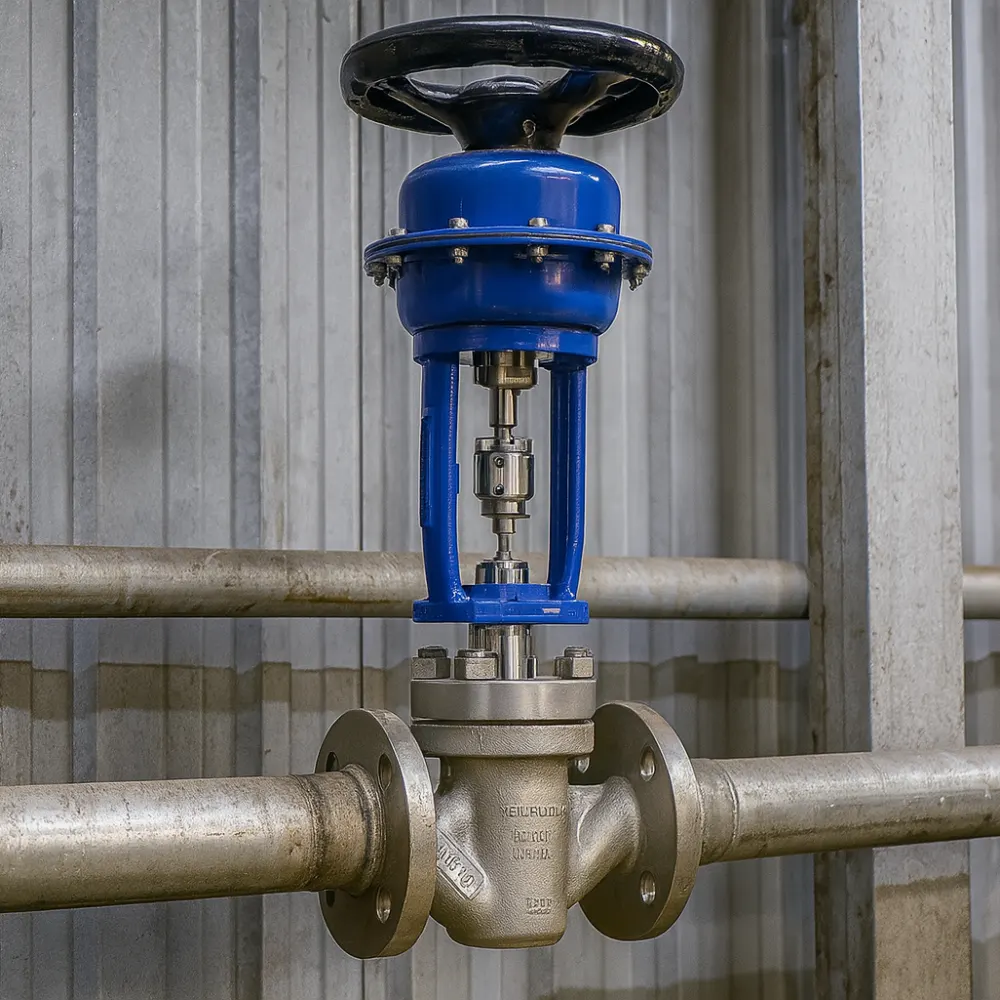
Valfonta control valve with pneumatic actuator
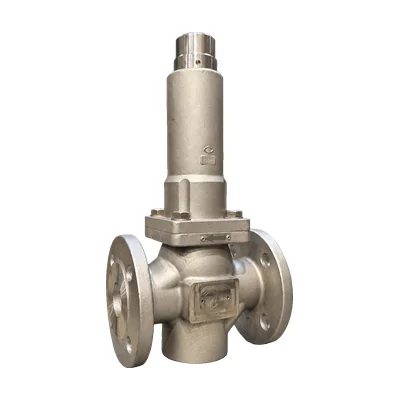
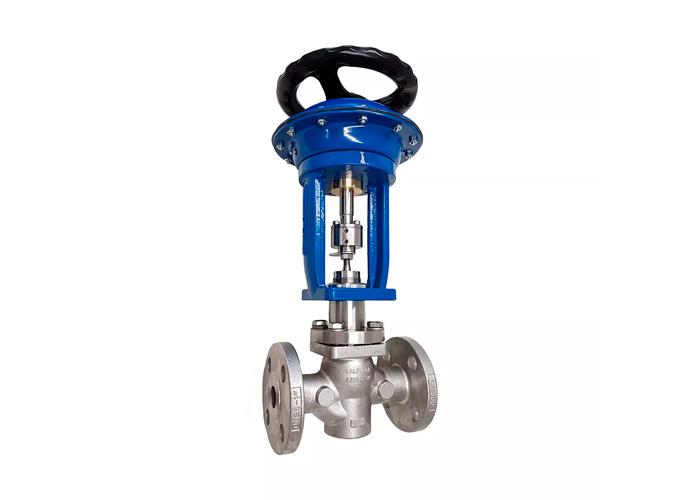
Among the most advanced solutions in our catalog is the C1 pneumatic control valve.
Main technical features:
Globe body designed for precise flow regulation.
Guided plug for greater stability and wear resistancemanual-C1-13B-ESP.
On/off or modulating service, depending on configuration.
Available materials:
- RG10 bronze
- GP240GHN carbon steel
- AISI 316 stainless steelmanual-C1-13B-ESP.
Multi-spring pneumatic actuator with optional positioner (4-20 mA)manual-C1-13B-ESP.
Electric actuator
Certifications: CE PED 2014/68/EU, ATEX zones 1 and 21manual-C1-13B-ESP.
Main benefits of this valve
High reliability under demanding conditions.
Quick on-site adjustment of the actuator stroke.
Adaptable to high-temperature or corrosive services.
Noise reduction and anti-cavitation options availablemanual-C1-13B-ESP.
Most common applications of this valve
Chemical and petrochemical industry
Power and steam generation
Pharmaceutical and food plants
Industrial air conditioning (HVAC) systems
Water and industrial fluid treatment facilities
Our experience allows us to offer valves tailored to each process, ensuring maximum efficiency, safety, and compliance with international regulations.
Types of hydraulic control valves commonly found in today’s systems
Pressure reducing valves: used to control a pressure downstream of the valve by means of a pressure transducer.
Pressure sustaining valves: Used to control a pressure upstream of the valve by means of a pressure transducer.
Flow limiting valves: The purpose of this type is to regulate the flow in the pipe, monitored by a transducer.
Cistern level controllers: using a level sensor, the capacity of a cistern can be controlled.
Elevated tank level controllers: The control valve can also be used to control the level of an elevated tank.
How do control valves work?
First of all, control valves are essential for fluid transport systems, since they make it possible to implement various safety measures intended to safeguard the integrity of the machinery and of the production process itself.
The operation of a fluid system is defined by the start, stop, and direction processes involved in handling liquids and gases.
This is where control valves make it possible to manage pressure loads, so they can have different numbers of ports depending on the functions to be controlled in an industrial environment, such as pressure, fluid mixing, or temperature.
You can see all our models on the control valves page, including the C1 control valve with pneumatic actuator.
Need personalized advice on our control valves?
Choosing and configuring a control valve correctly is a critical factor in ensuring the efficiency, safety, and reliability of any fluid system.
At Valfonta we offer you:
- A wide range of industrial control valves, designed to adapt to the most demanding environments.
- Specific solutions, such as our C1 control valve with pneumatic actuator, which combines high precision, easy integration, and low maintenancemanual-C1-13B-ESP.
- A specialized technical team to give you personalized advice at every stage of the project: selection, installation, start-up, and maintenance.
Do not hesitate to fill out our contact form to request personalized advice.
Our team will be happy to help you find the valve that best suits the needs of your industrial installation.
Frequently asked questions
What is a control valve?
A control valve is a device used to regulate the flow, pressure, or temperature of a fluid within a piping system. It works by adjusting the opening of its internal passage, which allows precise control of the fluid.
What are the main types of control valves?
The main types include globe, butterfly, and ball valves, pressure reducing valves, pressure sustaining valves, flow limiting valves, and level controllers for cisterns and elevated tanks.
What factors should be considered when selecting a control valve?
It is crucial to consider resistance to the fluid’s temperature and pressure, the right size for the flow rate, and the ability to withstand erosion or corrosion.
What types of control valves does Valfonta design and manufacture?
Valfonta specializes in pressure reducing and pressure relief valves, and also designs control valves with pneumatic actuators and custom valves for different sectors.
How can I know which control valve is right for my system?
If you are unsure which type of control valve is best for your installation, we recommend contacting us directly for personalized advice.
Related valves
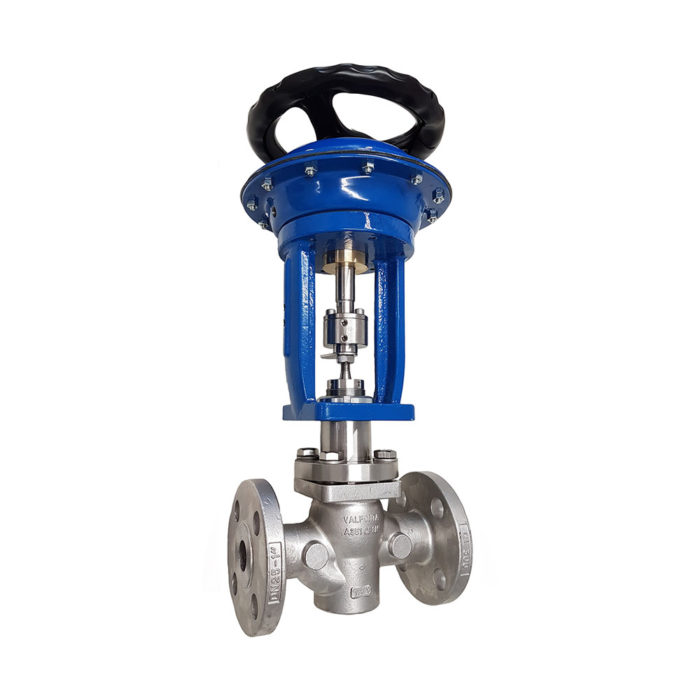 C1 control valve
 Custom valve design
Related articles

Can we help with your installation?
Tell us the fluid, the inlet and outlet pressures, the temperature, and the flow rate, and we will recommend the right valve.
You can also call 933 720 888 or email valfonta@valfonta.com.