


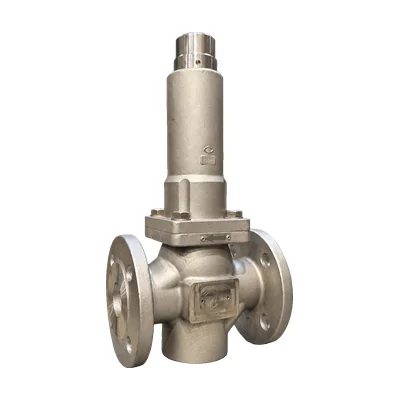

How to choose the right relief valve for your industrial system
Article contents
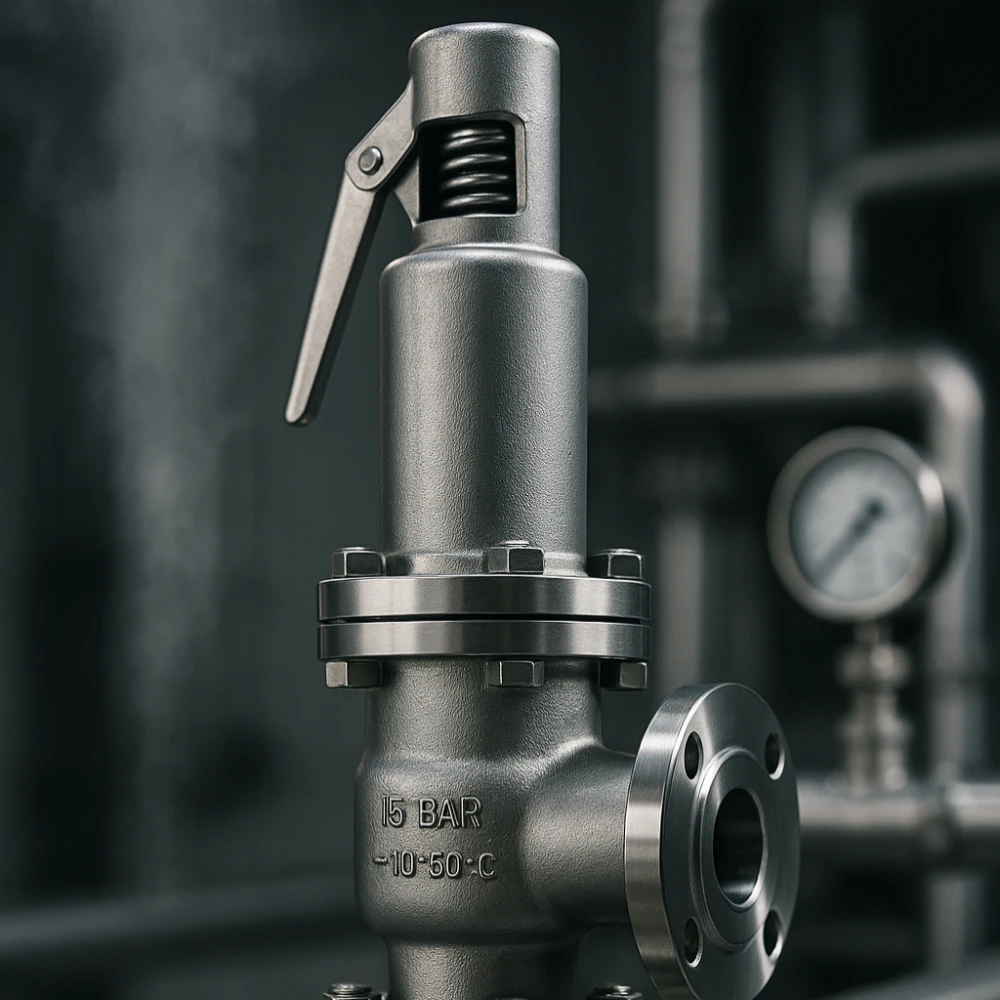
Selecting the right pressure relief valve is a critical factor in any industrial installation that handles fluids under pressure.
These valves protect equipment, people, and processes against unwanted pressure increases, ensuring the stability and proper operation of the system.
In this article, we will take a detailed look at how these valves work, what factors you should consider when choosing the most suitable model, and what solutions Valfonta offers for different industrial sectors.
What is a pressure relief valve?
A pressure relief valve is a device designed to open automatically when the pressure in a system exceeds a preset pressure, allowing the controlled release of fluid and preventing structural damage or accidents.
Its main function is to protect the system against overpressure that could compromise the integrity of pipes, vessels, pumps, or other critical components. Although they are often confused, relief valves and safety valves serve different functions.
While safety valves are designed to open immediately in extreme emergency situations, relief valves respond progressively to small pressure increases, providing more precise control and preventing sudden fluctuations in the system.
These valves are essential in industries such as chemicals, food, energy, and pharmaceuticals, where pressure control is vital for production processes to run correctly.
How does a pressure relief valve work?
The operating principle of a pressure relief valve is simple yet highly effective. Normally, the valve remains closed as long as the system pressure stays below the defined set point. When the inlet pressure exceeds this limit, the force of the fluid overcomes the resistance of the internal spring or actuator, causing the plug to open progressively.
This movement allows part of the fluid to escape, thereby reducing the pressure in the line until normal conditions are restored. Once equilibrium is restored, the spring returns the plug to its original position and the valve closes automatically.
In Valfonta models, such as the S1 or S2 excess pressure valves and the S3 relief valves, this operation is achieved through highly sensitive self-operated systems capable of working with steam, compressed air, inert gases, or liquids, ensuring effective control over a wide range of pressures and temperatures.
Key factors in choosing a relief valve
Fluid type
The first fundamental criterion is the type of fluid that will flow through the valve. Not all models are suitable for every medium.
Valfonta relief valves are designed to work with:
- Steam
- Compressed air
- Inert gases
- Industrial liquids.
For example, for high-temperature steam, you will need a model that can withstand those extreme thermal conditions, such as the S3.
For corrosive fluids, it may be advisable to choose valves made of AISI 316L stainless steel.
Working pressure range
Each valve has a specific pressure range within which it can operate safely and effectively. It is essential to know both the normal working pressure and the pressure peaks that may occur.
Examples of regulation ranges in Valfonta products:
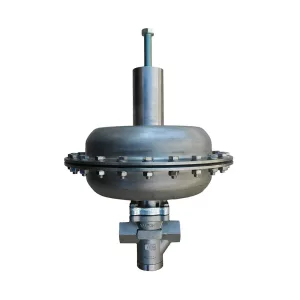
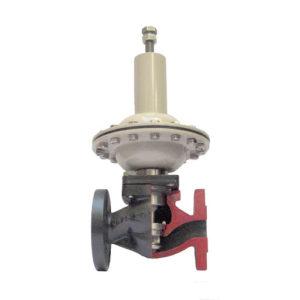
- Model S1: from 0.1 to 15 barg.
- Model S2: from 0.02 to 10 barg.
Model PRV53: from 0.5 to 10 barg. - Model PRV55: from 0.01 to 8 barg.
Selecting a model that operates within the right range extends the service life of the valve and improves the safety of the entire system.
Operating temperature
Fluid temperature is another critical parameter.
Each diaphragm and gasket material has a safe operating temperature limit:
- NBR: -20ºC to 80ºC
- EPDM: -40ºC to 125ºC
- PTFE: up to 220ºC.
In steam or very hot fluid applications, you must make sure that both the body and the internal components of the valve can withstand the expected temperature.
Construction materials
The materials of the body and internal components will determine the valve’s resistance to corrosion, pressure, and temperature.
At Valfonta we use materials such as:
- RG10 bronze
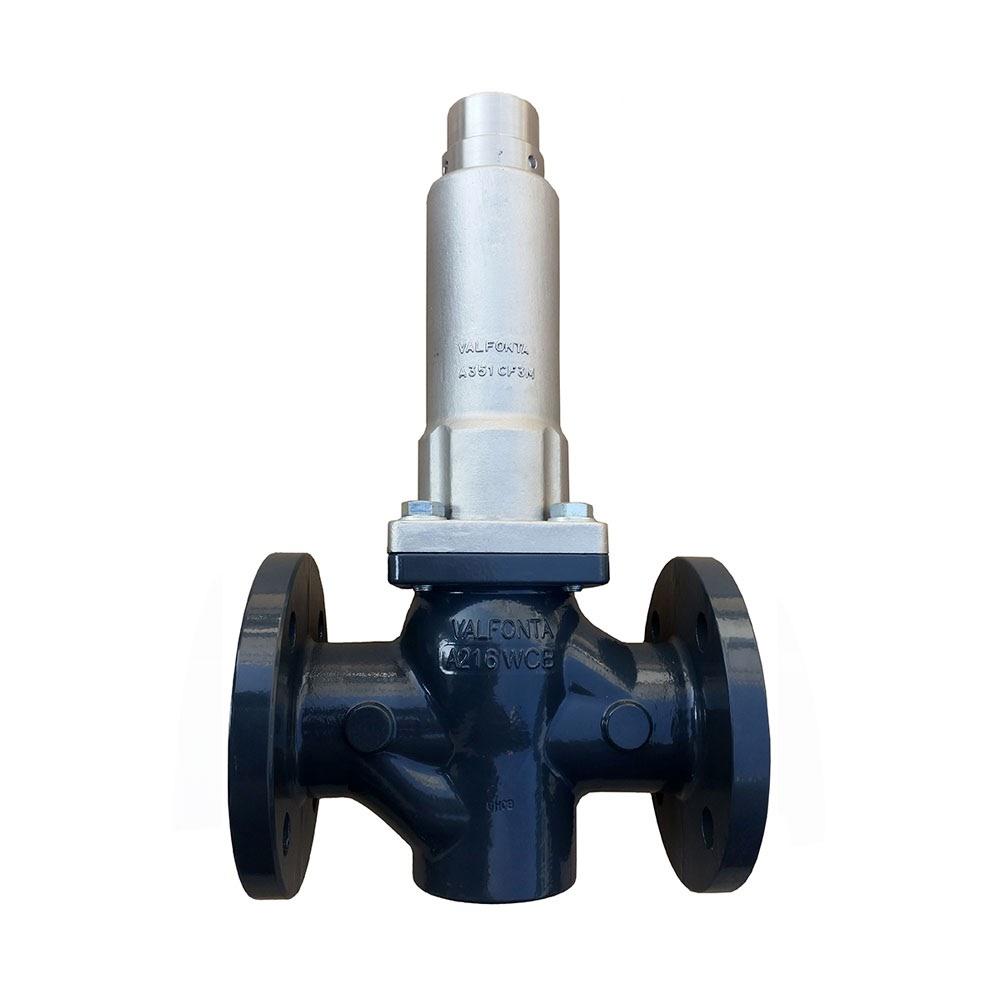
A216 WCB carbon steel - A351 CF3M stainless steel.
- Duplex or super duplex (on request)
For demanding environments or aggressive fluids, we recommend choosing versions made entirely of stainless steel.
Connections and regulations
Another aspect to consider is the valve’s connections:
- DIN PN16–PN40 flanges
- ANSI 150/300 flanges
- BSP or NPT threads.
It is also essential that the valves comply with current European regulations such as the Pressure Equipment Directive PED 2014/68/EU and, where applicable, ATEX certification for explosive atmospheres.
Types of Valfonta pressure relief valves
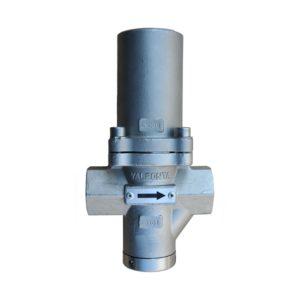
At Valfonta we offer a complete range of pressure relief valves to meet the needs of different industrial sectors. Each model is designed for specific fluid types, pressure ranges, and temperatures. Below is a summary of our most popular models:
| Model | Main features | Recommended applications |
|---|---|---|
| S1 | Self-operated. For steam, air, gases, and liquids. Pressure range from 0.1 to 15 barg. Made of carbon steel or stainless steel. | General industrial systems, steam, and compressed air. |
| S2 | Self-operated. Pressure range from 0.02 to 10 barg. Excellent response to overpressure. | Steam, inert gas, and liquid installations. |
| S3 | High thermal resistance. Handles fluids up to 220 °C. Pressure range from 0.5 to 20 barg. Guided plug. | Steam, chemical, and food applications. |
| PRV53 | Compact valve, easy to install. Inlet pressure up to 10 bar. Stainless steel materials. | Compressed air, nitrogen, water, and inert gases. |
| PRV54 | High thermal resistance up to 210 °C. Bellows-balanced. Wide pressure range (0.5–8 barg). | Steam processes, chemical laboratories. |
| PRV55 | Up to 25 barg maximum pressure. Robust design. Working temperature from −10 to 150 °C, with Viton gaskets. | Sanitary plants, steam, industrial gases. |
In addition, all our models can be supplied with different sealing options (NBR, EPDM, PTFE, FKM) and connections to the most demanding industrial standards (DIN, ANSI, BSP, NPT).
Each product datasheet is available on our website so you can review all the detailed specifications, or you can contact our technical department directly for advice on the most suitable choice.
Pressure relief (or pressure-relieving) devices: which model to choose
Valfonta pressure relief devices (PRV54, PRV55, S1, S2, and S3) maintain upstream pressure and discharge the excess proportionally. To choose between them, first look at three data points:
- Set pressure. From 0.01 barg with the PRV55 and from 0.02 barg with the S2, up to 20 barg with the S3.
- Size. The PRV54 and PRV55 range from DN15 to DN25; the S2 goes up to DN100, and the S1 and S3 up to DN150 (on the S3, DN125 and DN150 on request).
- Fluid and temperature. With steam, the S1 and S3 work up to 220 °C and the PRV54 up to 210 °C.
If what you need is to protect equipment against overpressure, you need a safety valve, not a relief valve. You will find the full comparison of the range on our relief and excess pressure valves page.
Installation and maintenance tips
Prior cleaning of the circuit
Before installing the valve, it is essential to thoroughly clean the inside of the pipes to remove solid particles or impurities that could damage the internal components.
Strainer installation
We recommend installing a strainer upstream of the valve to protect the seat and plug from solids carried by the fluid.
Horizontal mounting
Valfonta pressure relief valves must be installed in horizontal pipes, following the flow direction indicated by the arrow on the body.
Avoid mechanical stress
Pipe supports should be located as close as possible to the flanges, so that no weight or stress is placed on the valve or the actuator.
Proper control connection
On models that require an external pressure sensing point (such as the S1), it must be installed at least 1 meter from the valve, using suitable tubing.
Overheating protection
In steam or hot liquid systems, it may be necessary to install a condensate water seal pot to protect the diaphragm.
Periodic inspection
Although Valfonta relief valves require little maintenance, regular inspections are recommended to check for leaks, plug wear, or diaphragm deformation.
Set point calibration
If deviations in the opening pressure are detected, it is important to recalibrate the valve following the manufacturer’s instructions, adjusting the adjusting nut or screw.
Preventive component replacement
Under extreme conditions or intensive use, it may be advisable to replace gaskets and diaphragms after a certain number of opening/closing cycles, always using genuine spare parts kits.
Proper storage
If the valve is not installed immediately, store it in a dry place, protected from moisture, dirt, and extreme temperatures.

Relief valve start-up
To start operating a relief valve, careful steps must be followed to avoid problems such as water hammer, which can damage the system and the valve. Below are the basic start-up steps:
Slow opening of shutoff valves
It is advisable to open the shutoff valves gradually. This prevents sudden pressure changes that could damage the valve and other system components.
Pressure adjustment
Once installed, the outlet pressure of the valve is regulated by turning the control screw. Turning it clockwise increases the pressure, and turning it counterclockwise reduces it. This adjustment makes it possible to calibrate the valve to the needs of the system, ensuring that it stays within the established safety limits.
Benefits of properly adjusting the relief valve
These benefits make adjusting a relief valve an essential practice in any system that requires precise pressure control.
If you already know what your installation needs, see our range of pressure relief valves or the datasheet for the S3 pressure relief valve.
Frequently asked questions
What happens if a relief valve is not installed in a pressurized system?
Without a relief valve, a system can suffer uncontrolled overpressure. This can lead to serious damage to pipes, vessels, pumps, or other equipment, as well as posing a risk to people’s safety.
A relief valve acts as passive insurance: it remains closed under normal conditions and is activated only when necessary, preventing costly or even fatal accidents.
What is the difference between a relief valve and a safety valve?
Although both devices protect against overpressure, there are important differences between them:
- Relief valve: Opens progressively in response to a controlled pressure increase. Ideal for processes that require finer regulation.
- Safety valve: Designed to open quickly and fully in extreme overpressure situations, as an emergency measure.
In many cases, both types must be installed together to ensure complete protection.
How do you adjust the opening pressure of a relief valve?
The opening pressure is normally adjusted using an adjusting screw or nut located on the upper actuator of the valve.
Turning it clockwise increases the set pressure; turning it counterclockwise reduces it.
It is essential to carry out this operation carefully and, if possible, following the specific instructions for each model.
How often should a relief valve be inspected or serviced?
Although Valfonta pressure relief valves require little maintenance, a preventive inspection at least once a year is recommended, especially in critical systems or under intensive operating conditions.
The inspection should check:
- Condition of the plug and seat
Diaphragms and gaskets
Proper operation of the adjustment mechanism
Possible leaks or dirt buildup
Proper maintenance ensures correct operation and extends the service life of the valve.
Related valves
Related articles

Can we help with your installation?
Tell us the fluid, the inlet and outlet pressures, the temperature, and the flow rate, and we will recommend the right valve.
You can also call 933 720 888 or email valfonta@valfonta.com.