


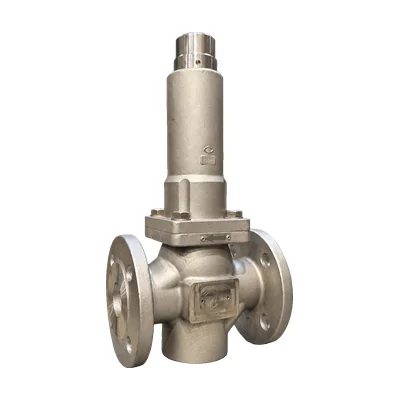

What is the difference between a safety valve and a pressure relief valve?

Article contents
Although the two terms are often used interchangeably in industry, there is a fundamental technical distinction between them. The main difference lies in the opening mechanism and the type of fluid they are designed for.
In short: a safety valve is designed to pop open and release a large amount of fluid immediately (usually gases or steam) to prevent an explosion. A relief valve, by contrast, opens gradually and in proportion to the pressure rise (usually for liquids) to keep the system stable without damaging it.
Understanding this difference is vital not only for plant efficiency but also for operator safety and equipment integrity. Below, we break down each concept from a technical standpoint.
Technical definitions: what is what?
To choose the right protection device, we first need to understand how each one works internally. At Valfonta we manufacture both types, and the wrong choice can lead to system failures or safety risks. We review all the options in our guide to pressure relief devices.
Pressure relief valve
A pressure relief valve is a proportional-action device. It is designed mainly for systems with incompressible fluids, that is, liquids such as water, thermal oils, or fuels.
Unlike a safety valve, it opens gradually. When the pressure exceeds the set limit, the valve disc begins to lift slightly. If the pressure keeps rising, the valve opens further; if the pressure stabilizes, the valve stops opening. It does not discharge all the fluid at once, only the amount needed to bring the pressure back to a safe level. With liquids, this is crucial to avoid the destructive “water hammer” that would occur if the flow were shut off or opened suddenly.
- Main purpose: Process control and protection of components (pumps, piping).
- Behavior: Modulating and controlled.
Safety valve
A safety valve is a fast-acting or “sudden-opening” device (pop action). It is designed specifically for service with compressible fluids, such as steam, compressed air, or technical gases.
It works in a binary way: when the internal system pressure reaches the set point (set pressure), the valve does not open little by little. Instead, it opens fully (to 100% of its lift capacity) almost instantly. That is why this value must be checked periodically: we explain it in why you should audit the set pressure of relief valves.
This makes it possible to discharge a large mass of gas in the shortest possible time, reducing the pressure drastically and preventing the vessel or pipe from bursting.
- Main purpose: Ultimate safety (protection of life and critical equipment).
- Behavior: On/off.
The 3 main differences between safety and relief valves
Beyond their definitions, three technical factors clearly set these two valves apart. Understanding these nuances will help you determine which one your installation needs.
1. Fluid type: compressible vs. incompressible
This is the golden rule. Safety valves are used almost exclusively with gases and steam (compressible fluids). This is because gases, as they build up pressure, store an enormous amount of energy that can be explosive.
Relief valves, by contrast, are used with liquids (incompressible fluids). Liquids do not compress in the same way, so the pressure rise is due more to pumping force or thermal expansion than to compression of the volume, which calls for gentler handling.
2. Opening mechanism: pop vs. proportional
The safety valve is designed to open fully as soon as the set pressure is reached. It has no “in-between positions”; it aims to release the maximum amount of mass in the shortest possible time to prevent a disaster.
The relief valve, on the other hand, operates proportionally. It opens gradually as the pressure rises above the set pressure. If the pressure rises 10%, the valve opens 10%. This avoids sudden changes that could damage the piping (water hammer) in hydraulic systems.
3. The reseat point (closing)
Once the pressure has dropped to a safe level, the safety valve closes again, but it usually does so at a pressure significantly lower than the opening pressure (this is known as blowdown) to prevent the valve from “chattering,” or opening and closing repeatedly in rapid succession.
The relief valve tends to close as soon as the pressure returns to the set level, acting more like a limit regulator than an emergency discharge device.
Quick comparison table: safety valve vs. relief valve
To make quick selection easier, we have summarized the technical characteristics of both devices in the following table:
| Characteristic | Safety valve | Relief valve |
|---|---|---|
| Main fluid | Gases, steam, air | Liquids, water, oil |
| Opening type | Sudden / Instantaneous (Pop action) | Gradual / Proportional |
| Purpose | Safety against explosion or critical failure | Overpressure control and stability |
| Prevention | Prevents the vessel from bursting | Prevents damage to pumps and piping |
| Example of use | Steam boilers, reactors, gas tanks | Hydraulic circuits, fuel lines |
When to use each valve: application examples
Understanding the theory is important, but seeing how these devices behave in real-world situations is what makes the difference when designing a safe installation. Here we look at the most common scenarios for each type.
Use cases for a pressure relief valve
Here the goal is to protect the machinery (pumps, piping) and keep the process running without sudden interruptions.
Liquid pumping systems: Imagine a pump driving water or oil through a pipe when, suddenly, a downstream shutoff valve closes. The pump would keep pushing, raising the pressure until the pipe bursts or the motor burns out. This is where a relief valve is installed in a bypass: as the pressure rises, it opens gradually and recirculates the liquid back to the tank or to the pump suction. If what needs protecting is the tank itself against overpressure or vacuum, atmospheric valves such as the ALPER are used.
Hydraulic and lubrication circuits: In heavy machinery, when a cylinder reaches the end of its stroke, the oil pressure rises. The relief valve lets the oil flow back to the tank, keeping the pressure stable and preventing damage to the seals.
Fuel lines: To prevent overpressure caused by thermal expansion (if fuel trapped in a section of pipe heats up), a small relief valve releases the small amount of liquid needed to relieve the stress.
Use cases for a safety valve
Remember that here we are looking for an immediate reaction to prevent a catastrophic failure in vessels that contain stored energy (compressed gases or steam).
Steam boilers: This is the textbook example. If the steam pressure exceeds the boiler’s design limit, the safety valve “pops,” opening to 100%. This discharges the steam instantly to keep the boiler from exploding. For boilers and steam or hot water tanks, Valfonta manufactures the JAS boiler safety valve, with instantaneous full opening.
Compressors and air receivers: In a compressed air tank, if the pressure switch fails and the compressor keeps pumping in air, the pressure will rise dangerously. The safety valve acts as the last line of defense, releasing the excess air all at once.
Chemical reactors (gas phase): In exothermic processes that generate gas rapidly, a valve is needed that can evacuate that volume of gas as fast as it is generated in order to maintain the integrity of the reactor.
See our ranges of pressure relief valves and safety valves, or the datasheet for the S3 pressure relief valve.
Do you need personalized advice from our engineers?
Choosing between a safety valve and a relief valve is not just a matter of terminology, but of operational safety and efficiency.
Mistaking a gas application for a liquid one can have serious consequences for your installation.
At Valfonta, we manufacture and distribute both solutions, complying with current regulations and adapting to the specific needs of your fluid, pressure, and temperature.
If you are unsure which model to install on your steam, gas, or liquid line, don’t take chances.
Contact our technical team for a customized study and to ensure optimal protection of your equipment.

Frequently asked questions
Can I use a safety valve for water or other liquids?
It is not recommended. If you use a sudden-opening safety valve in a water system, the massive, sudden flow when it pops open can cause violent “water hammer.” This creates shock waves that can break pipes and supports. For liquids, a proportional-opening relief valve is always preferable.
Are the terms safety and relief interchangeable?
Colloquially, many technicians use them interchangeably. From a regulatory and engineering standpoint, however, they are not. A safety valve has fast-opening characteristics certified for gases, while a relief valve has a gradual-opening characteristic for liquids.
What is set pressure?
It is the exact pressure point at which the valve is set to begin opening. In safety valves, full opening occurs almost immediately after this point is exceeded. In relief valves, full opening requires additional overpressure (generally 10% or 25% above the set pressure).
What is a safety relief valve?
It is a hybrid term used to describe a versatile valve that can work either way depending on the application. It generally refers to a valve that opens rapidly (safety type) when used with gases, but can also open proportionally (relief type) when installed in a liquid system.
Does the valve close at exactly the same pressure at which it opened?
In relief valves, yes; they tend to close as soon as the pressure drops to the set level (set point). In safety valves, no; they need the pressure to fall significantly below the opening pressure (a margin known as blowdown or reseating differential) to ensure tight shutoff and to keep the valve from “chattering” or vibrating unstably.
Where should the fluid released by each valve be discharged?
Because the safety valve releases toxic or hot fluid at high velocity, its outlet must always be routed to a safe location (such as a vent header or the atmosphere) where there is no backpressure to affect its popping. The relief valve, being part of process control, usually discharges the liquid through a return line to the storage tank or to the pump suction, recirculating the fluid without losing it.
Related valves
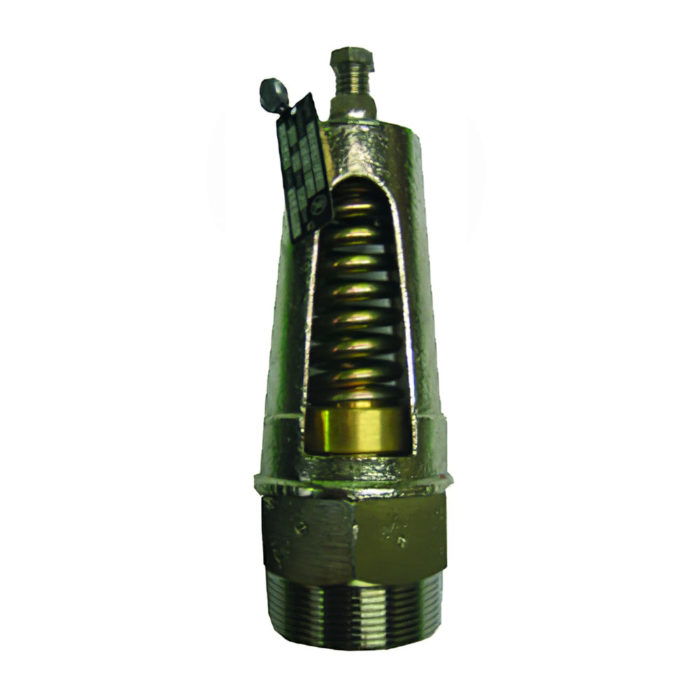 368–371 safety valve
Related articles

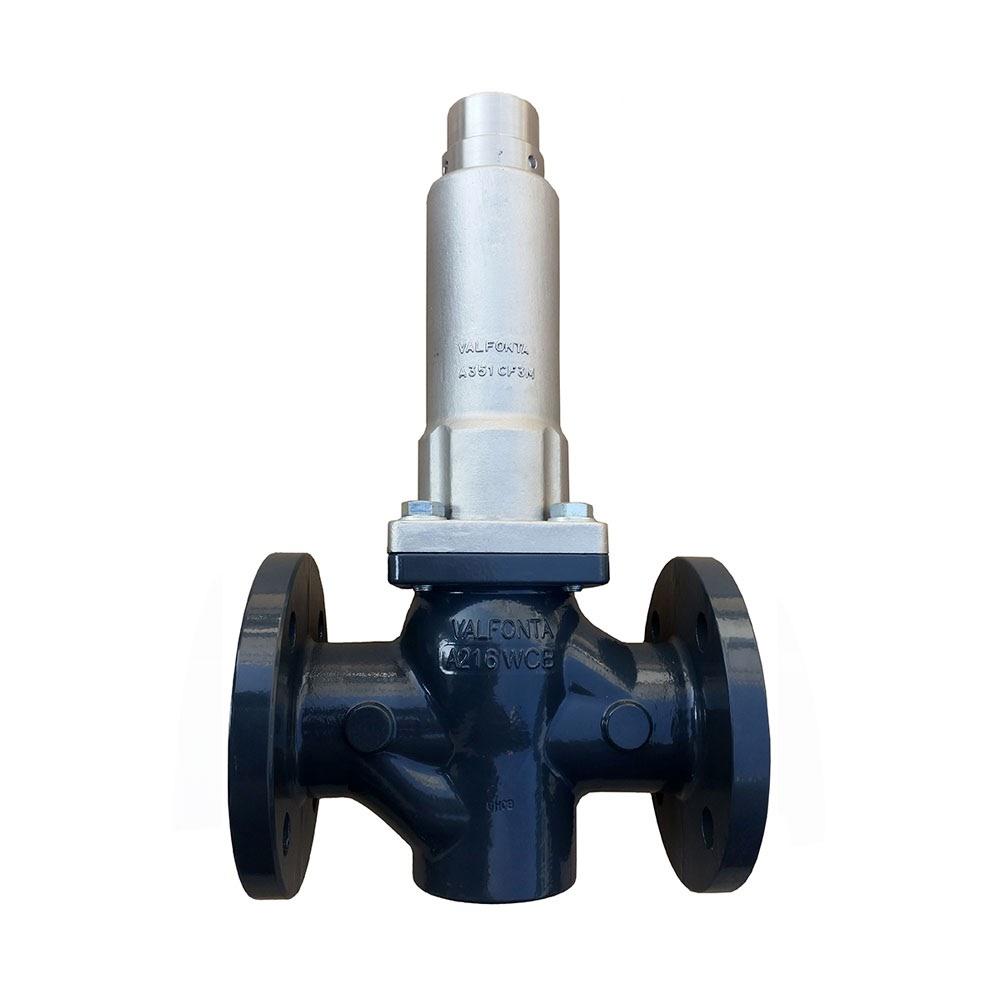
Can we help with your installation?
Tell us the fluid, the inlet and outlet pressures, the temperature, and the flow rate, and we will recommend the right valve.
You can also call 933 720 888 or email valfonta@valfonta.com.