


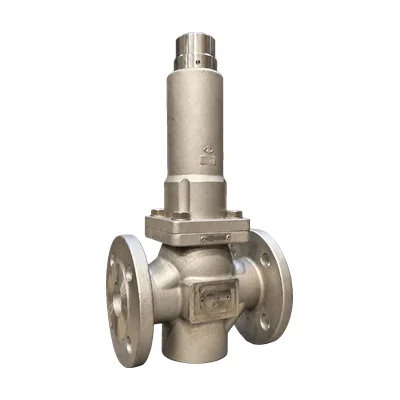

Stainless steel PRVs valves for desalination plants in coastal USA

Article contents
Why do standard valves fail prematurely in saline applications?
In the competitive US desalination market—from municipal plants in Florida to industrial skids in Texas—corrosion remains the primary cause of asset failure.
Standard pressure reducing valves (PRVs), often specified with generic "316 Stainless Steel" bodies, frequently fail within 12 to 18 months of service.
The failure mechanism is rarely simple oxidation. It is a combination of galvanic corrosion and chloride attack that compromises the valve's internal regulation mechanism.
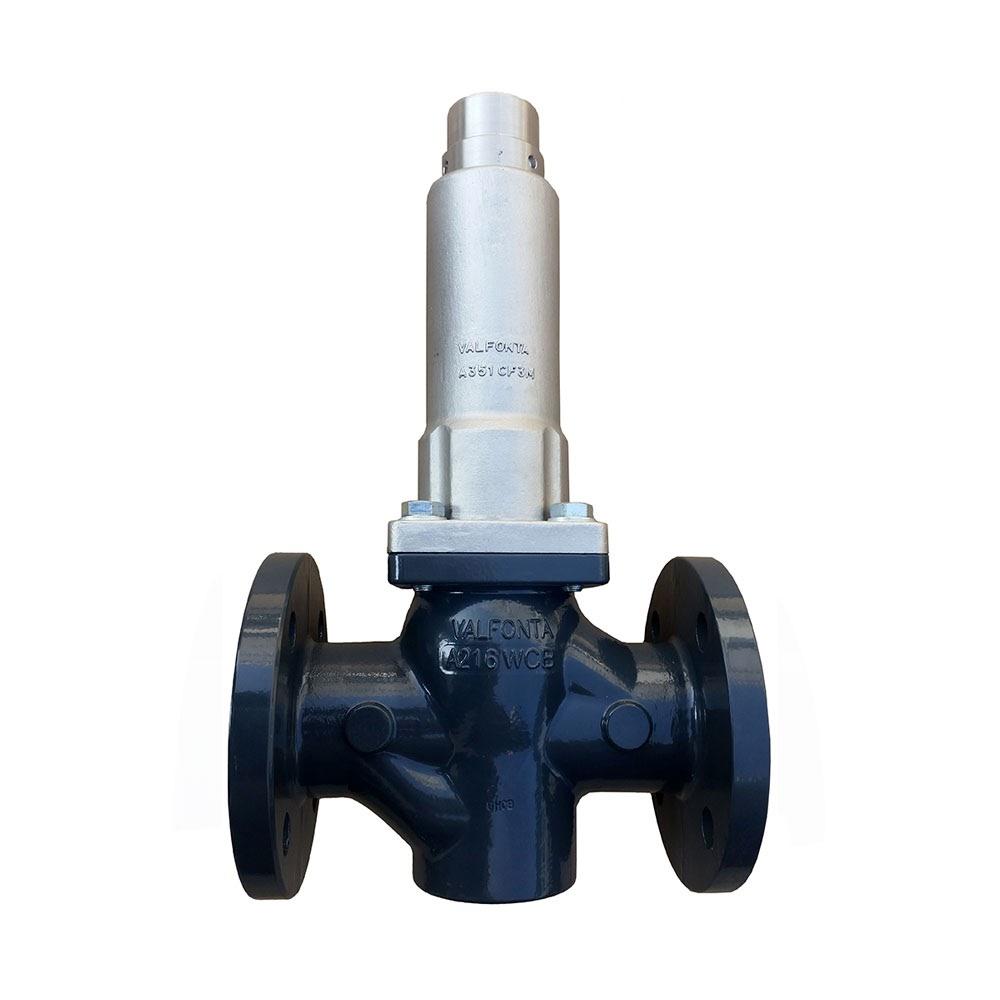
For Plant Managers, this translates into unstable downstream pressure, leaks, and unplanned shutdowns. Valfonta engineers specifically address these challenges with our PRV Series (PRV30, PRV44, PRV45), designed to exceed standard CF8M specifications.
How does Chloride Stress Corrosion Cracking (SCC) compromise valve integrity?
The most insidious threat in high-pressure brine lines is Chloride Stress Corrosion Cracking (SCC). This phenomenon occurs when austenitic stainless steels are subjected to tensile stress in a chloride-rich environment—exactly the conditions found inside a PRV regulating seawater at 900 psi (60 bar).
In cast bodies (investment casting), micro-porosities act as initiation points for these cracks. SCC manifests as microscopic fissures that propagate rapidly, leading to sudden catastrophic failure without prior warning leaks.
To mitigate this, Valfonta’s PRV30 and PRV44 models feature bodies machined from solid bar stock. The dense, forged-like grain structure of bar stock effectively blocks crack propagation, ensuring long-term structural integrity even in lines with high chloride concentration (>10,000 ppm).
Is AISI 316L enough, or does your brine line require Super Duplex?
Material selection must be driven by the specific salinity and temperature of the fluid. A "one-size-fits-all" approach with 316L is often insufficient for the rejection lines where brine concentration is highest.
- Seawater Intake & Permeate: For standard seawater intake or potable water distribution (permeate), our standard AISI 316L (1.4404) construction is generally sufficient, provided the temperature remains below 120°F (50°C).
- High-Pressure Brine Rejection: In the RO rejection lines, Valfonta offers the PRV Series custom-machined in Duplex (1.4462) or Super Duplex (1.4410) upon request. These alloys offer a Pitting Resistance Equivalent Number (PREN) >35, significantly outperforming 316L (~24) and providing the necessary safety margin against localized pitting.
How does the "Salt Spray" effect damage external actuators in coastal facilities?
Corrosion isn't limited to the wetted parts. In coastal plants, the marine atmosphere itself is corrosive. The "salt spray" effect carries airborne chlorides that settle on valve actuators, springs, and bolts.
Standard valves with large external pneumatic actuators or exposed carbon steel springs will rust and eventually cease.
Valfonta’s PRV Series offers a distinct design advantage for coastal installations:
- Compact & Enclosed Design: Unlike control valves with bulky yokes, the PRV30/44/45 feature a compact, self-contained design. The regulating spring is fully enclosed within the stainless-steel bonnet (or spring housing), shielding it entirely from the salt-laden atmosphere.
- No External Actuators: Being self-acting, they require no external air supply or electrical wiring, eliminating the most vulnerable components in a corrosive environment.
How to ensure stability in Reverse Osmosis (RO) and distribution lines?
Stability is not just an operational requirement in a Seawater Reverse Osmosis (SWRO) plant; it is the cornerstone of the entire process economics. A pressure fluctuation of just a few psi in the feed line can disrupt the delicate osmotic equilibrium across the semi-permeable membranes. If the pressure drops, permeate production halts; if it spikes, it can irreversibly foul or telescope the expensive membrane elements.
Furthermore, in the post-treatment and distribution stages, maintaining a flat pressure curve is critical to prevent "water hammer" that could shatter GRP (Glass Reinforced Plastic) piping often used in permeate lines.
Valfonta engineers address these challenges by segmenting the plant's pressure control into purpose-built solutions within our PRV Series: utilizing the PRV45 for high-flow low-pressure stability, the PRV30 for aggressive high-pressure rejection, and the compact PRV20 for critical instrumentation lines.
Why is the PRV45 the superior choice for low-pressure permeate distribution?
Once the seawater has been desalinated, the resulting permeate (potable water) must be distributed to remineralization skids or municipal storage tanks. This process typically requires a steady downstream pressure between 15 and 90 psi (1 to 6 bar).
While many US competitors attempt to use standard piston valves here, they often fail to achieve stable regulation at these lower ranges due to internal friction. The Valfonta PRV45 is specifically engineered to bridge this gap.
- Enhanced Sensitivity Actuator: Unlike standard hydraulic piston valves that suffer from "stick-slip" at low pressures, the PRV45 features a widened sensing chamber. This design increases the hydraulic ratio between the sensing area and the seat area. A small deviation in downstream pressure translates into a large corrective force on the stem, allowing the valve to modulate smoothly even at partial openings of 15-20%.
- Flow Capacity ($C_v$) Optimization: Permeate lines often carry high volumes of water. The PRV45 body is designed with an optimized flow path to maximize the flow coefficient ($C_v$). This minimizes pressure loss across the valve when fully open and prevents the "choking" effect common in undersized regulators during peak demand.
- FDA & NSF Compliance: Since this valve handles the final product—drinking water—material safety is paramount. The PRV45 is available with FDA-certified EPDM seals, ensuring no leaching of plasticizers or contaminants into the ultra-pure permeate, meeting the strict requirements of US water districts.
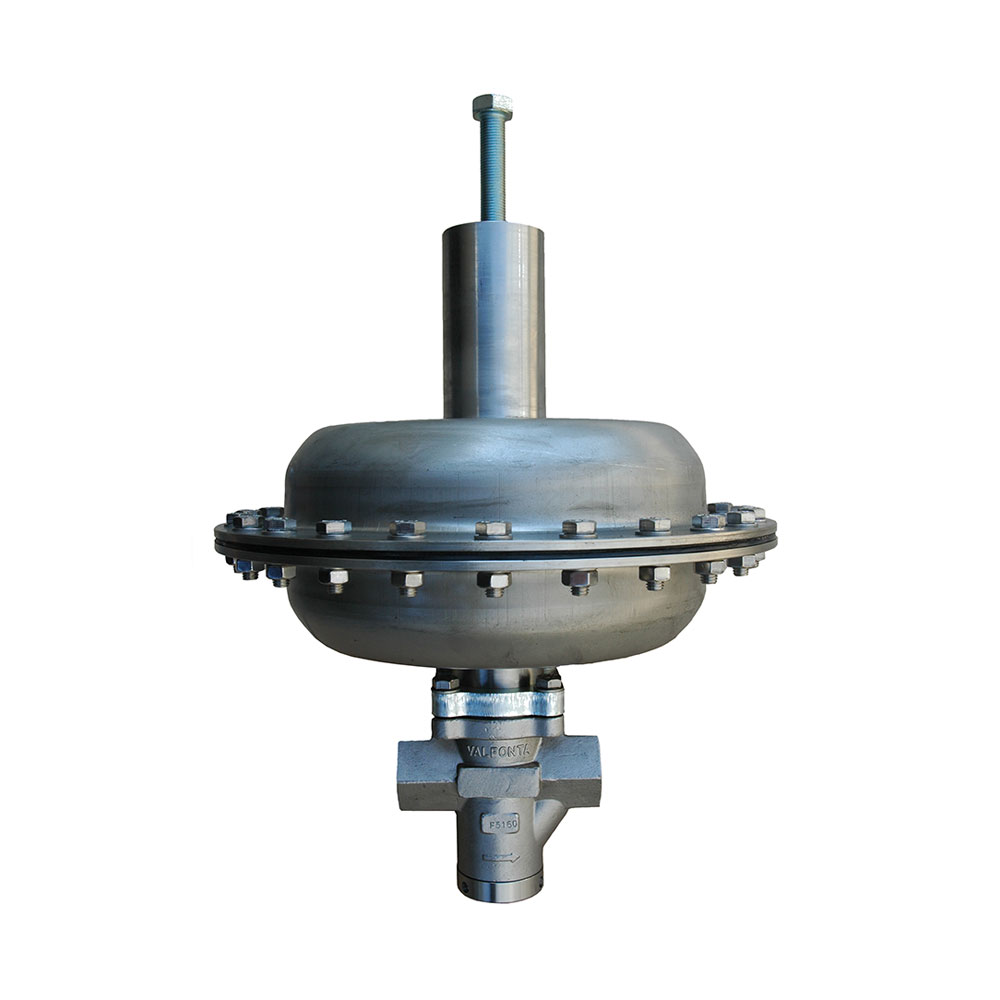
Can the PRV30 Piston Valve withstand the cavitation of high-pressure lines?
The brine rejection line and high-pressure auxiliary cleaning (CIP) systems represent the most hostile fluid environments in a desalination facility. We are dealing with highly concentrated saline water (TDS > 70,000 ppm) being throttled at pressures often exceeding 800-1000 psi (60-70 bar).
In these conditions, the fluid velocity through the seat can reach supersonic speeds, causing flashing and cavitating flow. A standard diaphragm valve would be shredded in hours. The Valfonta PRV30 is the industry’s heavy-duty answer to this problem.
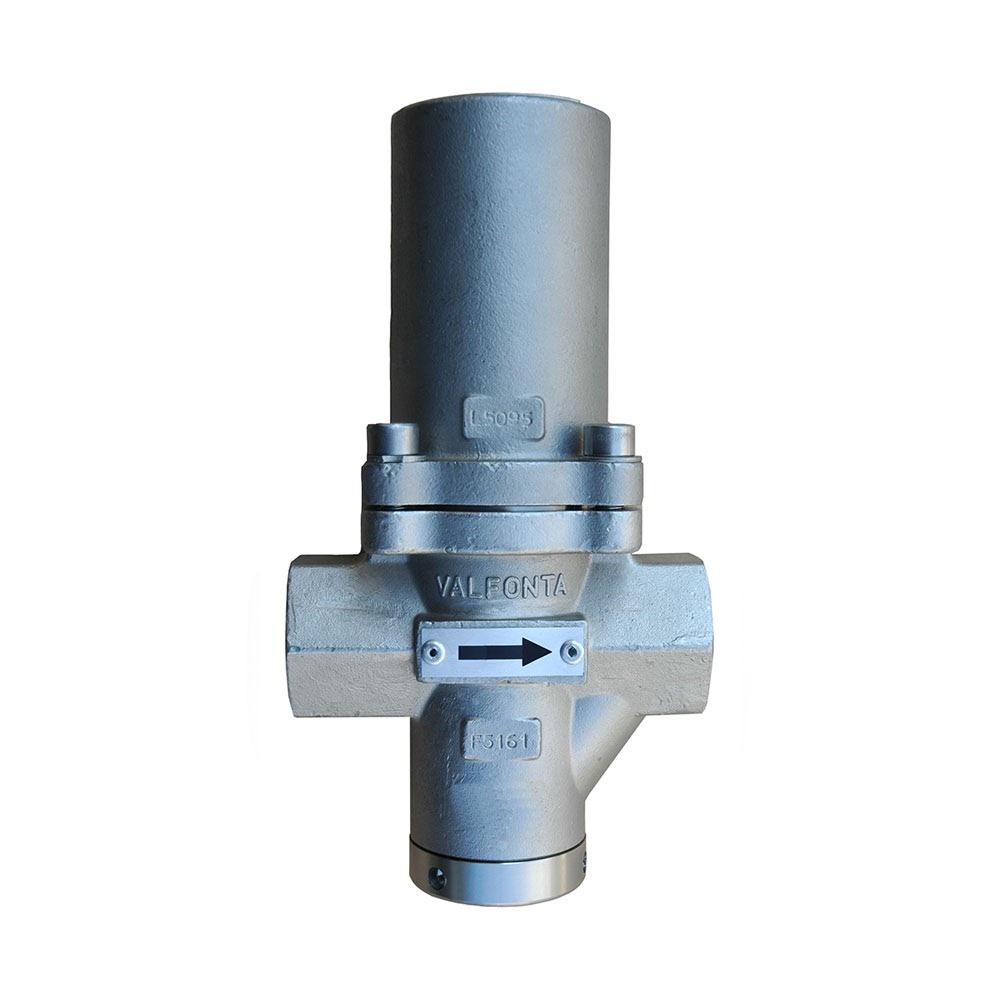
- The Physics of the Piston: The PRV30 utilizes a solid stainless steel piston rather than a flexible membrane. The mass of this piston acts as a mechanical damper, absorbing the high-frequency vibrations caused by the massive pressure drop ($\Delta P > 500$ psi). This prevents the valve from entering resonance, a common cause of stem fatigue.
- Hardfacing Strategy: To combat the erosion caused by micro-implosions (cavitational pitting), Valfonta does not rely on soft stainless steel. We apply Stellite Grade 6 (Cobalt-Chromium-Tungsten) hardfacing to both the plug and the seat. This alloy achieves a hardness of 45 HRC, effectively armoring the trim against the "sandblasting" effect of high-velocity brine.
- Dynamic Sealing: The piston seal in the PRV30 is designed with a self-energizing geometry. As the system pressure increases, the seal presses tighter against the cylinder wall, ensuring Class IV shutoff even under extreme loads.
Why is the "Machined from Bar Stock" design of the PRV20 critical for sampling lines?
In every SWRO plant, there is a network of small-bore tubing (1/4", 3/8", 1/2" NPT) used for online analyzers (pH, conductivity, ORP) and sampling panels. These lines require small, precise regulators to step down pressure before the sensors.
The Valfonta PRV20 is unique in the US market because it is manufactured exclusively from solid bar stock, never from castings.
- The Porosity Problem: Cheap, investment-cast mini-regulators often contain microscopic casting pores. In a high-chloride environment, these pores trap salt crystals. Over time, "crevice corrosion" expands these pores, leading to pinhole leaks that spray pressurized seawater onto sensitive electronic analyzers.
- Bar Stock Integrity: By machining the PRV20 from a solid billet of AISI 316Ti (1.4571) or Duplex 2205, we guarantee a dense, uniform grain structure with absolutely zero porosity. This makes the PRV20 virtually immune to body leakage, protecting your expensive instrumentation panels ($10k+ assets) from saltwater damage.
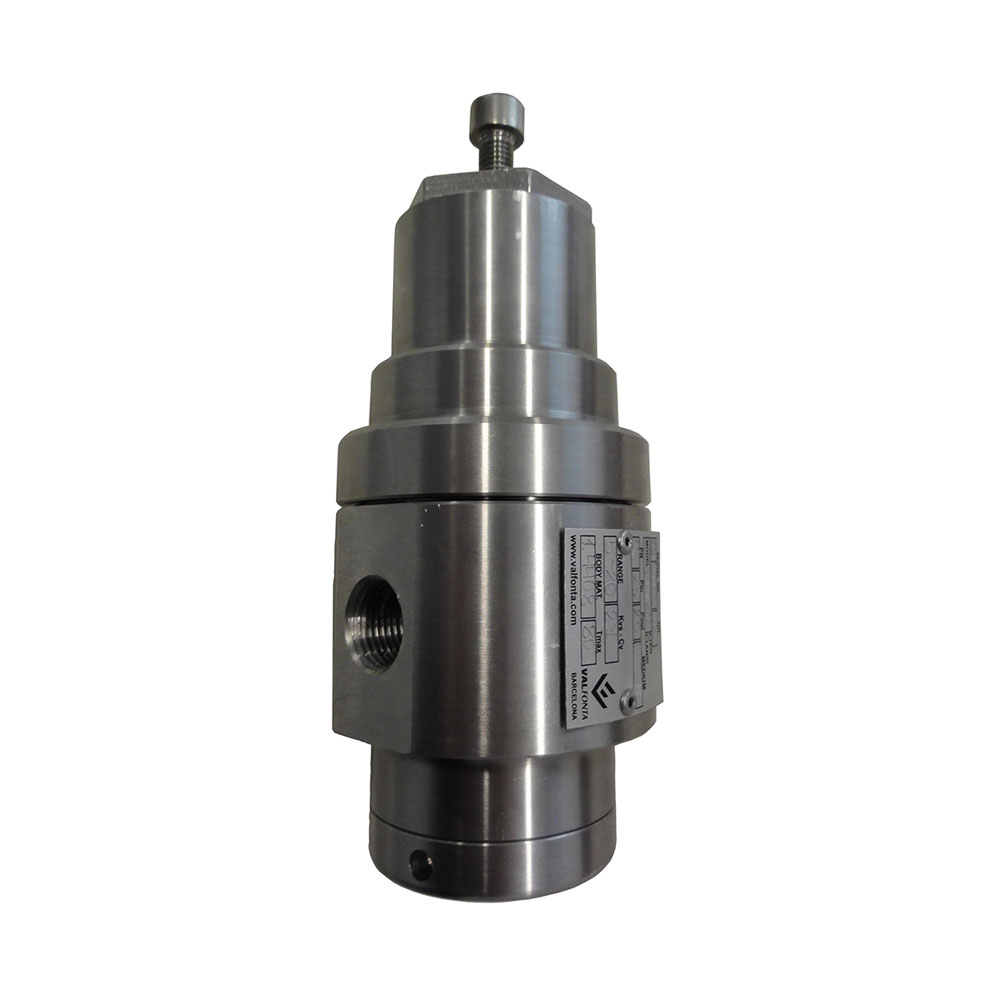
- Compact "All-in-One": The PRV20 integrates the sensing mechanism and the spring housing into a compact footprint (approx. 5 inches tall), ideal for crowded sampling skids where space is at a premium.
To help US engineers select the correct model, we provide the following operational comparison:
| Feature | PRV20 (Instrumentation) | PRV45 (Permeate Dist.) | PRV30 (Brine/High Pressure) |
|---|---|---|---|
| Typical Application | Sampling Panels, Analyzers | Potable Water, permeate | Rejection, Pump Protection |
| Body Construction | Solid Bar Stock (No Castings) | Cast or Bar Stock (size dep.) | Solid Bar Stock (Heavy Duty) |
| Connection Types | 1/4" - 1/2" NPT Female | 1/2" - 2" NPT or ANSI Flanges | 1/2" - 2" NPT or ANSI 300/600 |
| Max Inlet Pressure | 3000 psi (210 bar) | 360 psi (25 bar) | 3600 psi (250 bar) |
| Outlet Range | 1.5 - 200 psi | 10 - 100 psi (Optimized) | 15 - 300+ psi |
| Trim Material | 316Ti Stainless Steel | 316L / EPDM (Soft Seat) | Stellite Gr. 6 (Hard Faced) |
How to integrate European precision into US Infrastructure (ASME/ANSI)?
For many US Plant Managers, integrating European valves into an existing American piping network is often perceived as a headache due to compatibility fears. However, Valfonta has eliminated this barrier by standardizing our PRV Series for the North American market.
We do not require you to install adapters or modify your skid layout. Our valve bodies are machined with NPT (National Pipe Taper) threads as standard for sizes up to 2 inches, ensuring a leak-proof seal with your existing instrumentation fittings.
For larger lines requiring flanged connections, we provide integral flanges machined according to ASME B16.5 Class 150, 300, or 600, matching the exact "Face-to-Face" dimensions required by US engineering standards. This "Drop-in Replacement" capability means you can replace a failing, cast-iron regulator with a solid stainless steel Valfonta unit during a standard maintenance window, without welding or re-piping.
Furthermore, all our pressure gauges and documentation are supplied in PSI, and our technical support team speaks the language of ASME Section VIII, ensuring that your compliance paperwork is seamless from day one.
Are Valfonta valves compatible with existing NPT and ANSI B16.5 piping?
Beyond physical connectivity, long-term compatibility depends on ease of maintenance. In the remote desalination plants of Texas or the island installations of the Caribbean, waiting weeks for a proprietary spare part is not an option. Valfonta’s design philosophy for the US market centers on modularity and simplicity. The PRV Series is designed to be serviced inline (Top-Entry) for most maintenance tasks.
Crucially, we utilize standard commercial O-ring sizes for static seals wherever possible, allowing maintenance crews to source emergency replacements locally if needed. However, for the critical dynamic seals and the piston itself, we offer comprehensive "Soft Goods Kits" and "Overhaul Kits" with rapid delivery to the US.
Unlike many competitors who force you to buy a whole new valve when the trim wears out, Valfonta provides the individual seat and plug components, respecting your OPEX budget. By combining the robustness of European bar-stock manufacturing with the connectivity standards of American industry, Valfonta offers the definitive solution for the corrosive reality of coastal desalination.
Related valves
Related articles


Can we help with your installation?
Tell us the fluid, the inlet and outlet pressures, the temperature, and the flow rate, and we will recommend the right valve.
You can also call 933 720 888 or email valfonta@valfonta.com.