


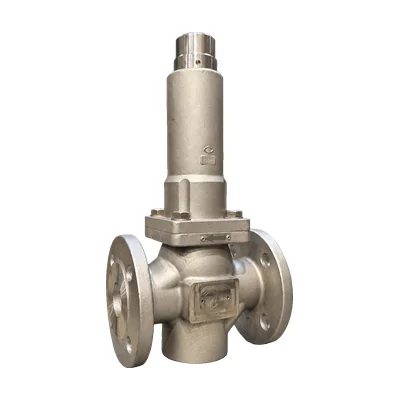

Custom industrial steam ejectors for all types of systems
Article contents
What are industrial steam ejectors?
Industrial steam ejectors play a key role in many industrial processes that require generating vacuum or handling fluids.
These efficient and versatile units use the principle of steam flow to generate suction and transfer energy.
In this article, we will explore in detail how industrial steam ejectors work, their various applications, and the benefits they offer in industrial environments.
Industrial steam ejectors are devices designed to harness the flow of steam to generate a vacuum or induce fluid circulation.
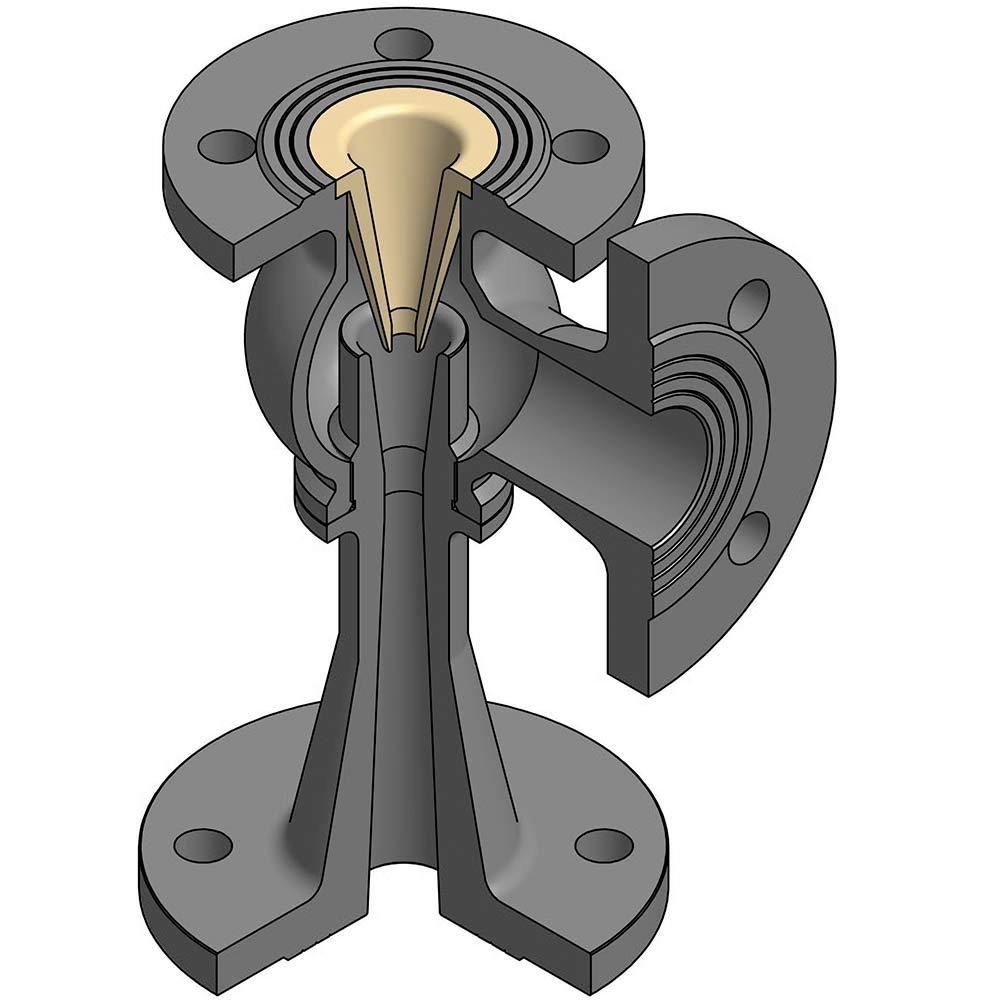
They consist of a series of nozzles, diffusers, and mixing chambers that, as they interact with the steam, create a low-pressure zone that draws in the desired fluid.
These ejectors are known for their high energy efficiency and their ability to handle a wide range of fluids, including gases, liquids, and solids.
How industrial steam ejectors work
Industrial steam ejectors work on the principle of fluid convergence-divergence. High-pressure steam is introduced through a converging nozzle, which increases the steam velocity.
As the steam accelerates, a low-pressure zone forms in a mixing chamber or diffuser, which in turn induces fluid flow into the ejector.
This suction is the result of the pressure difference between the inlet and the low-pressure zone, which makes it possible to handle and transfer fluids in industrial processes.
Applications of industrial steam ejectors
Industrial steam ejectors are used in a wide variety of industries and processes. Some of these applications include:
- Chemical industry: In the chemical industry, steam ejectors are used for handling chemicals, creating vacuum in distillation columns, and circulating fluids in reactors.
- Food industry: In the food industry, steam ejectors are used for evaporating liquids, drying foods, and degassing packaged liquids.
- Oil and gas industry: In this industry, steam ejectors are used for crude oil desalting, gas extraction, and vacuum in refining processes.
- Pharmaceutical industry: In the pharmaceutical industry, steam ejectors are used for the distillation, evaporation, and drying of pharmaceutical products.
- Paper industry: In the paper industry, steam ejectors are used for generating vacuum in papermaking and removing water in the drying stage.
These are just a few examples of the many applications in which industrial steam ejectors play a key role in production processes.
Benefits of industrial steam ejectors
Industrial steam ejectors offer a number of benefits that make them an ideal choice for many applications in industrial environments:
- Energy efficiency: Steam ejectors use steam as their energy source, which makes them highly energy-efficient devices. This results in significant savings in operating costs over the long term.
- Quiet operation: Steam ejectors have no moving parts and therefore generate no additional noise during operation. This makes them ideal for noise-sensitive work environments.
- Corrosion resistance: Steam ejectors are designed to withstand corrosive environments and harsh conditions. This makes them a durable and reliable option for demanding industrial environments.
- Versatility: Steam ejectors can handle a wide variety of fluids, which makes them suitable for many applications across different industries.
- Easy maintenance: These devices do not require complicated or costly maintenance. With proper maintenance, steam ejectors can have a long service life and optimal performance.
Do you need a steam and liquid ejector like the ones we supply at Valfonta?
Water ejector
This type of ejector is ideal for industrial applications that require extracting gases or vapors using water as the motive medium. Its simple yet effective design makes it versatile for a wide range of industrial environments, providing an efficient and reliable solution for vapor extraction in many processes.
Liquid ejector
With its ability to handle different types of fluids, this ejector is extremely versatile. It is perfect for applications that call for particular specifications regarding the type of fluid to be handled or extracted, offering flexibility and adaptability in a variety of industrial settings.
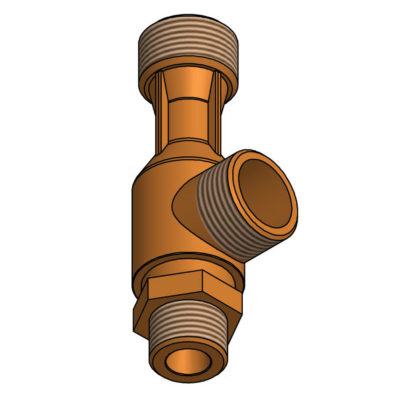
See the available models on our steam and liquid ejectors page.
Request information, with no obligation, about our industrial steam ejectors
Choosing this type of component can be difficult if you are not thoroughly familiar with its applications, materials, or operation.
If you have any questions about our products or services, feel free to contact us by calling 933 720 888, by emailing valfonta@valfonta.com, or by filling out the form on this website.
We always like to close by reminding you that our specialty is the design of pressure reducing valves, which we can custom-build for each application. We also have an extensive catalog of pressure relief valves and control valves at your disposal. With that said… what exactly do you need?
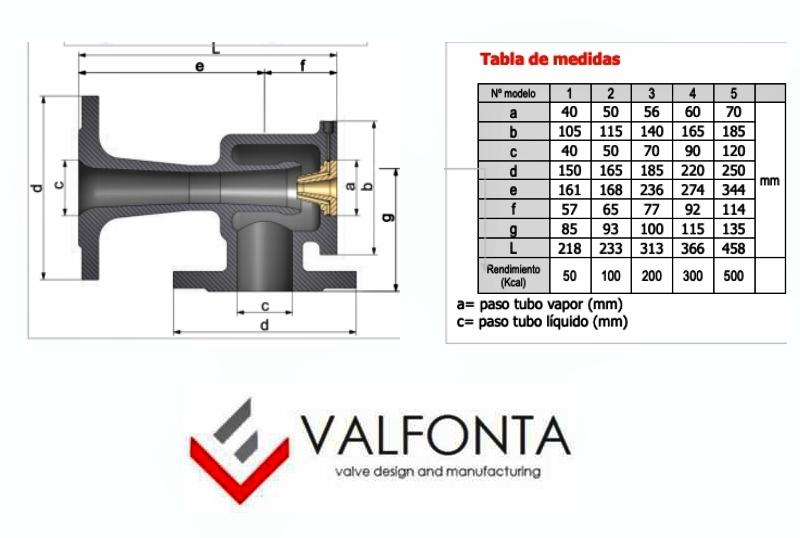
Valfonta ejector models: comparison
| Model | Function | Mounting | Capacity | Connection | Body limit |
|---|---|---|---|---|---|
| 248 | Pump or mix liquids, solids, or gases | In-line | 9 sizes, from 1,200 to 72,000 l/h of mixture | DIN PN16 flanges | 16 barg at 200 °C |
| 250 | Lift cold, hot, or viscous liquids | Between tanks, suction lift of up to 6 m | 5 sizes, from 1,500 to 10,000 l/h | BSP thread | 16 barg at 200 °C |
Data from the datasheets. Flow rates for the 248 with motive steam at 4 bar.
How to choose the right ejector
- Heating or pumping? To transfer liquid, prime a pump, or add a product to a line, the choice is between the 248 and the 250. To raise the temperature of a liquid with steam, the injectors: the 260 (at the bottom of the tank) and the 280 (in the pipe).
- Flow. Calculate the l/h you have to move and compare it with the size table in the datasheet. If the available steam pressure is lower than the reference pressure, the actual output will be lower.
- Materials. The 248 is made with a WCB carbon steel, RG10 bronze, or CF3M stainless body, and the 250 in RG10 bronze or 316 stainless.
Frequently asked questions
What is the difference between an ejector and a steam injector?
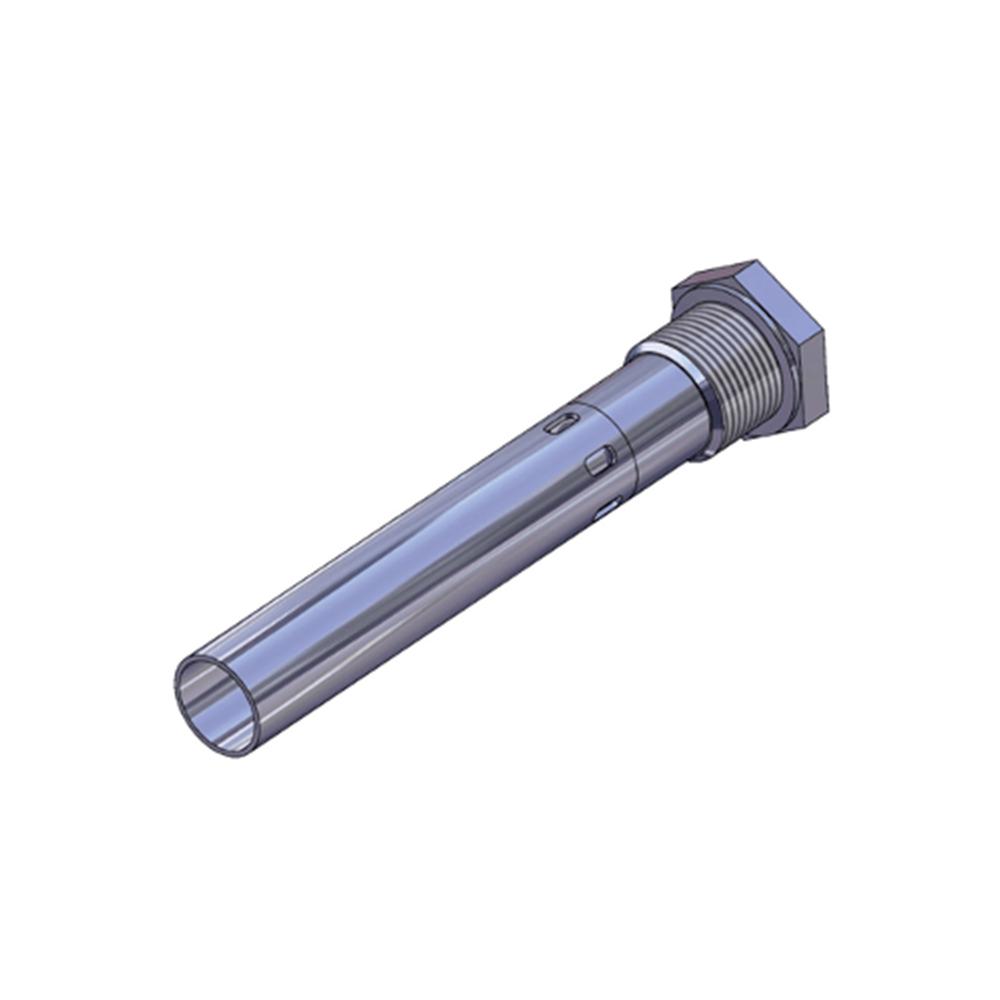
Both use the energy of steam to draw in and mix the liquid. In the Valfonta catalog, the 260 injector is a threaded 316 stainless tube for heating the contents of a tank up to 90 °C, while the 280 liquid heater is a flanged unit that heats the liquid in a pipe. We compare the injectors in 260 or 280 steam injector: how to choose.
What maintenance does a jet ejector need?
Its datasheets state that it requires no maintenance, because it has no moving parts. For the same reason, it reduces noise and vibration.
Can an ejector replace a pump?
For some jobs, yes. The 248 ejector is used to prime pumps when no self-priming pump is available, as a bilge pump on ships, or to draw a liquid from a tank and add it to a pipe. Without being submerged, it has a suction lift of up to 6.5 m and a discharge head of 5 to 12 m, depending on the steam pressure.
Which unit should I use if the liquid flows through a pipe?
The 280 liquid heater, which heats the liquid in-line and also increases its outlet pressure. To heat the contents of a tank, the 260 injector.
Related valves
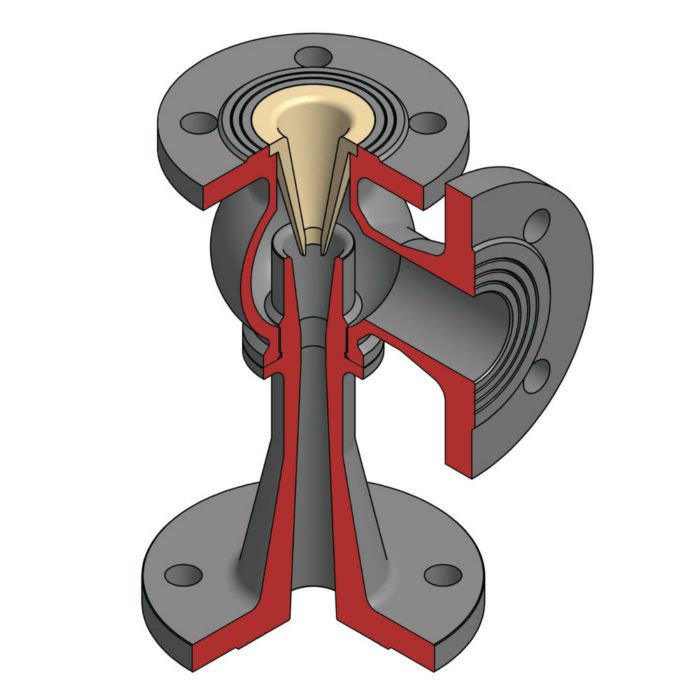 248 ejector
Related articles
Can we help with your installation?
Tell us the fluid, the inlet and outlet pressures, the temperature, and the flow rate, and we will recommend the right valve.
You can also call 933 720 888 or email valfonta@valfonta.com.