


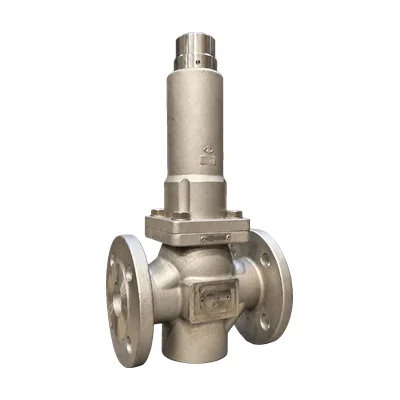

European Engineering, American Compliance: The Valfonta Standard
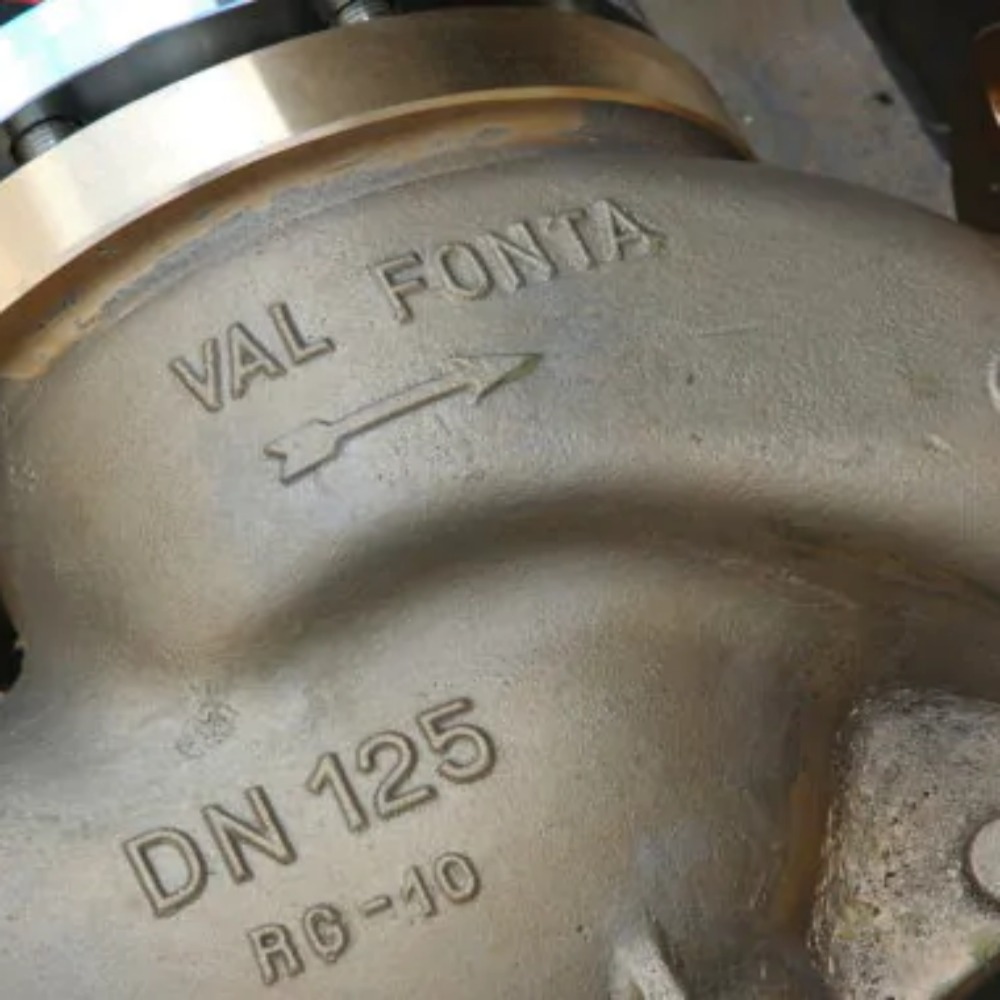
Article contents
When U.S. engineers evaluate pressure control valves for critical infrastructure, they expect products that meet rigorous domestic codes and deliver reliable, long-term performance.
At the same time, a growing number of specifiers are discovering that European-engineered valves bring a level of precision, material quality, and design maturity that is difficult to match at comparable price points. The challenge has always been compliance: a valve built to European standards does not automatically satisfy American regulatory requirements.
Valfonta bridges that gap. As a European manufacturer of pressure reducing valves, pressure relief valves, and control valves, Valfonta has developed a product line specifically adapted for the U.S. market, combining decades of European engineering expertise with full compliance to ANSI, ASME, and ASTM requirements.
This article explains what makes European valves in USA an increasingly attractive option, how Valfonta meets American compliance standards, and what U.S. specifiers need to know when writing Valfonta into their projects.
Why european-engineered valves are gaining ground in the U.S. market
The U.S. valve market has traditionally been dominated by domestic manufacturers. However, globalization, tighter performance requirements, and the search for cost-effective alternatives have opened the door to European suppliers who can demonstrate both technical excellence and regulatory compliance.
Understanding why this shift is happening requires a look at the engineering philosophy behind European valve design and the practical differences that matter to American buyers.
The engineering tradition behind European pressure control valves
European valve manufacturing, particularly in countries like Spain, Germany, and Italy, has evolved within a regulatory framework that emphasizes precision engineering, material traceability, and rigorous testing. The European Pressure Equipment Directive (PED 2014/68/EU) imposes strict requirements on design, manufacturing processes, and conformity assessment that apply across all EU member states.
Valfonta, founded and headquartered in Spain, designs and manufactures its entire product range in-house. Every valve, from the compact PRV20 to the larger piloted models, is machined, assembled, and tested at the company’s own facility. This vertical integration allows Valfonta to control quality at every stage, from raw material selection to final pressure testing, a level of oversight that is increasingly valued by U.S. engineers working on projects where traceability and accountability matter.
The engineering approach behind Valfonta valves emphasizes several principles that resonate with demanding American applications:
- Precision machining of AISI 316L stainless steel bodies and trim, ensuring corrosion resistance and dimensional accuracy across the full product line.
- Piston-balanced designs that maintain stable downstream pressure despite inlet pressure fluctuations, a critical feature in systems with variable demand.
- Maintenance-free operation with no routine servicing required, reducing total cost of ownership in installations where access is limited or labor costs are high.
- Multi-position installation capability, allowing the valve to be mounted in any orientation without affecting performance.
Key differences between European and American valve manufacturing standards
While the underlying engineering goals are similar, European and American valve standards differ in terminology, testing protocols, connection types, and documentation requirements.
These differences have historically created friction for U.S. buyers considering European valves in USA projects. Understanding where the standards diverge, and where they converge, is essential for making informed procurement decisions.
| Aspect | European Standard (EN/PED) | U.S. Standard (ANSI/ASME) |
|---|---|---|
| Pressure equipment directive | PED 2014/68/EU | ASME BPVC (Boiler and Pressure Vessel Code) |
| Flange dimensions | EN 1092-1 (PN designations) | ASME B16.5 / ANSI Class 150, 300, etc. |
| Threaded connections | BSP (British Standard Pipe) | NPT (National Pipe Thread) |
| Material certification | EN 10204 Type 3.1 | ASTM + MTR (Mill Test Report) |
| Pressure units | bar / MPa | psig / psi |
| Testing protocol | EN 12266-1 (shell and seat test) | API 598 / ASME B16.34 |
| Quality management | ISO 9001:2015 | ISO 9001:2015 (accepted) or ASME QC-1 |
The most visible difference for installers is the connection type. European valves traditionally use BSP (British Standard Pipe) threads and EN-standard flanges with PN ratings, while American systems require NPT (National Pipe Thread) connections and ANSI Class flanges. A European valve that cannot be supplied with NPT threads or ANSI flanges is, for all practical purposes, unusable in a U.S. installation without costly adapters that introduce potential leak points.
Valfonta addresses this directly. Both the PRV20 and PRV30 models for the U.S. market are available with threaded NPT connections as standard, and the PRV30 is also offered with ANSI Class 150 flanges, eliminating the need for adapters and ensuring a clean, code-compliant installation.
What U.S. engineers and specifiers look for in an imported valve
American engineers evaluating European valves in USA applications typically apply a checklist that goes beyond basic performance specifications. The valve must not only work correctly; it must also fit seamlessly into the domestic regulatory, documentation, and supply chain ecosystem.
The key criteria that U.S. specifiers evaluate include:
- Material compliance: body, trim, and sealing materials must meet or exceed ASTM specifications. AISI 316L stainless steel, for example, must be traceable to a certified heat and accompanied by a Mill Test Report (MTR).
- Connection compatibility: NPT threads or ANSI flanges must be available as standard, not as a special order that extends lead times.
- Pressure and temperature ratings in U.S. units: specifications must be provided in psig and degrees Fahrenheit, not just bar and Celsius.
- Testing documentation: test reports should reference recognized standards (API, ASME) or demonstrate equivalence to them.
- Technical support in the U.S. time zone: responsiveness matters when a project is on a tight schedule and questions arise during installation.
- Spare parts availability: seal kits, gasket kits, and spring sets must be available without transatlantic shipping delays.
A European manufacturer that can satisfy all six criteria offers the U.S. market the best of both worlds: European engineering quality backed by American-compatible compliance and logistics.
How Valfonta meets american compliance requirements
Meeting U.S. compliance requirements is not a matter of relabeling a European product. It requires deliberate engineering decisions, investment in testing and certification, and a commitment to providing documentation in the formats that American specifiers and inspectors expect. Valfonta has made this investment across its product line, ensuring that every valve destined for the U.S. market is fully compliant from the factory.
ANSI, ASME, and ASTM: navigating U.S. regulatory frameworks for European valves in USA
The regulatory landscape for pressure control valves in the United States is defined by three principal bodies: ANSI (American National Standards Institute), ASME (American Society of Mechanical Engineers), and ASTM International. Each addresses a different aspect of compliance.
ANSI sets the dimensional and performance standards for valve connections and flanges. ASME B16.5 defines flange dimensions and pressure-temperature ratings for Class 150, 300, and higher. ASME B16.34 establishes minimum wall thicknesses, material requirements, and testing criteria for valves. ASTM provides the material specifications, such as ASTM A351 for cast stainless steel (the equivalent of the European AISI 316L designation used in Valfonta valve bodies).
For European valves in USA projects, the critical question is whether the valve’s European certifications have direct equivalences within the American system. In many cases, they do. The AISI 316L stainless steel used throughout Valfonta’s product line corresponds to ASTM A351 CF3M, a grade recognized and accepted across U.S. industries. Valfonta’s PRV30, for instance, specifies A351 CF3M / AISI 316L as its body and cover material, and the PRV20 uses AISI 316L throughout, ensuring full material compatibility with U.S. requirements.
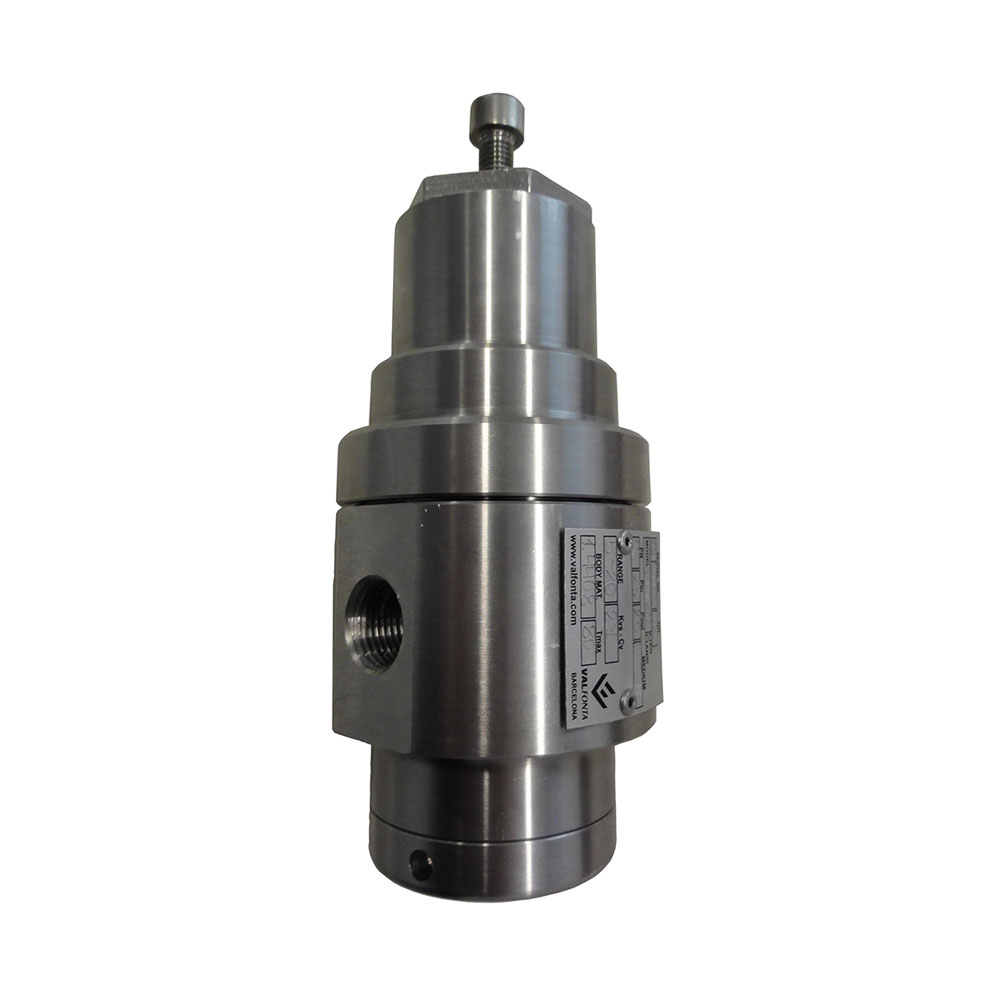

Material certifications, testing protocols, and third-party validation
Material traceability is non-negotiable in U.S. industrial and municipal projects. Every Valfonta valve shipped to the United States is accompanied by material certificates traceable to the original mill, with chemical composition and mechanical properties documented per EN 10204 Type 3.1, which is accepted as equivalent to the MTR format familiar to American inspectors.
On the testing side, every Valfonta valve undergoes factory testing that includes hydrostatic shell testing and seat leakage testing. These protocols align with the requirements of API 598 and EN 12266-1, providing dual-standard coverage that satisfies both European and American quality expectations.
Valfonta’s quality management system is certified to ISO 9001:2015, a standard recognized worldwide and accepted by virtually all U.S. procurement processes as evidence of a controlled manufacturing environment. For projects requiring additional third-party validation, Valfonta can provide compliance documentation upon request, including PED 2014/68/EU conformity assessment.
From CE marking to ASME compliance: a dual-certified product line
Valfonta’s approach to the U.S. market is not to replace European certifications with American ones, but to offer both. The PRV20 and PRV30 models available for U.S. projects are designed from the outset to comply with both frameworks simultaneously.
| Model | Type | Sizes (NPS) | Connections | Key applications |
|---|---|---|---|---|
| PRV20 | Direct-acting PRV | 1/4″ to 3/4″ | NPT (BSP on request) | Laboratories, sanitary systems, compressed air, sprinkler systems |
| PRV30 | Direct-acting PRV | 1/2″ to 1″ | NPT, ANSI CL150, EN PN16/25 | Water systems, compressed air, steam, chemical labs, sprinklers |
The PRV20, Valfonta’s compact direct-acting pressure reducing valve, is built entirely in AISI 316L stainless steel with a piston-balanced design. It handles maximum inlet pressures up to 580 psig, with outlet pressure ranges from 3 to 290 psig depending on spring selection. Sizes range from 1/4″ to 3/4″ NPS with NPT threads as standard. Its Cv values range from 1.4 to 2.8 depending on size, making it ideal for laboratory, sanitary, compressed air, and sprinkler applications.
The PRV30 is a larger direct-acting model with a maximum inlet pressure of 363 psig and outlet ranges from 7 to 175 psig. Available in 1/2″ to 1″ NPS, it offers three connection options: threaded NPT, flanged EN PN16/25, and flanged ANSI Class 150. The body material is A351 CF3M / AISI 316L stainless steel, with Cv values from 2.3 to 4. It serves the same application families as the PRV20 but handles higher flow rates and offers the versatility of flanged connections for larger system integration.
Both models carry European PED compliance available upon request alongside their U.S.-ready specifications, giving project engineers the flexibility to specify a single valve platform for multinational projects or facilities that must meet both regulatory frameworks.
Specifying Valfonta valves for U.S. projects with confidence
Specifying an imported valve for an American project requires more than confirming that it meets the technical requirements. Engineers and procurement teams need assurance that the manufacturer can support the product throughout its lifecycle, from initial specification through installation and long-term service. Valfonta’s commitment to the U.S. market extends well beyond shipping a box of valves across the Atlantic.
Industries and applications where Valfonta valves are already performing in the U.S.
Valfonta valves are currently specified and installed across a range of U.S. industries where precision pressure control is critical and material quality cannot be compromised.
The sectors where European valves in USA installations are gaining the strongest traction include:
- Municipal water systems: pressure reducing valves for distribution networks, pressure management zones, and building connections where stable downstream pressure reduces water loss and pipe stress.
- Chemical and pharmaceutical processing: the full AISI 316L construction of Valfonta valves makes them suitable for corrosive fluids, high-purity applications, and clean-in-place (CIP) systems where material contamination is unacceptable.
- HVAC and building services: pressure regulation for chilled water loops, steam systems, and domestic hot water circuits in commercial and institutional buildings.
- Compressed air and gas systems: the PRV20 and PRV30 are rated for gases and liquids, including compressed air, nitrogen, and neutral gases, covering a wide range of industrial utility applications.
- Fire protection and sprinkler systems: pressure reducing valves that maintain stable supply pressure to sprinkler zones, ensuring code-compliant coverage throughout the protected area.
- Laboratory and research facilities: precise pressure regulation for sensitive analytical instruments, autoclaves, and gas distribution manifolds where even small pressure fluctuations can affect results.
In each of these applications, the combination of stainless steel construction, maintenance-free operation, and multi-position installation flexibility makes Valfonta a compelling alternative to established domestic brands, particularly where corrosion resistance and long-term reliability are priorities.
Frequently asked questions about European valves in USA
Are European pressure reducing valves compatible with ANSI flanges?
Not automatically. European valves are typically manufactured with EN-standard flanges (PN ratings), which have different bolt patterns, face finishes, and pressure-temperature ratings than ANSI Class flanges.
However, manufacturers like Valfonta specifically produce U.S.-market versions with ANSI Class 150 flanges and NPT threaded connections as standard options. The PRV30, for example, is available in threaded NPT, flanged EN PN16/25, and flanged ANSI CL150 configurations, so specifiers can choose the connection that matches their system without requiring adapters.
Do Valfonta valves meet ASME and ASTM material requirements?
Yes. Valfonta’s valve bodies and internal trim are manufactured in AISI 316L stainless steel, which corresponds to ASTM A351 grade CF3M, a material widely accepted in U.S. industrial and municipal applications.
All materials are traceable to the original mill with certificates conforming to EN 10204 Type 3.1, which is recognized as equivalent to the Mill Test Report (MTR) format used in U.S. procurement. Gasket materials include NBR, EPDM, and FKM (Viton), with PTFE available for the PRV30, covering the full range of chemical compatibility requirements.
What lead times should U.S. buyers expect for Valfonta products?
Standard Valfonta models in stock configurations typically ship within 2 to 4 weeks from order confirmation, depending on the specific model and quantity.
Custom configurations, such as special spring ranges, reduced Cv trims, or non-standard materials like bronze or super duplex, may require 6 to 8 weeks. Valfonta maintains direct communication with U.S. distributors and project engineers to provide accurate delivery schedules aligned with project timelines.
Can Valfonta provide documentation in formats required by U.S. specifiers?
Yes. Valfonta provides technical datasheets, installation manuals, and dimensional drawings with all specifications expressed in U.S. customary units (psig, degrees Fahrenheit, inches, NPS).
Material certificates, test reports, and compliance documentation are available in English and formatted to meet the expectations of American engineering firms, general contractors, and inspection authorities. The U.S.-edition catalogs (such as PRV20-US-26 and PRV30-US-26-ENG) are specifically designed for the American market.
How does Valfonta handle warranty and technical support in the United States?
Valfonta provides technical support directly from its engineering team, with communication available in English during business hours that overlap with U.S. Eastern and Central time zones.
Warranty terms cover manufacturing defects in materials and workmanship under normal service conditions. Spare part kits, including seal kits, gasket kits, and spring sets, are cataloged with dedicated reference numbers (e.g., PRV30.SP1, PRV30.SP2, PRV30.SP3) and can be ordered directly, ensuring that field service does not depend on sourcing individual components from overseas.
Are Valfonta valves approved for use in U.S. municipal water systems?
Valfonta valves are manufactured in AISI 316L stainless steel with NSF-compatible elastomers, making them suitable for potable water contact in municipal systems. Specific project approvals depend on the requirements of the local authority having jurisdiction (AHJ).
Valfonta works with U.S. specifiers to provide the documentation and material certifications needed to support approval submissions. The company’s ISO 9001:2015 quality certification and the availability of full material traceability facilitate the approval process for most municipal and water utility applications.
Related valves
Related articles

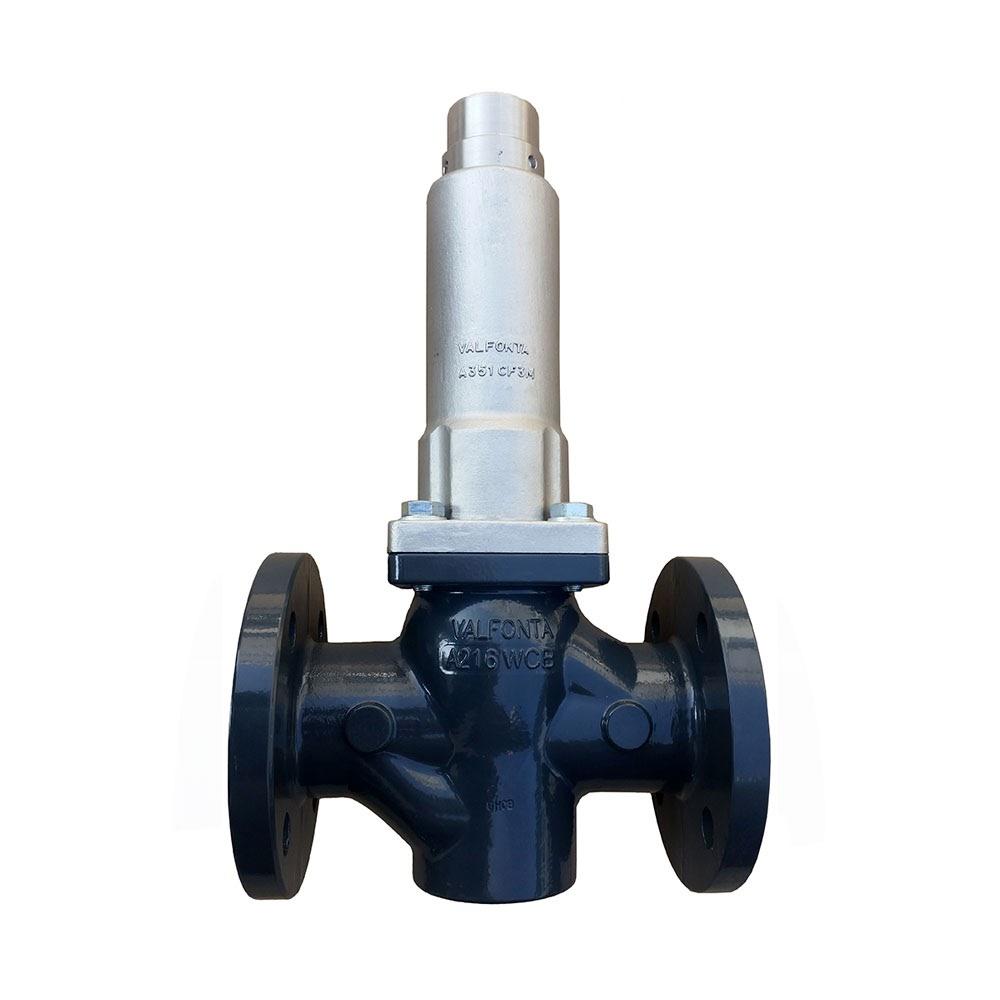

Can we help with your installation?
Tell us the fluid, the inlet and outlet pressures, the temperature, and the flow rate, and we will recommend the right valve.
You can also call 933 720 888 or email valfonta@valfonta.com.