


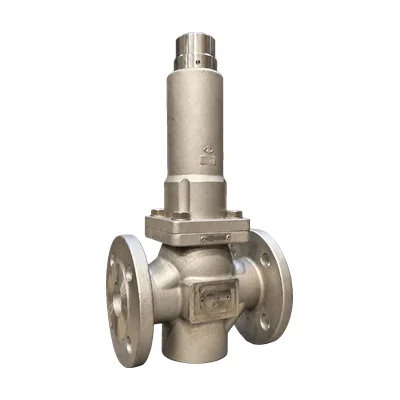

Bellows-sealed pressure reducing valves: total protection against external leaks
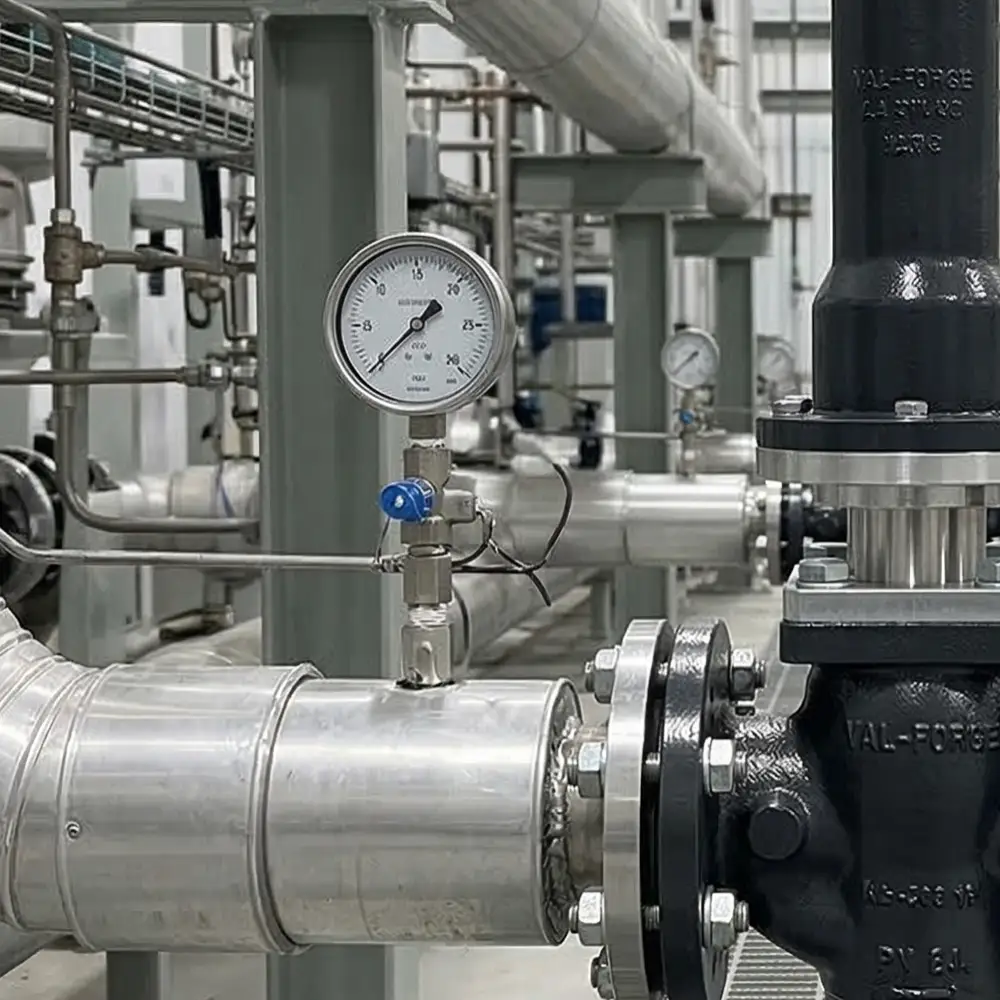
Article contents
- Technical guide to identifying the root causes of instability, preventing fatigue damage, and ensuring precise regulation
- Tightness challenges in controlling thermal and hazardous fluids
- Technical specifications and performance of the Valfonta M2F model
- Installation recommendations and regulatory compliance
- Frequently asked questions
Technical guide to identifying the root causes of instability, preventing fatigue damage, and ensuring precise regulation
In today’s process industry, handling fluids at extreme temperatures or with aggressive chemical properties requires infrastructure that is not only efficient in terms of regulation but also completely leak-tight.
Pressure reducing valves are critical components in any fluid network, but when the medium being conveyed is thermal oil, high-pressure steam, or toxic chemicals, the most common point of failure is usually not the plug seat but leakage along the stem to the atmosphere.
The Valfonta M2F series has been designed precisely to eliminate this risk.
By incorporating a stainless steel sealing bellows, these valves remove the reliance on traditional dynamic sealing systems, providing an impassable physical barrier that safeguards operator safety and protects the environment.
Tightness challenges in controlling thermal and hazardous fluids
The integrity of an industrial plant is measured by its ability to keep process fluids contained within the pipework. In severe applications, however, maintaining that containment is a constant challenge.
Thermal fluids, for example, penetrate far more readily than water, and even slight degradation of the sealing systems can lead to a costly and dangerous fugitive emission.
The design of the bellows seal valve responds to a pressing need: moving from friction-based sealing to sealing based on the mechanical integrity of the material. In sectors such as chemicals, petrochemicals, or power generation, the difference between a conventional valve and a bellows valve can mean the difference between continuous operation and an emergency shutdown due to a fire or contamination hazard.
The vulnerability of the conventional stuffing box in severe service
Pressure reducing valves have traditionally used a stuffing box to seal the stem passage. This system consists of a series of packing rings (usually graphite or PTFE) compressed around the moving stem. Although it is an economical and functional solution for inert fluids at moderate temperatures, it has critical vulnerabilities in severe service:
Frictional wear: Every time the valve regulates and the stem moves, it rubs against the packing. Over time, this friction erodes the sealing material, creating micro-channels through which the fluid escapes.
Thermal cycling: In thermal oil or saturated steam applications, the constant expansion and contraction of the metal affect the compression of the stuffing box. This requires frequent manual readjustment (“tightening” the stuffing box) to prevent leaks.
Fluid hardening: Some fluids, on coming into contact with air in the stuffing box area, tend to crystallize or carbonize, damaging the stem and accelerating seal failure.
Operational and environmental risks of stem leaks in the plant
A leak along the stem of a pressure reducing valve is not merely a cosmetic problem or a waste of product; it is a systemic risk. In the case of thermal oil, a leak can be the trigger for a fire, since oil at high temperature can self-ignite on contact with certain thermal insulation materials (wicking effect).
From an environmental standpoint, international standards such as ISO 15848 and TA-Luft are increasingly strict about fugitive emissions. Volatile organic compounds (VOCs) escaping from poorly sealed valves contribute significantly to the plant’s carbon footprint and can lead to severe legal penalties.
In addition, in terms of energy efficiency, a constant steam leak represents a loss of enthalpy that directly increases the boiler fuel bill, reducing the facility’s competitiveness.
How does the stainless steel bellows ensure hermetic tightness?
Valfonta’s definitive solution in the M2F model is to replace (or reinforce) dynamic sealing with a metal expansion bellows. The bellows is a corrugated tubular component, made of high-grade stainless steel, welded at one end to the stem and at the other to the bonnet or valve body.
This design turns the seal into a static physical barrier. When the stem rises or falls to regulate pressure, the bellows expands or contracts like an accordion, keeping the fluid completely confined inside. There are no sliding surfaces in contact with the atmosphere, which eliminates friction and the possibility of leakage.
In the M2F model, this bellows is generally double-ply, providing redundant safety: if the inner ply were to suffer a fatigue fracture after millions of cycles, the outer ply would maintain tightness while the control systems detect the anomaly. It is, in essence, the ultimate expression of total protection against external leaks.
Technical specifications and performance of the Valfonta M2F model
For a bellows seal valve to be effective in an industrial environment, the seal design alone is not enough; the robustness of the entire assembly must match the design pressures and temperatures.
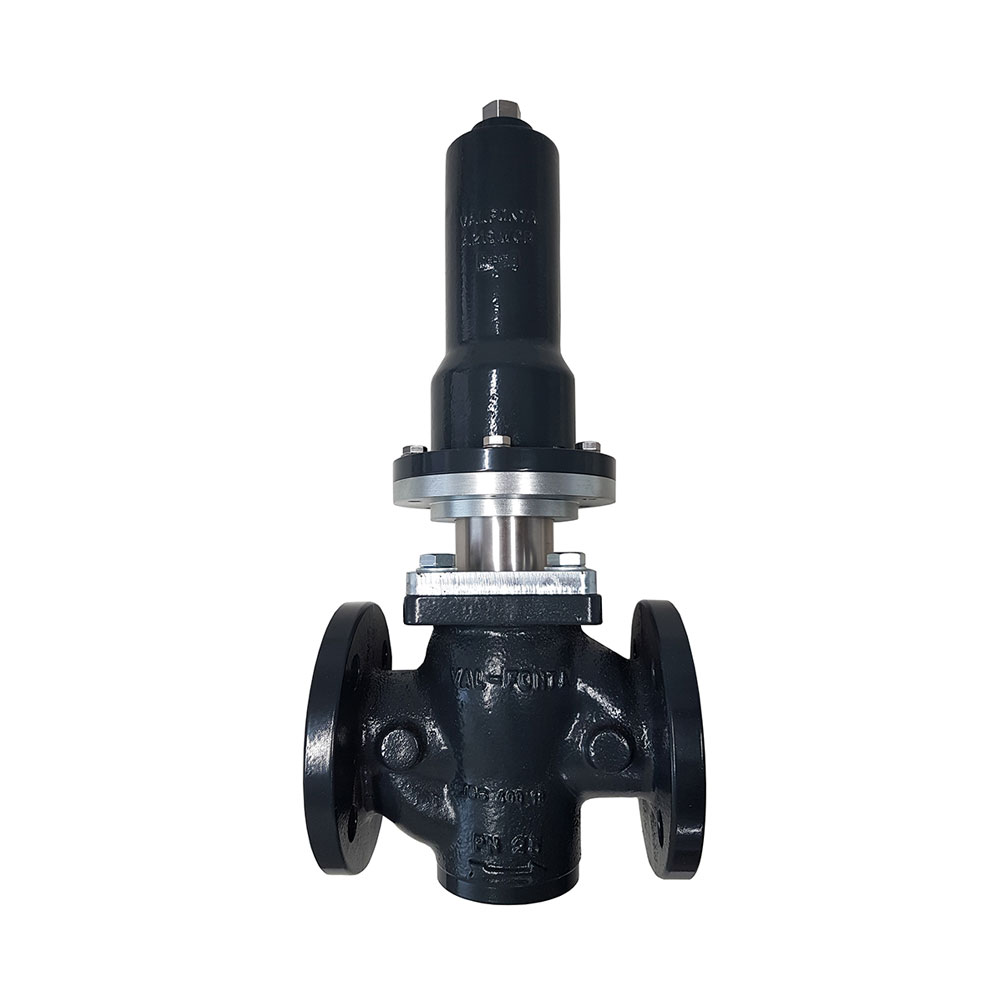
The Valfonta M2F model is a direct-acting pressure reducing valve that stands out for its mechanical simplicity and its extreme reliability in sealing the stem. The consolidated technical specifications of the M2F series, essential for any engineering specification process, are presented below:
| Technical feature | Valfonta M2F Model Specification |
|---|---|
| Nominal Sizes (DN) | From DN 15 to DN 150 (full bore) |
| Pressure Ratings (PN) | PN 16, PN 25, and PN 40 |
| Body Materials | Bronze (RG10), Carbon Steel (WCB), Stainless (CF8M) |
| Bellows Material | Stainless Steel AISI 316Ti (Titanium-stabilized) |
| Temperature Range | -10°C to +350°C (depending on material and fluid) |
| Compatible fluids | Steam, Thermal Oil, Compressed Air, and Inert Gases and Liquids |
| Connection Type | Flanged (standard DIN/EN), others on request |
| Safety Standards | Pressure Equipment Directive 2014/68/EU (PED) |
Materials analysis: from RG10 bronze to AISI 316L stainless steel
Selecting the body material is the first critical step in ensuring the longevity of the reducing valve. Valfonta offers three main configurations for the M2F, each suited to a specific chemical and thermal aggressiveness profile:
Bronze (RG10): the choice for installations up to PN25 with saturated steam, compressed air, gases, or liquids, with AISI 316L stainless steel internals and AISI 316Ti bellows.
Carbon Steel (ASTM A216 WCB): Reserved for high-pressure applications (PN40) or where plant safety regulations prohibit the use of cast iron. Its excellent weldability and mechanical strength make it ideal for superheated steam networks.
Stainless Steel (ASTM A351 CF8M / AISI 316): Essential in the chemical, pharmaceutical, and food industries. Its high molybdenum content ensures superior protection against pitting corrosion and it is the only recommended material when the conveyed fluid is corrosive or when aggressive CIP (Cleaning In Place) is required.
The role of the AISI 316Ti stainless steel bellows in reducing mechanical fatigue
The heart of the M2F valve is its metal bellows. Valfonta does not use a standard stainless steel for this component, but AISI 316Ti (Titanium-stabilized). This metallurgical choice is fundamental for several technical reasons:
Resistance to sensitization: At elevated temperatures (especially above 400°C, even if the valve operates below that), stainless steels can suffer chromium carbide precipitation at the grain boundaries. The addition of titanium “traps” the carbon, preventing this degradation and maintaining resistance to intergranular corrosion.
Extended cycle life: The bellows is subjected to constant compression and extension movements. AISI 316Ti has a higher fatigue limit, allowing the bellows to withstand hundreds of thousands of regulation cycles without cracking.
Multi-ply design: In high-pressure configurations, double- or triple-wall bellows maintain the flexibility needed for precise regulation while multiplying resistance to internal pressure, also acting as a redundant safety barrier.
Thermodynamic behavior in thermal oil and saturated steam lines
The regulation dynamics of the M2F vary according to the physical state of the fluid. In thermal oil lines, where the fluid is incompressible and operates at temperatures of up to 350°C, valve stability is critical to avoid pulsations in the heat exchangers. Valfonta’s balanced design ensures that upstream pressure variations do not affect the seat, because the bellows also acts as a force-compensating element.
In the case of saturated steam, the M2F handles volumetric expansion exceptionally well. As a direct-acting valve, it responds immediately to pressure drops on the demand side.
The challenge here, however, is condensation. The design of the M2F bonnet allows adequate heat dissipation to protect the adjusting spring, ensuring that the spring constant is not altered by radiant heat and thus maintaining set-point accuracy over the long term.
Installation recommendations and regulatory compliance
Implementing a bellows seal valve on a process line does not end with its purchase; the installation phase and regulatory validation are the pillars that ensure the investment translates into safe operation.
At Valfonta, we insist that the performance of the M2F series is intrinsically linked to observing safety distances and orienting the equipment correctly, especially with high-enthalpy fluids.
To ensure optimal operation, three golden rules of installation must be followed:
Orientation: The stem should preferably remain vertical to avoid asymmetrical radial loads on the bellows, which could cause premature wear from lateral friction.
Filtration: A “Y” strainer with a suitable mesh size must be installed upstream. Metal particles or welding debris can lodge in the bellows convolutions, acting as cutting elements during compression cycles.
Straight runs: It is recommended to allow a distance of at least 10 times the nominal diameter (DN) downstream before any elbow or fitting to avoid turbulence that generates mechanical vibration (chatter) at the plug.
Preventive selection and sizing under the PED 2014/68/EU directive
Every reducing valve installed within the European Union must comply with the Pressure Equipment Directive 2014/68/EU (PED). The Valfonta M2F model is manufactured under the strictest quality controls, with each unit assigned a risk category based on the product of the nominal diameter (DN) and the maximum pressure (PS).
The importance of the PED for bellows valves lies in the classification of the fluid:
Group 1 (Dangerous fluids): Includes flammable, toxic, or explosive gases. For these services, the absolute tightness provided by the bellows is not just a recommendation; it is a safety requirement to prevent hazardous atmospheres.
Group 2 (Other fluids): Such as steam or compressed air. Here, the PED focuses on the structural strength of the body to prevent pressure explosions.
Correctly sizing the Kv (flow coefficient) is vital. An oversized valve will operate too close to its seat, causing unstable regulation and subjecting the bellows to constant micro-oscillations that exhaust its fatigue life. For this reason, Valfonta’s engineering department always recommends validating the flow calculation before confirming the valve DN.
Frequently asked questions
What is the operational difference between a stuffing box and a bellows seal?
The main difference is the type of seal: static vs. dynamic. In a stuffing box, the seal depends on compressing packing against a moving stem, which leads to friction and potential leaks as it wears.
In a bellows seal valve, the seal is a welded metal barrier that moves together with the stem. This eliminates friction, removes the need for maintenance (nut adjustments), and ensures zero external leakage.
What service life can be expected from the bellows in an M2F reducing valve?
The service life of a bellows is measured in operating cycles (opening/closing). Valfonta’s AISI 316Ti bellows are designed to withstand tens of thousands of full cycles under nominal pressure conditions.
However, under stable regulation conditions (where movement is small and gradual), the service life can extend over several years. Factors such as water hammer, excessive vibration, or fluids containing solids can drastically reduce this longevity.
Is the M2F valve suitable for applications in explosive atmospheres (ATEX)?
Yes. Since it has no electrical components and is made entirely of metallic materials (except for specific gaskets), the M2F valve is “simple” mechanical equipment under the ATEX regulations.
Provided the valve and piping are properly grounded to prevent the buildup of electrostatic charges, and it is verified that the surface temperature does not exceed the ignition limit for the zone, the M2F model is perfectly suitable for ATEX zones.
How does downstream back pressure affect the integrity of the bellows?
The M2F series design is balanced. The bellows not only serves as a seal; its effective area is calculated to offset the force of the upstream pressure on the plug. Excessive back pressure or unexpected downstream pressure spikes could, in theory, tend to “collapse” the bellows if the design limits are exceeded, but under normal operating conditions the compensation system protects the integrity of the assembly.
Which maintenance indicators signal a seal failure?
Unlike a stuffing box, where a leak is immediately visible, a bellows failure is internal to the bonnet. For this reason, high-safety valves such as the M2F usually include a secondary safety stuffing box and a test hole (check-hole) in the bonnet.
If process fluid appears when the plug is removed from this hole, it indicates that the first barrier (the bellows) has failed and the stem-bellows assembly must be scheduled for replacement before the secondary seal fails.
Why is the M2F model the standard in thermal oil systems?
Thermal oil has a high coefficient of thermal expansion and a strong tendency to “seek out” leak paths. In addition, at temperatures of 300°C, oil in contact with air oxidizes rapidly and can produce toxic fumes or fire hazards.
The M2F is the standard because it offers the only guarantee of total containment, eliminating the constant dripping that tends to foul and degrade thermal insulation in process plants.
Related valves
Related articles

Can we help with your installation?
Tell us the fluid, the inlet and outlet pressures, the temperature, and the flow rate, and we will recommend the right valve.
You can also call 933 720 888 or email valfonta@valfonta.com.