


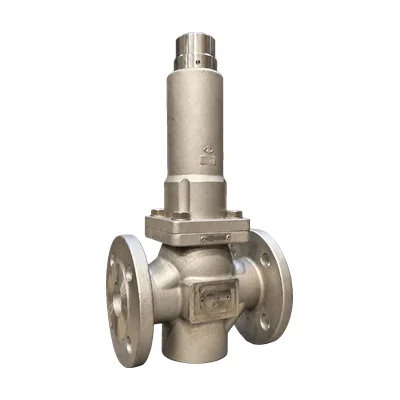

Pressure reducing valve symbols: characteristics and representations
Article contents
7 common mistakes (and how to avoid them)
- Confusing a PRV (relief) with a reducing valve
- Omitting the upstream strainer
- Placing the pressure sensing point incorrectly (sensing)
- Neglecting preventive maintenance
- Sizing by pipe DN (instead of by Kv/Cv)
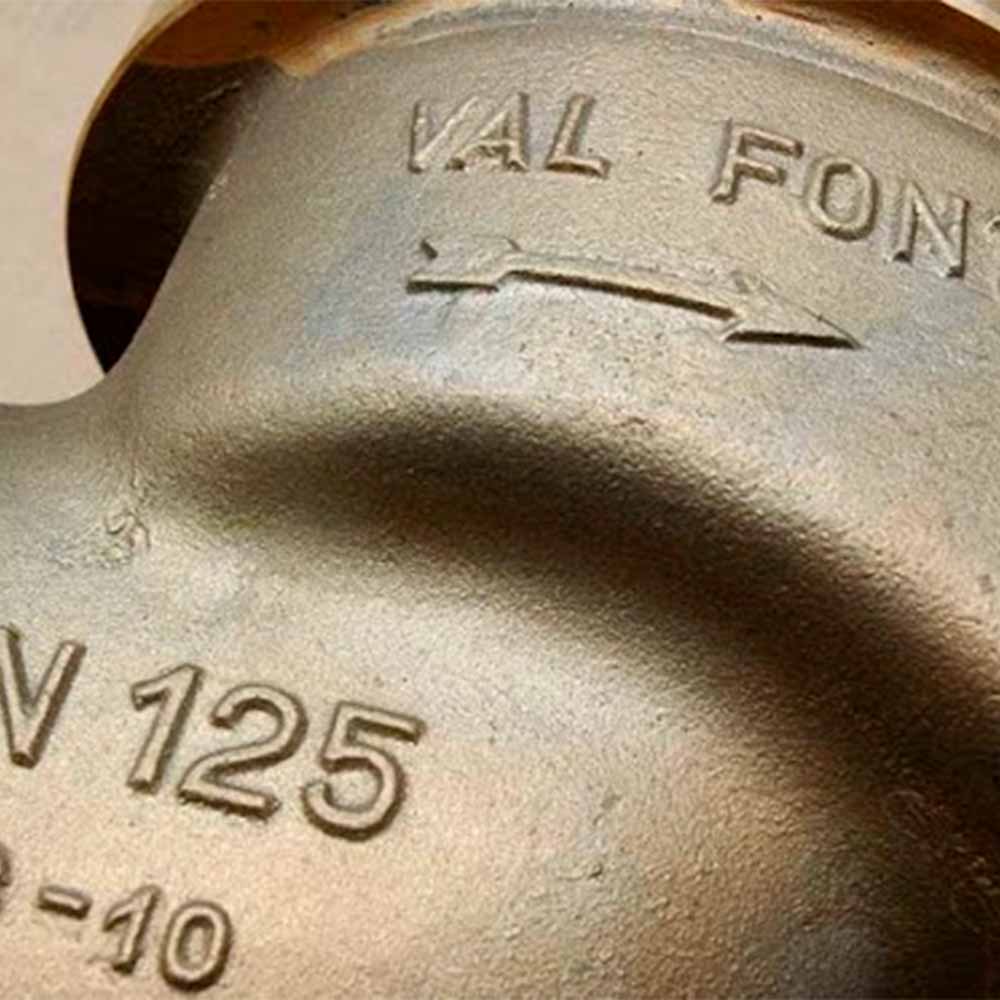
- Ignoring installation and flow direction
- Not specifying the regulation range or leakage class
- Some frequently asked questions about pressure valve symbols
What are reducing valve symbols?
Pressure reducing valve symbols on P&ID drawings make it possible to identify unambiguously how pressure is controlled in a line, what accessories are required, and how the valve should be installed.
A correct symbol prevents purchasing, installation, and operating errors, and speeds up maintenance. Below, we have compiled the most commonly used symbols, drawing conventions, and real examples linked to the Valfonta reducing valve families.
Why is it important to know these symbols rigorously?
In process engineering, the symbol of a reducing valve conveys, at a glance, its operating principle (direct-acting, pilot, bellows, or piston), its role (maintaining P2), and the associated elements (control sensing point, pressure gauge, strainer, isolation valves). Documenting these details properly reduces rework and shutdowns.
Furthermore, it is important to remember that pressure reducing valve symbols may vary slightly depending on the standard followed, but they always retain a basic principle that helps identify the essential function of the valve in pressure regulation. Nevertheless, the basic concepts are usually similar and are based on the idea of providing a clear and concise visual representation of the function of the valve in question.
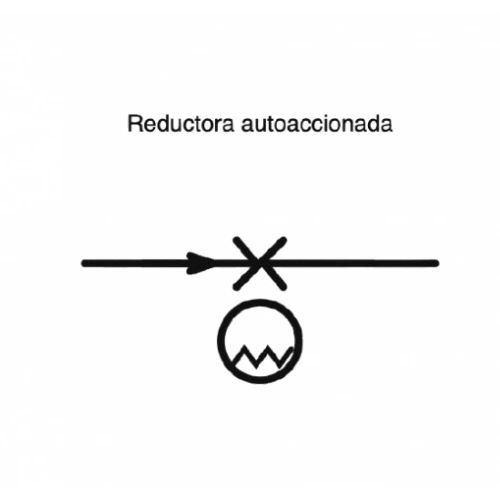
Direct-acting reducing valve
- Representation: valve body with spring/diaphragm on top and flow arrow →.
- Technical reading: the fluid itself acts against the spring/diaphragm to maintain P2.
- Typical use: steam, industrial water, and air networks; low complexity, high reliability (M1, M2, VD).
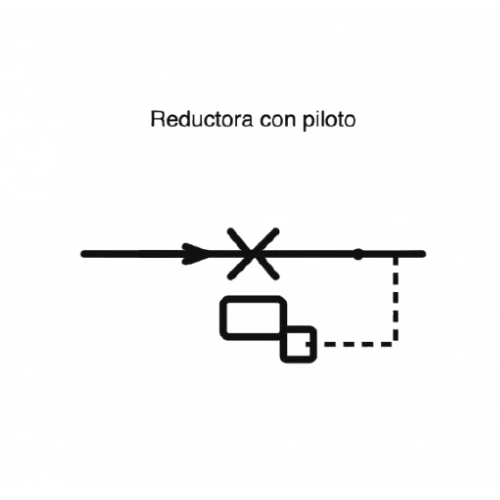
Pilot / diaphragm reducing valve
- Representation: main valve + thin line to the pilot (external control).
- Reading: better sensitivity and stability under large variations.
- Use: variable flows, more demanding set points.
→We do not offer this type of valve in our catalog, but we can make them to order. Request information with no obligation.
→ Contact our technical team directly
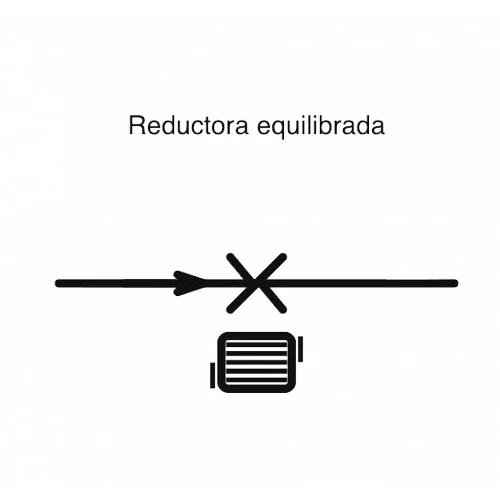
Piston- or bellows-balanced reducing valve
- Representation: balanced internal element; bellows may be indicated.
- Reading: compensates for P1 and reduces the influence of fluctuations.
- Use: gases and steam with P1 fluctuations (PRV30/44/45, M2+Bellows).
→PRV30 pressure reducing valve
→PRV44 pressure reducing valve
→PRV45 pressure reducing valve
→M2 pressure reducing valve with bellows
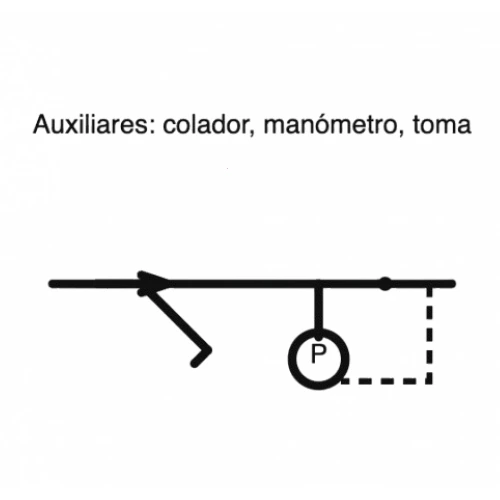
Auxiliary elements
- Upstream strainer (Y-strainer): essential to protect the seat/plug.
- Pressure sensing point: at ≥10×DN downstream or as per the datasheet.
- Pressure gauge: displays P2 and helps with calibration.

7 common mistakes (and how to avoid them)
Confusing a PRV (relief) with a reducing valve
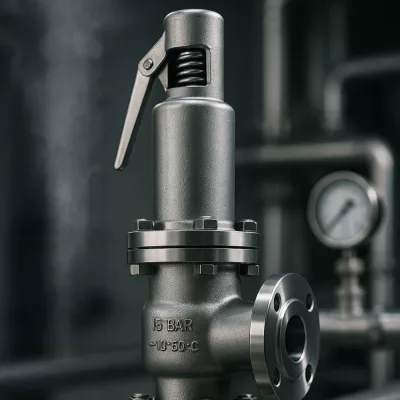
- What happens: a PRV/PSV opens only when the pressure exceeds the set pressure, in order to depressurize; a reducing valve regulates continuously to keep P2 stable. Installing a PRV where regulation is needed causes sawtooth behavior, high consumption, and unnecessary popping.
- How to avoid it: define the objective of the loop. If you need constant downstream pressure (P2), choose a self-operated reducing valve (e.g., M1/M2/PRV30/PRV45/VD). If the risk is overpressure, add a relief valve (S1/S2/S3 or PRV53/54/55) in parallel or on the critical equipment.
Omitting the upstream strainer
- What happens: entrained particles erode the seat/plug, causing leaks, loss of tightness, and set point deviations. In steam, scaling accelerates wear.
- How to avoid it: install a strainer (Y-strainer) upstream of the valve, with a mesh suited to the fluid (as a guide: 80–200 mesh in clean water; coarser in steam/air). Provide for blowdown and periodic maintenance of the screen. Leave a straight run of ≥5–10 DN before the reducing valve.
Placing the pressure sensing point incorrectly (sensing)
- What happens: if the sensing point is too close to the valve, after a bend, a tee, or a turbulent zone, hunting (oscillation) and poor repeatability can occur. In networks with variable flow, measuring at the wrong point throws the entire loop off balance.
- How to avoid it: place the sensing point 1–5 DN downstream on a straight run, away from disturbances (bends, pumps, on/off valves). On long lines or lines with distributed consumers, use remote sensing at the point where P2 matters (e.g., the inlet of a heat exchanger). Use a clean, drainable impulse line that is as short as possible.
Neglecting preventive maintenance
- What happens: without inspections, the strainer clogs, the spring fatigues, and the gaskets degrade; P2 is no longer stable.
- How to avoid it: schedule an annual inspection (or according to service severity): condition of the seat/plug, gaskets, spring/diaphragm, external leaks, strainer cleaning, and set point verification. Use genuine kits to preserve performance and certifications.
Sizing by pipe DN (instead of by Kv/Cv)
- What happens: a “line-size” valve usually ends up oversized, operates nearly closed, vibrates, and cavitates; or, conversely, it is undersized and throttles the flow.
- How to avoid it: calculate the Kv/Cv with Q, ρ, P1, P2, and T; choose the DN that meets the capacity, noise/cavitation, and a reasonable pressure drop. If Qmin is very low, consider a reduced trim or two valves in parallel (one for “peak” and one for “base” load). If the pressure drop is large, also check the risk of cavitation in reducing valves.
Ignoring installation and flow direction
- What happens: mounting outside the recommended orientation or reversing the flow causes noise, vibration, and premature wear.
- How to avoid it: respect the flow arrow, mount horizontally with the actuator vertical when the model requires it, and leave maintenance clearance and straight runs before/after.
Not specifying the regulation range or leakage class
What happens: selecting “by eye” leads to unsuitable spring ranges (with no margin) and to seats/leakage classes that do not meet leakage requirements (e.g., for drinking water or gases). Result: imprecision, spring overstress, and leaks when shut down.
How to avoid it: define in the specification:
- P1 max. / P2 set / operating ΔP and flow range (Qmin–Qmax).
- Spring range required (e.g.: 0.5–3; 1–8; 4–12 barg, etc.).
- Leakage class (metal-to-metal or soft: NBR/EPDM/PTFE), chemical compatibility, and temperature.
Standards (PED/CE, ATEX if applicable) and connections (DIN/ANSI/BSP/NPT). - Ask the manufacturer for the sizing sheet by Kv/Cv and the correct spring with margin (set point between 30–70% of the range).
Some frequently asked questions about pressure valve symbols
If you have any questions or need help with anything related to reducing valve symbols or which model is best suited to your system, don’t hesitate to fill out the contact form; we will be happy to assist you.
Our technical team can review your process data (fluid, flow, P1/P2, temperature), propose the most efficient solution, and give you clear recommendations on materials, connections, and leakage class.
We can also guide you in interpreting drawings and standards, and prepare a custom proposal if your installation requires it. Write to us and we will reply with practical, straightforward advice.
Frequently asked questions
What symbol is used for a self-operated reducing valve?
A valve body with spring/diaphragm and flow arrow; a pressure sensing point and a pressure gauge may be added.
How is the pilot line represented?
With a thin line from the pressure sensing point to the pilot or upper chamber.
Where should the pressure sensing point be located?
This ejector is ideal for processes that require more efficient handling of heat and energy. The use of superheated steam makes it particularly suitable for applications with high energy demands, delivering optimized performance in terms of energy efficiency and thermal management.
Which accessories should appear on the P&ID?
Strainer, isolation valves, pressure gauges, and, if applicable, a bypass.
Related valves
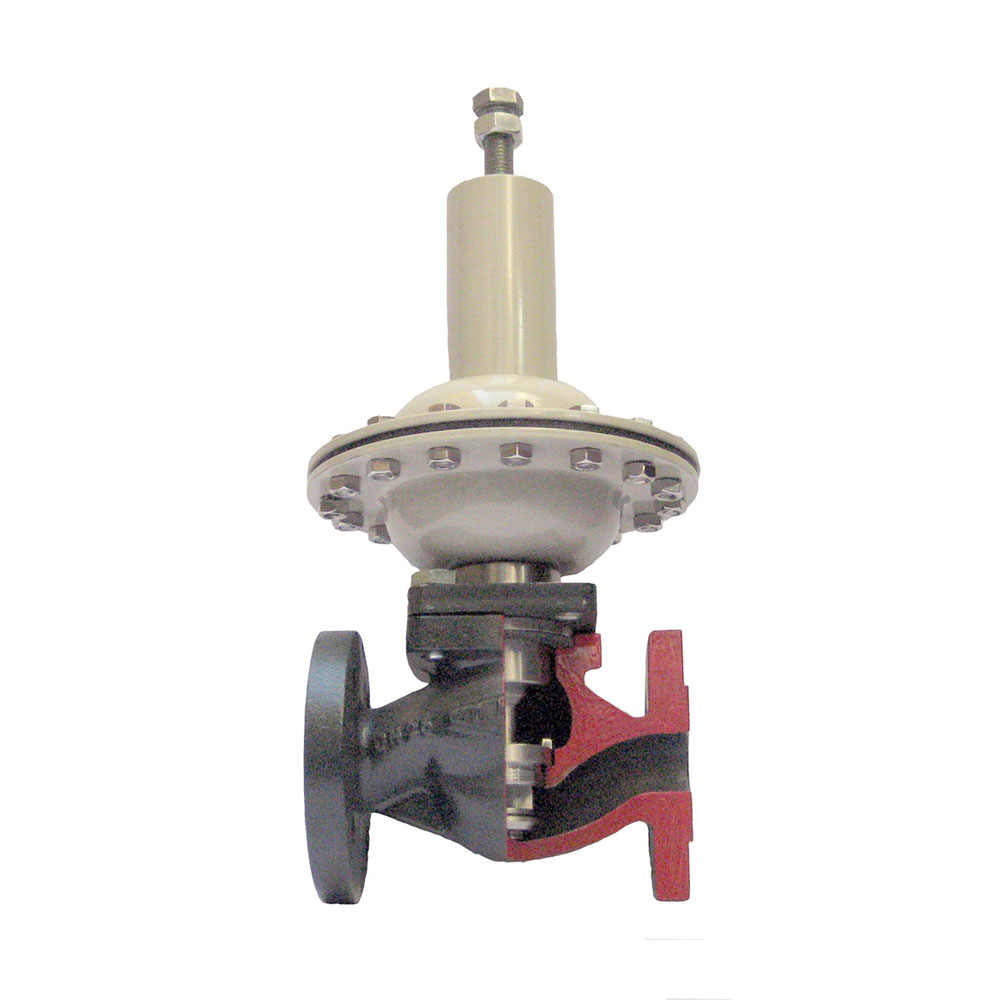 M2 diaphragm reducing valve
Related articles

Can we help with your installation?
Tell us the fluid, the inlet and outlet pressures, the temperature, and the flow rate, and we will recommend the right valve.
You can also call 933 720 888 or email valfonta@valfonta.com.