


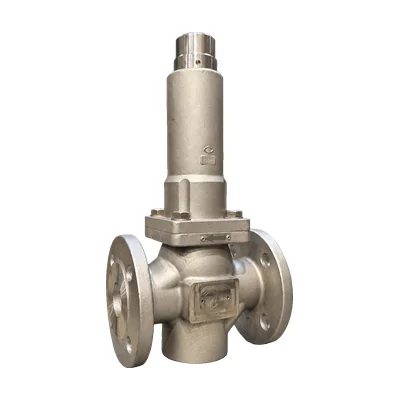

How do you install a water pressure reducing valve?
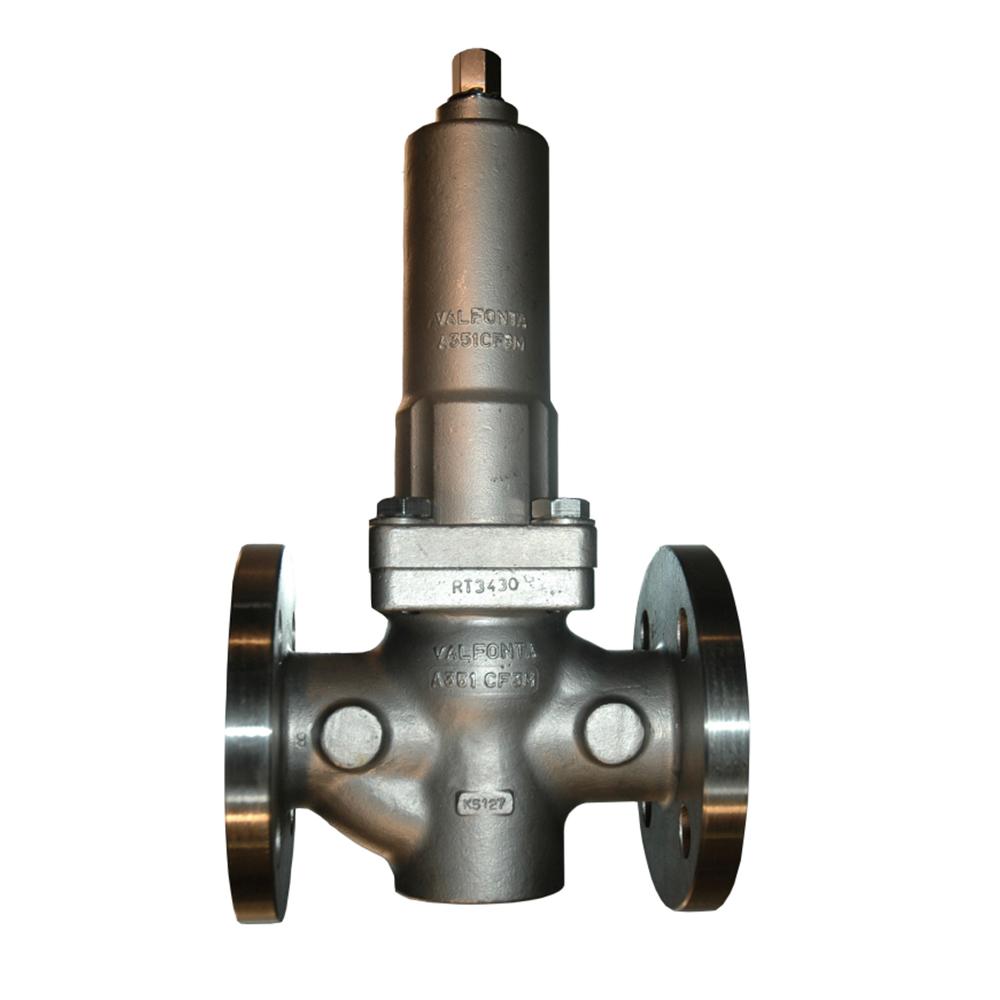
Operation, installation, and start-up of a water pressure reducing valve
To explain how to install a pressure reducing valve, we will use the VALFONTA VD model as an example, designed to keep the outlet pressure constant by means of the regulating piston.
It works on the direct-acting principle: the upstream pressure reaches the valve and pushes the bushing upward, actuating the gasket. Once the valve is closed, the adjusting screw must be turned clockwise. This displaces the spring, which acts on the bushing and the gaskets, opening the valve up to the required pressure. Any variation in inlet pressure is absorbed by the valve through the balancing of the two parts of the bushing, which are connected by a balancing hole.
Installing a pressure reducing valve like this one
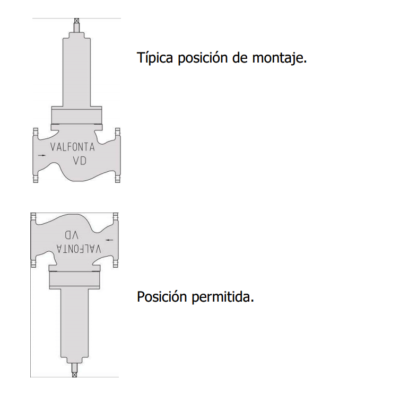
It is vitally important to clean the pipe thoroughly before installing the valve, so that no small particle or impurity can affect its correct operation. It is also highly recommended to install a strainer at the valve inlet to protect it. The valve should be installed in a horizontal pipe; the flow direction must match the direction shown by the arrow on the valve body.
The parts that support the valve should be placed as close to it as possible, but never attached to the valve or the actuator, in order to eliminate unnecessary stresses.
Keeping the main water line in good condition
Knowing in advance the nature and function of the pressure reducing valve, keep in mind that, for both new installations and replacements, the main water line must be in excellent condition.
Not knowing its condition means higher potential costs in the future and that the pressure reducing valve may have a shorter service life or simply fail.
Ideally, these essential products should be subject to demanding conditions in which they balance the system pressure, but also with the assurance that the rest of the components are working properly. Even more complex assemblies, such as installing pressure reducing valves with butterfly valves, call for a more careful review of the industrial application. This largely determines the success of installing pressure reducing valves.
The Importance of Ongoing Maintenance and Monitoring
Beyond proper installation, ongoing maintenance and monitoring are essential. Regular evaluation and periodic adjustment are necessary to identify and address any wear or irregularity in time. Valfonta prioritizes durability and sustainability, offering valves that, with proper care, promise a long service life and sustained operation.
Safety Considerations: An Essential Priority
Safety is fundamental when installing a pressure reducing valve. All procedures must be carried out by trained professionals, in strict compliance with safety standards and guidelines. In addition, choosing the right valves, such as Valfonta’s AISI 316L stainless steel valves, has a direct impact on the operational safety of the system.
Before installing it, it is worth reviewing where the pressure reducing valve should be installed in the line. You will find all the models on our pressure reducing valves page.
How to install a pressure reducing valve: start-up
The first step for a correct start-up is to open the shutoff valves very slowly, so as to avoid any water hammer during the process. Next, turn the adjusting screw until the required pressure is reached. Compressing the spring raises the outlet pressure; turn it clockwise to increase it and counterclockwise to decrease it. This type of pressure reducing valve has a long list of applications: chemical laboratory installations, water distribution systems, wastewater installations, industrial air, compressed air, sprinkler systems, fuel oil…
Request information, with no obligation, about any of our pressure reducing valves
If you would like more detailed information about any of our valves, or need advice on how to install a pressure reducing valve, simply get in touch with us. You can do so by calling 933 720 888, sending an email to valfonta@valfonta.com, or filling out the form on this website. What exactly do you need?
Frequently asked questions
What is a pressure reducing valve and how does it work?
A pressure reducing valve regulates the pressure of a fluid to a constant level at the outlet, regardless of fluctuations at the inlet, by means of a direct-acting mechanism.
How should the pipe be prepared before installing a pressure reducing valve?
It is essential to clean the pipe thoroughly so that impurities do not affect the operation of the valve, and installing a strainer at the inlet is recommended.
How is a pressure reducing valve installed correctly?
The valve must be installed in a horizontal pipe, making sure that the flow direction matches the one indicated by the arrow on the valve body, and the support parts must be placed close to the valve, without being attached to it.
What precautions should be taken when starting up a pressure reducing valve?
At start-up, open the shutoff valves slowly to avoid water hammer, and adjust the adjusting screw to obtain the desired pressure.
What applications is a pressure reducing valve suitable for?
These valves are suitable for applications such as water distribution systems, chemical installations, compressed air, sprinkler systems, and fuel oil systems.
How does the valve body material affect its durability?
The body material, such as RG10 bronze or AISI 316L stainless steel, determines the strength and durability of the valve against different fluids and conditions.
Which pressure reducing valve model is ideal for inert gases?
Models such as Valfonta’s PRV20 and PRV30 are ideal for inert gases, thanks to their robust construction and their ability to handle different types of fluids.
Why is the Kvs value crucial in a pressure reducing valve?
It is important because it indicates the flow capacity of the valve, directly affecting the performance of the system in which it is installed.
Does Valfonta offer different types of connections on its valves?
Yes, Valfonta offers various connection options, such as flanged and threaded, to suit different systems and needs.
Related valves
Related articles
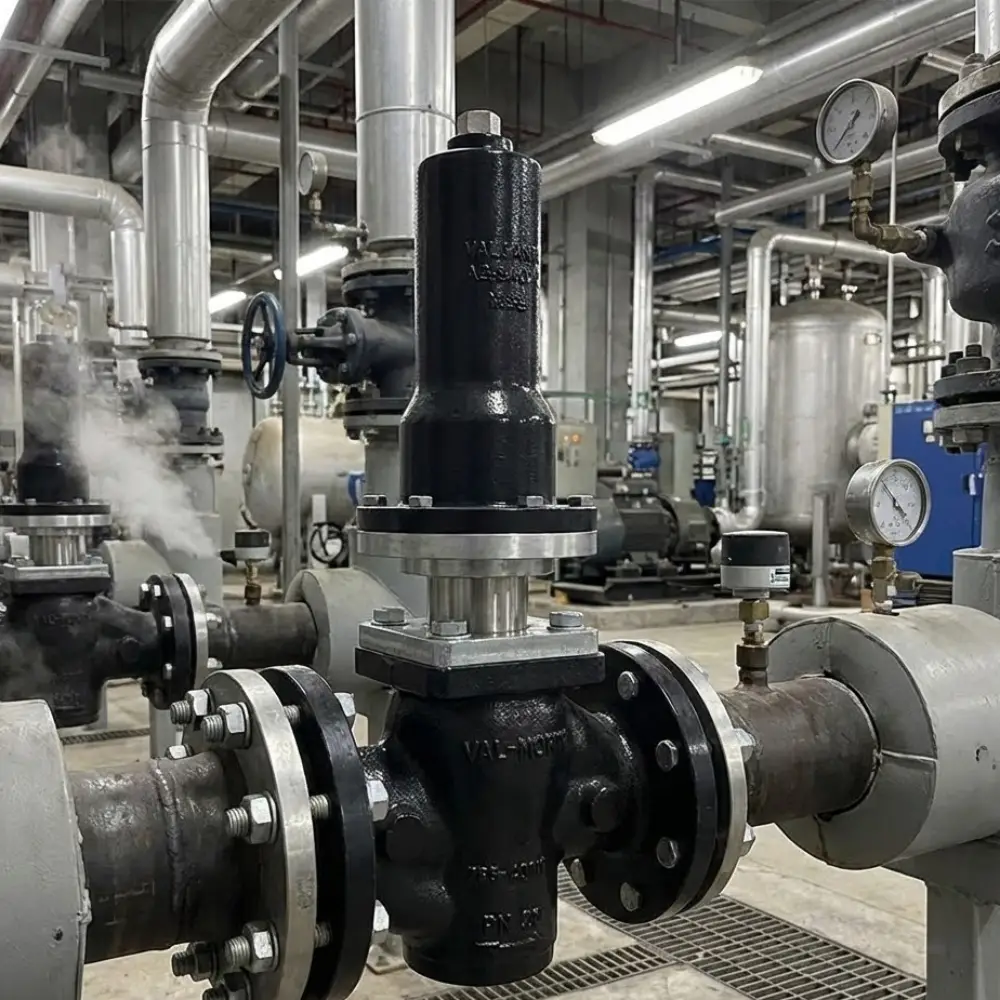

Can we help with your installation?
Tell us the fluid, the inlet and outlet pressures, the temperature, and the flow rate, and we will recommend the right valve.
You can also call 933 720 888 or email valfonta@valfonta.com.