


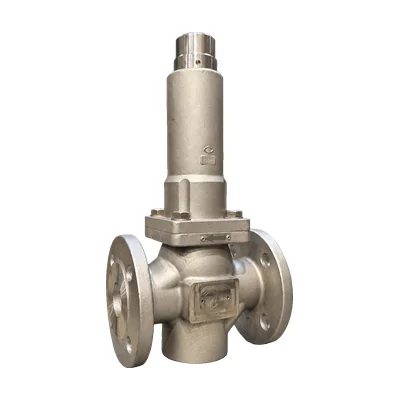

Pressure reducing valve for steam: installation, management, and maintenance

Article contents
Choosing the right reducing valve is only half the job. The other half—the one that decides whether the installation runs stably for years or causes problems from the first month—lies in how it is installed, which components go with it, and what maintenance it receives.
Uncontrolled pressure fluctuations cause damage to machinery, loss of efficiency, and even risks to operators. In this guide we approach steam management from a practical point of view: the pressure reducing station, installation, the most common problems, and maintenance.
The steam pressure reducing station: what it consists of and how it is installed
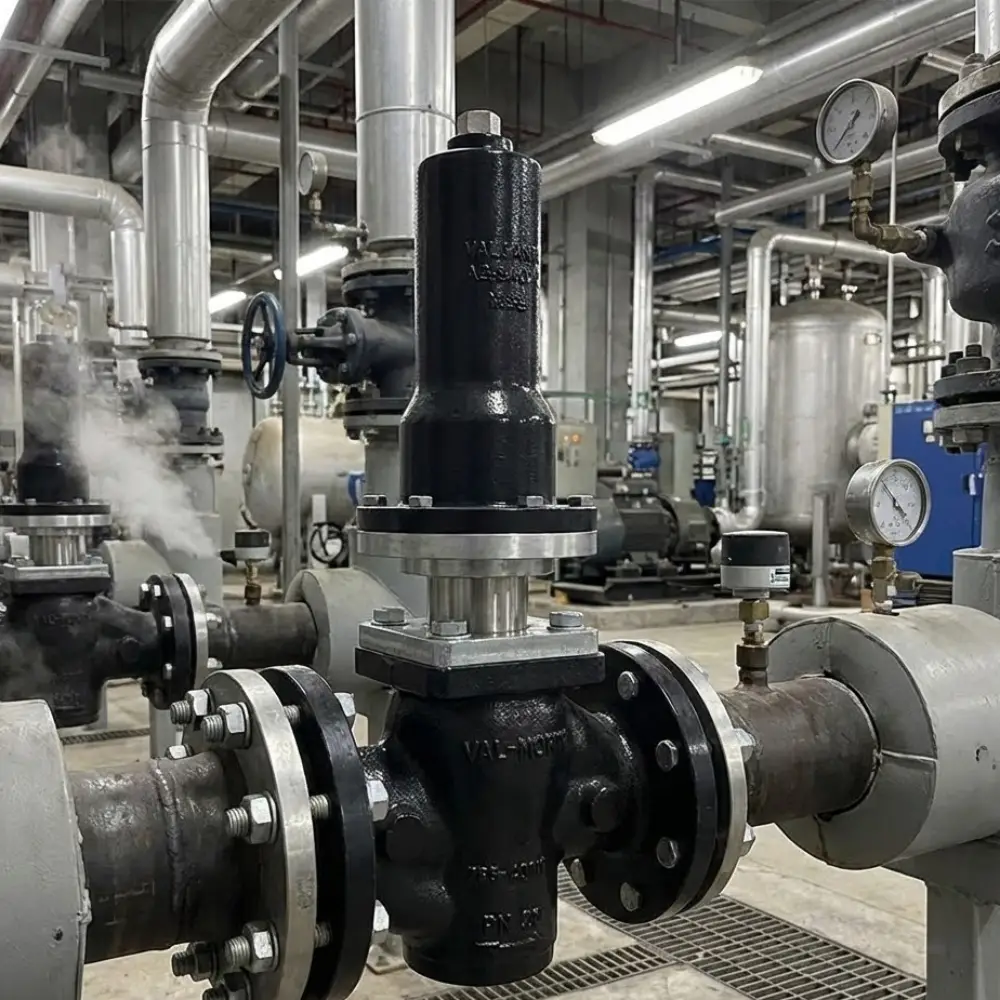
In a steam line, the reducing valve almost never works alone. It is part of a set of components whose job is to deliver steam to it in good condition and to protect the installation.
Components that go with the reducing valve
A well-designed pressure reducing station usually includes, in addition to the valve itself, the following components:
Shutoff valves upstream and downstream, so that work can be done without draining the entire line.
Strainer, which traps particles and protects the valve seat from premature wear.
Moisture separator and steam trap, essential for removing condensate and delivering steam that is as dry as possible.
Upstream and downstream pressure gauges, which make it possible to verify the setting and diagnose problems.
Downstream overpressure protection, by means of a relief valve or a safety valve, depending on what the installation requires.
That last point is important: the reducing valve regulates, but it does not protect. If the downstream line cannot withstand the inlet pressure in the event of a failure, a dedicated protection device is required.
Where and how it is placed in the line
The valve is installed in the distribution line, ahead of the equipment or group of consumers whose pressure is to be controlled. It is advisable to provide straight pipe runs upstream and downstream of the valve so that the flow arrives stabilized and regulation is not disturbed by turbulence, and to leave the adjusting screw accessible so it can be adjusted without dismantling anything.
Condensate drainage must be dealt with upstream of the valve, and the downstream pipe is usually of a larger diameter, because steam increases in volume as its pressure is reduced. Many Valfonta models can be installed in different positions, which provides flexibility when the available space is limited. Even so, it is advisable to leave clearance around the valve so it can be handled with tools: a few extra inches in the design save hours on every subsequent intervention.
Most common installation mistakes
The faults we see most often are always the same: installing the valve without an upstream strainer, forgetting condensate drainage, not leaving enough straight pipe runs, doing without the downstream pressure gauge—which forces adjustment to be done blind—or sizing the outlet pipe the same as the inlet pipe. None of them is a serious mistake on its own, but together they turn a correct valve into an unstable installation.
There are two more worth pointing out. The first is adjusting the set pressure all at once to the final value instead of approaching it gradually with consumption open, which makes it difficult to find the stable point. The second is placing the valve somewhere inaccessible, behind other equipment or at an awkward height: the installation works just the same on day one, but it turns every inspection into a costly intervention and, in practice, means maintenance ends up being postponed.
Common steam management problems and how to avoid them
When a steam line causes problems, the source is rarely the valve itself. These are the three most common scenarios and how they relate to pressure reduction.
It is worth keeping in mind what is at stake. Efficient management of steam pressure is a key factor in the performance and safety of the installation: uncontrolled fluctuations translate into damage to machinery, a drop in process efficiency, and, in the most serious cases, risks to the safety of workers. Each of the problems that follow has a known solution and is almost always cheaper to prevent than to repair.
Water hammer and vibration
Condensate accumulated in the pipe and the bubbles formed by the steam can cause water hammer and vibration that compromise the integrity of the pipes and the other components of the system. It is one of the most destructive types of damage and, at the same time, one of the most avoidable: good condensate drainage, gradual start-up, and avoiding sudden valve closures eliminate most cases. Maintaining a constant, appropriate pressure, which is exactly what the reducing valve does, significantly minimizes these risks.
Wet steam and condensate carryover
The ideal steam for a reducing valve is dry saturated steam. When it arrives laden with moisture, the water droplets erode the seat and the plug, accelerate wear, and cause erratic regulation. The solution lies in the moisture separator and steam trap upstream of the valve, and in proper insulation of the line to prevent unnecessary condensation.
Pressure fluctuations and instability
If the outlet pressure oscillates instead of remaining stable, there are usually three causes: an oversized valve that operates nearly closed at low loads, a clogged strainer that throttles the flow, or dirt and wear on the seat that prevent proper shutoff. Checking the downstream pressure gauge under different consumption conditions makes it possible to identify which of the three is the culprit before touching anything.
It is worth insisting on diagnosis before replacing anything. If the pressure shoots up only when consumption stops, the problem points to the shutoff—the seat or gaskets. If it drops as demand increases, it is usually a matter of flow: a dirty strainer or a valve too small for the peak. And if it oscillates continuously with no clear pattern, the usual cause is oversizing. That small preliminary analysis saves unnecessary replacements and line shutdowns.
Maintenance and choosing the right model for your installation
Simple but consistent maintenance is what keeps the installation efficient over time and prevents unplanned shutdowns.
What to check and how often
Periodic inspection should focus on a few points: the actual outlet pressure versus the set pressure, the condition of the strainer, the gaskets, and the seat, the absence of leaks, and proper operation of the steam trap. An annual check is a reasonable benchmark in most installations, and it should be more frequent on lines with lower-quality steam or in continuous service.
Valfonta pressure reducing valves for steam are designed precisely to make that inspection easier: their modular design provides quick access to the internal components for cleaning, repair, or replacement, which reduces downtime. On top of this, they are built with materials resistant to the high temperatures and corrosion associated with steam, which extends the service life of the equipment.
A simple record of each inspection—date, set pressure, measured pressure, and parts replaced—also makes it possible to spot trends: if the interval between adjustments gets shorter over time, something is wearing out, and it is advisable to act before it causes an unplanned shutdown.
Steam pressure reducing valve models and custom manufacturing
These are the most common models in our catalog for steam lines, with the advantage each one offers in installation and operation:
| Model | Features | Advantage in installation and operation |
|---|---|---|
| M1 reducing valve | Self-operated, diaphragm control | Requires no auxiliary power: it keeps regulating even if the electrical or pneumatic supply fails |
| M2 reducing valve | Direct-acting, diaphragm-compensated | Handles gases from -10 to +80 °C, liquids, and steam: a single model for several lines |
| M2 bellows reducing valve | Direct-acting with bellows | Simple regulation and installation in any position when space is limited |
| PRV44 reducing valve | Direct-acting with bellows | Fine regulation on demanding steam lines |
| PRV45 reducing valve | Direct-acting | Easy regulation even under extreme conditions and in any position; suitable for laboratories with corrosive vapors |
When the application goes beyond the standard—unusual flow rates, special materials, specific connections, or certification requirements—we manufacture the valve to order. Our engineering team studies the installation and designs the solution, something that has been part of Valfonta's standard service since 1961.
You can view the full range and datasheets in the pressure reducing valves category, and see our pressure relief valves for protecting the line against overpressure.
To choose and size the right model, see our guide on what a steam pressure reducing valve is and how to choose one.
Frequently asked questions
What components does a steam pressure reducing station include?
In addition to the reducing valve, it usually includes shutoff valves upstream and downstream, a strainer to protect the seat, a moisture separator with a steam trap to remove condensate, upstream and downstream pressure gauges, and overpressure protection by means of a relief valve or a safety valve.
Where is the reducing valve installed in a steam line?
In the distribution line, ahead of the equipment or group of consumers whose pressure is to be controlled. It is advisable to provide straight pipe runs upstream and downstream, deal with condensate drainage upstream, and leave the adjusting screw accessible. The downstream pipe is usually of a larger diameter, because steam increases in volume as its pressure is reduced.
What causes water hammer and how can it be prevented?
It is caused by condensate accumulated in the pipe and by the bubbles formed by the steam, which generate pressure waves and vibration capable of damaging pipes and components. It is prevented with good condensate drainage, gradual start-up, avoiding sudden valve closures, and maintaining a constant, appropriate pressure.
What is wet steam and how does it affect the valve?
It is steam that carries water droplets instead of arriving as dry saturated steam. These droplets erode the seat and the plug, accelerate wear, and cause erratic regulation. It is corrected by installing a moisture separator and steam trap upstream of the valve and properly insulating the line.
How often should a steam reducing valve be inspected?
An annual check is a reasonable benchmark in most installations, with more frequent checks on lines with lower-quality steam or in continuous service. You should check the actual outlet pressure versus the set pressure, the strainer, the gaskets and the seat, any leaks, and the operation of the steam trap.
Where can I buy self-operated steam reducing valves for an industrial plant?
Valfonta manufactures and supplies directly self-operated pressure reducing valves for steam from its facilities in Badalona (Barcelona), with more than 60 years of experience. You can browse the full catalog on the website or contact our technical department to study your installation and propose the right model, including custom manufacturing.
Related valves
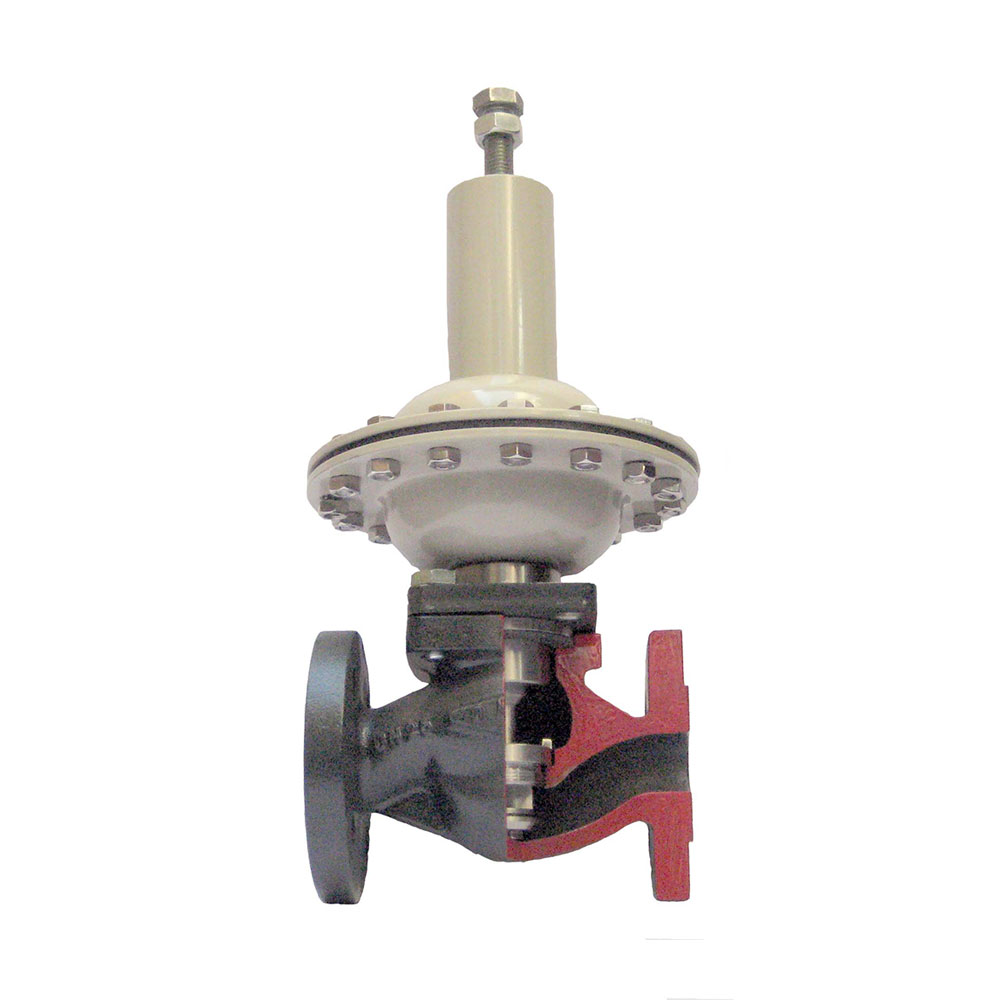 M2 diaphragm reducing valve
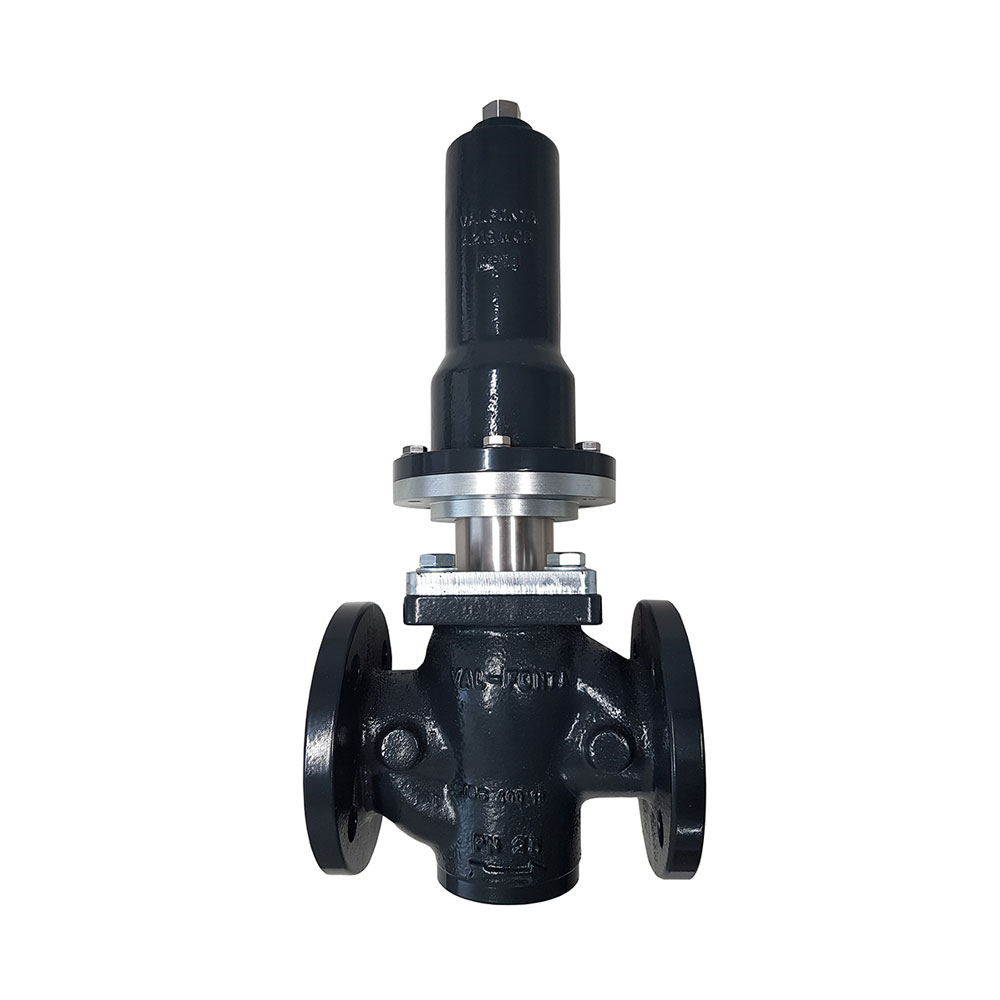 M2F bellows reducing valve
Related articles
Can we help with your installation?
Tell us the fluid, the inlet and outlet pressures, the temperature, and the flow rate, and we will recommend the right valve.
You can also call 933 720 888 or email valfonta@valfonta.com.